
 English
 Afrikaans
 Albanian
 Amharic
 Arabic
 Armenian
 Azerbaijani
 Basque
 Belarusian
 Bengali
 Bosnian
 Bulgarian
 Catalan
 Cebuano
 Chichewa
 Corsican
 Croatian
 Czech
Czech Danish
 Dutch
Dutch Esperanto
 Estonian
 Filipino
 Finnish
 French
 Frisian
 Galician
 Georgian
 German
 Greek
Greek Gujarati
 Haitian Creole
 Hausa
Hausa Hawaiian
 Hebrew
 Hindi
Hindi Hmong
Hmong Hungarian
 Icelandic
 Igbo
Igbo Indonesian
 Irish
Irish Italian
 Japanese
 Javanese
 Kannada
 Kazakh
 Khmer
Khmer Korean
 Kurdish (Kurmanji)
 Kyrgyz
 Lao
Lao Latin
Latin Latvian
 Lithuanian
 Luxembourgish
 Macedonian
 Malagasy
 Malay
Malay Malayalam
 Maltese
 Maori
Maori Marathi
 Mongolian
 Myanmar (Burmese)
 Nepali
 Norwegian
 Pashto
 Persian
 Polish
 Portuguese
 Punjabi
 Romanian
 Russian
 Samoan
 Scottish Gaelic
 Serbian
 Sesotho
 Shona
Shona Sindhi
 Sinhala
 Slovak
 Slovenian
 Somali
 Spanish
 Sudanese
 Swahili
 Swedish
 Tajik
Tajik Tamil
Tamil Telugu
 Thai
Thai Turkish
 Ukrainian
 Urdu
Urdu Uzbek
Uzbek Vietnamese
 Welsh
Welsh Xhosa
Xhosa Yiddish
 Yoruba
 Zulu
Zulu
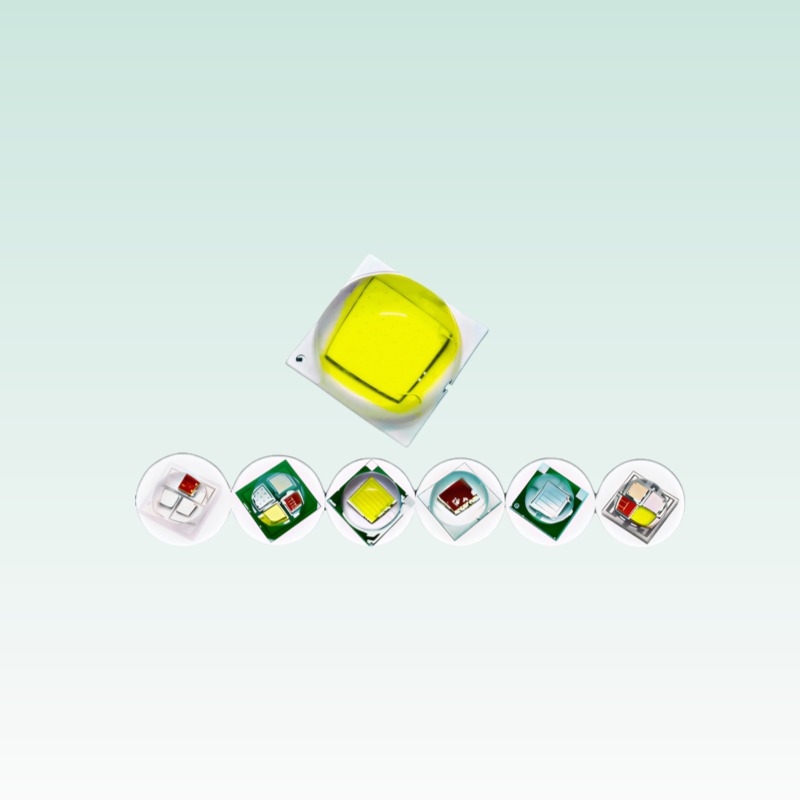






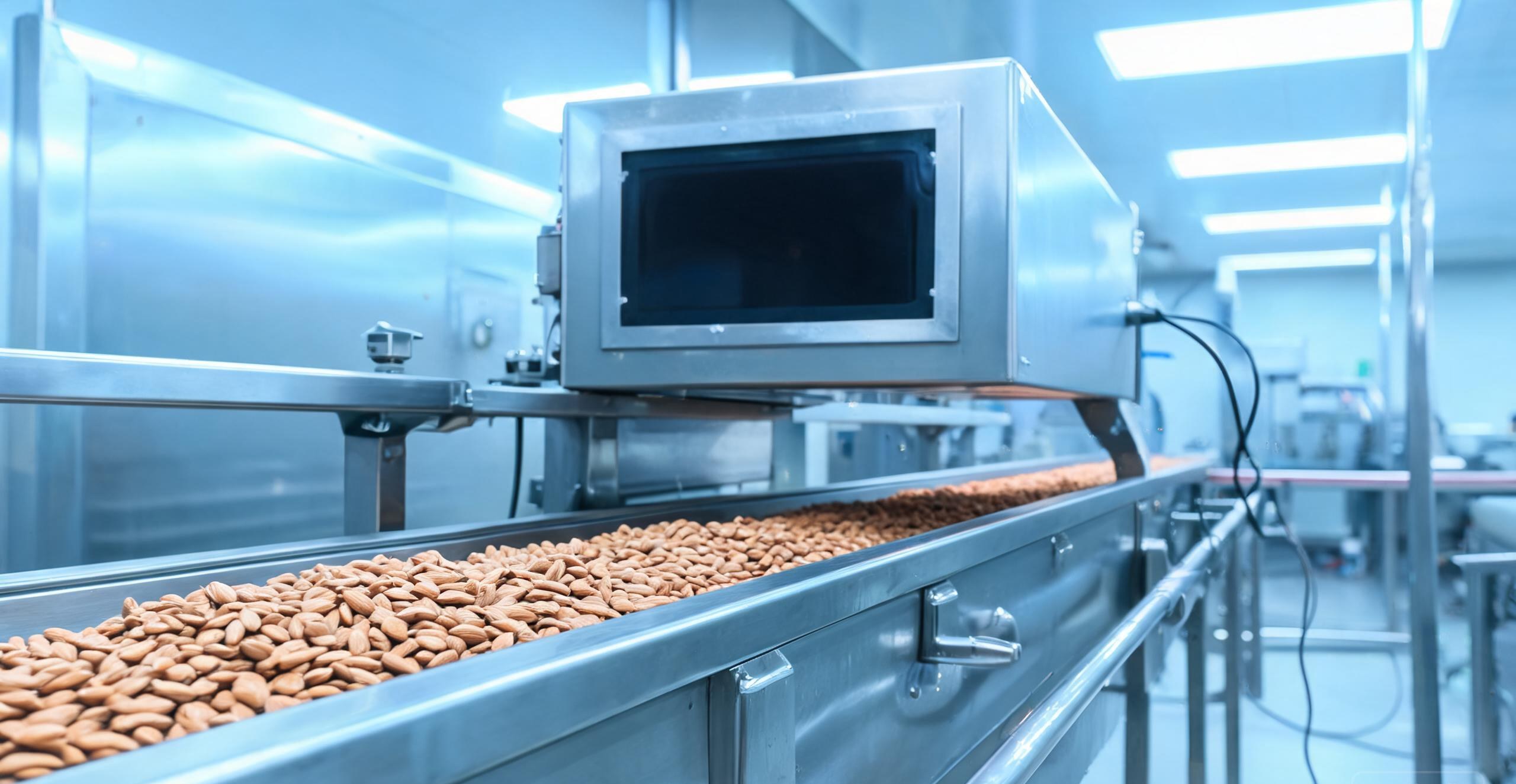
Nut and grain processors face a stubborn inspection problem: shell fragments, insect damage, and foreign matter that look identical to good product under visible light. This project shows how 1470nm SWIR LEDs solved it — raising foreign-matter rejection accuracy to 99.2% on a high-throughput sorting line.
Application Background
A nut processing company supplying retail brands in Europe and North America needed to upgrade its optical sorting line. The existing color-camera system reliably removed visibly discolored kernels, but three defect classes kept escaping to the customer’s incoming inspection:
- Shell fragments — thin, pale pieces that match almond flesh under RGB imaging
- Concealed insect damage — internal cavities with no external color signature
- Plastic and rubber debris — from conveyor wear, often similar in color to product
Each escaped defect risked chargebacks and audit findings under the customer’s food-safety program. Manual re-inspection of flagged lots was costing the plant 40+ labor hours per week.
Engineering Challenge
The physics of the problem pointed to the short-wave infrared band. Water and organic materials interact with SWIR light very differently than with visible light:
- At 1470nm — close to a strong water absorption peak — the moisture contrast between sound nut flesh and damaged or foreign material produces a dark-bright signature invisible to RGB cameras
- Shell, plastic, and insect-damaged tissue show clearly differentiated reflectance against healthy kernels at this wavelength
Three constraints shaped the illumination design: the sensors needed uniform line illumination across a 1200mm scan width; the LEDs had to deliver sustained radiant power under continuous duty at 40°C ambient inside the sorter housing; and the source lifetime had to match the machine’s 5-year service interval to avoid mid-season teardowns.
Solution & Key Components
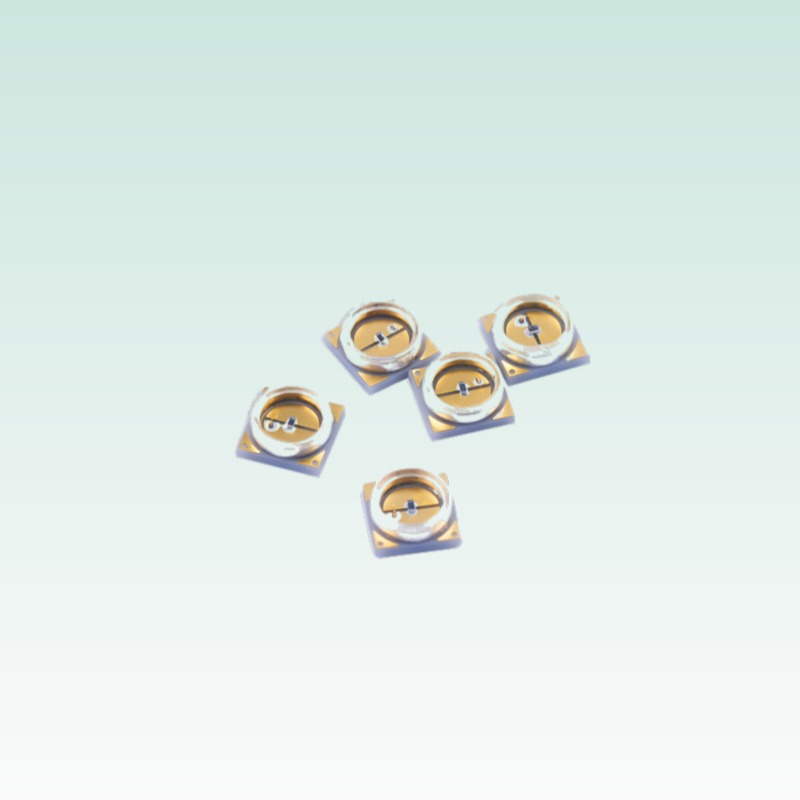
Queendom supplied SWIR LED arrays built on the 3535 high-radiance platform, configured for line-scan illumination:
| Parameter | Value | Design Note |
|---|---|---|
| Peak wavelength | 1470 nm (SWIR) | Matches water-absorption contrast band |
| Package | 3535 ceramic SMD | Thermal stability under continuous duty |
| Line coverage | 1200 mm (8 modules × 150 mm) | Overlap eliminates dark seams |
| Illumination uniformity | > 90% across scan width | Critical for line-scan cameras |
| Drive | Constant current, closed-loop thermal foldback | Protects radiant output at 40°C ambient |
| Service lifetime target | 50,000 h (L70) | Exceeds machine service interval |
Integration notes for sorting-machine builders: the modules mount behind protective sapphire windows (SWIR transmits well; glass absorbs partially), and the constant-current zones map one-to-one to the camera’s pixel banks so intensity can be trimmed per zone during commissioning.
Results
After a two-week validation run, the SWIR channel caught shell fragments and plastic debris that the RGB stage missed, while the false-reject rate stayed below the 0.5% contract threshold — keeping yield losses acceptable.
Recommended Products
Frequently Asked Questions
Why 1470nm instead of 1550nm for food sorting?
Both wavelengths sit in the SWIR water-contrast band. 1470nm offers a practical balance: strong moisture contrast, available high-radiance LED sources, and better sensor compatibility than longer SWIR wavelengths, which increasingly require costlier InGaAs detector options.
Can SWIR LEDs replace RGB cameras entirely?
No — the two channels are complementary. RGB removes visibly discolored product; SWIR catches moisture, shell, and foreign-material contrast invisible to color imaging. Most modern sorters run both channels in sequence.
How are the arrays protected in wash-down environments?
Modules sit behind sapphire or SWIR-transmissive windows in IP65-rated housings, with gasketed cable glands — the same enclosure discipline used in the food-washdown lighting described in our waterproof lighting applications.