







The problem as it presented itself
The customer arrived with a working prototype and a production problem: the LEDs that passed the bench test were not the ones that survived the line. Nothing in the data was out of spec — the failures were spread across batches rather than concentrated in one lot, which ruled out a supplier problem and pointed at the process instead.
Three measurements separated the causes. First, forward voltage at a fixed low current across a sample of each batch, which showed whether the die set was consistent. Second, case temperature under the real drive condition, which showed whether the thermal path matched the assumption in the design. Third, the reflow profile logged on the line, which showed whether the assembly process stayed inside the qualified window.
The first two came back clean. The profile log showed the peak temperature sitting close enough to the limit that normal line-to-line variation pushed parts past it. This is the most common way a qualified component becomes an unqualified assembly, and it is invisible on the datasheet.
- Measure the process, not just the part. A component that meets its specification can still be assembled outside its qualification.
- Log the profile, do not assume it. Reflow profiles drift as boards and fixtures change.
- Look at failure distribution first. Failures spread across batches point at the process; failures concentrated in one batch point at the supply.
Once the profile was corrected and re-qualified, the field return rate dropped to the level the component datasheet predicts. The component never changed — only the process around it.
Many countries have invested a lot of manpower here to study the application of LED in automobiles. The cars of the time are already equipped with LED lighting equipment, for example, the 200 Cadillac period 5 state-owned cars.
- Features of automotive LED
Because LED has the advantages of energy saving, long life, maintenance-free, explosion-proof, no fear of vibration, easy to control new text, etc., plus the cold light characteristics of the LED itself, the shape of the lamp will not be deformed due to long-term heat, thereby improving the entire set of lights Life. Especially the LED light-up time is fast (the incandescent lamp of batch 1 is 0.7~1s faster), so when using LED as the brake light, if the car in front is printed with the car behind the car, it will be seen 0.7~1s earlier than the incandescent brake light To the signal. The speed of driving on the highway is 100 km/h, which can be braked 20 m ahead of the incandescent brake lights, thus preventing the occurrence of collisions between two vehicles and reducing hidden traffic hazards.
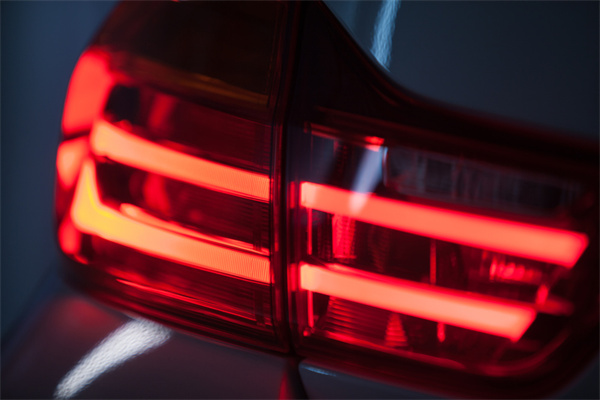
At present, LEDs are widely used in car taillights, brake lights, direction lights, indicator lights, reversing order, car ceiling lights, reading lights, as well as handles, car locks, switches, cup holders, seat belt buckles, mirror side sugar cars With the rapid development of technology, the price of LED will be greatly reduced, so the use of LED in automobiles will become more and more popular.
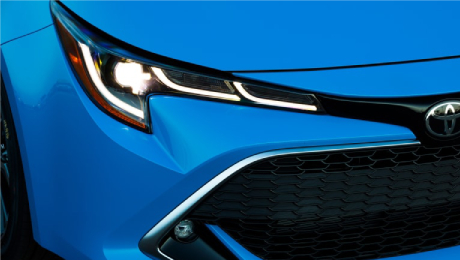
LED application
2 Power supply for automotive LED
The LED on the car uses the battery on the car as the power supply. The passenger battery on the car changes greatly. The voltage of the passenger battery that is not charged in the leisure time may drop to 10V. After fully charged, the power supply voltage of the oil can be Up to about 14V. The LED lamp must realize voltage stabilization or steady current power supply, so the input voltage of the car LED should be processed, and the voltage stabilization circuit should be designed to stabilize the voltage of 10~14V to 12V. Now there are models with this kind of module on the market. LED, like the 1W LED module made by Fujian Cangle Electronics Company, its input voltage is 10~14V, output constant current voltage is 12V, it is usually suitable for use in automobiles.
3 Examples of automotive LEDs
Recently, the new car LED lights are equipped with a kind of LED chassis lights on the car chassis, which can emit dazzling lights at night. New car decoration products with this effect have been popular at home and abroad. It integrates safety and decoration. At night, foggy, rainy, cloudy, and poorly visible roads, it can provide pedestrians or other vehicles with driving or parking location marks, thereby reducing potential accidents. This will bring greater market space for LEDs.
Automotive LEDs are most suitable for the backlight display of digital instrument indicators, front and rear turn signals, brake indicators, reversing lights, anti-fog lights, reading lights, etc., for the angle, color difference, brightness, voltage, light attenuation, and heat dissipation of these lights, UV protection and reliability requirements are very high. Only by meeting these requirements can automotive LEDs be truly industrialized.
Recently, there is a new car maintenance lamp on the market (as shown in Figure 6.4), which uses φ mm white LED. Usually, Yisheng car maintenance lamp is composed of 30 or 60 LEDs, which are used as spare parts for cars. When the car is on the road at night In the event of a malfunction, this repair lamp is very useful.
If there is a failure in the head of the car, the maintenance lamp can be directly connected to the passenger battery to light it as a maintenance lamp. If a malfunction occurs inside the car yang, it can be connected to the cigarette lighter in the cab to light up. This kind of light can also flash yellow light, which can be used as a reminder or alarm for passing cars.
It is forbidden to use the above content without the author’s authorization, and reprinting must note the source of this content or the consent of the publisher
Automotive Lighting Applications
Our automotive-grade LEDs meet AEC-Q102 standards for headlights, taillights, and interior lighting. These high-power LED chips withstand extreme temperatures and vibration in vehicle environments.
AEC-Q102 Certified LED Chips
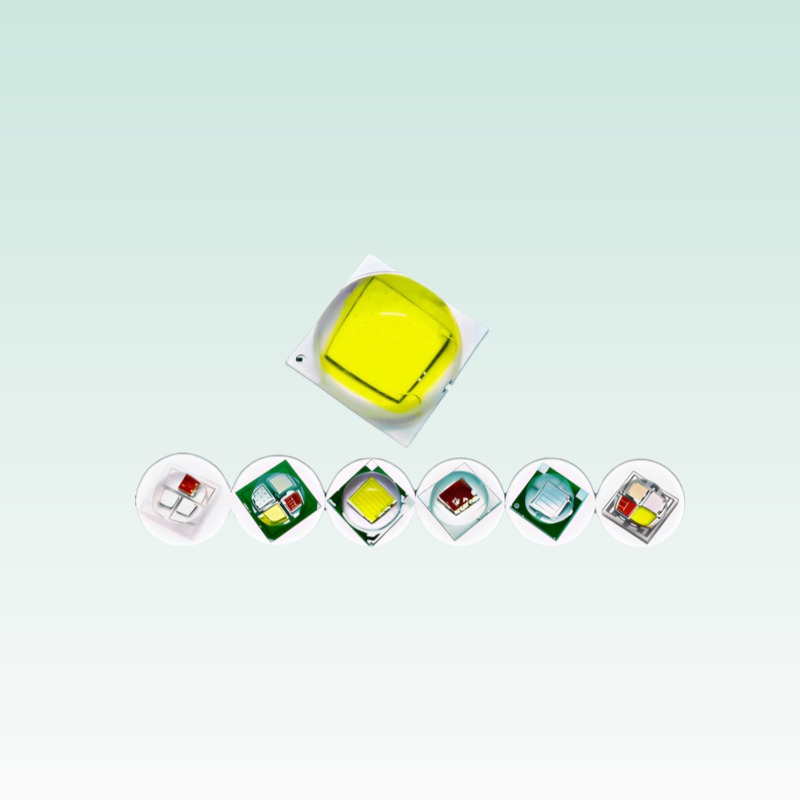
All our automotive LED components undergo rigorous reliability testing including temperature cycling, mechanical shock, and electrostatic discharge tests. Our 3535 ceramic LEDs offer superior thermal performance for headlight applications.
Headlight & Taillight Solutions
We supply high-power LED arrays for adaptive headlights, dynamic taillights, and daytime running lights. Our automotive LED solutions include white, amber, and red LEDs with precise color coordinates.
Interior & Exterior LED Products
From dashboard backlighting to ambient interior lighting, our SMD LEDs and LED chips provide reliable illumination for all vehicle zones. Explore our automotive LED catalog.
AEC-Q102 Qualification
Automotive LED reliability testing including temperature cycling.
Headlight Beam Patterns
Low beam, high beam, and DRL LED optical design meeting ECE standards.
Thermal Cycling Performance
LED package integrity under -40°C to +125°C automotive profiles.