
 English
 Afrikaans
 Albanian
 Amharic
 Arabic
 Armenian
 Azerbaijani
 Basque
 Belarusian
 Bengali
 Bosnian
 Bulgarian
 Catalan
 Cebuano
 Chichewa
 Corsican
 Croatian
 Czech
Czech Danish
 Dutch
Dutch Esperanto
 Estonian
 Filipino
 Finnish
 French
 Frisian
 Galician
 Georgian
 German
 Greek
Greek Gujarati
 Haitian Creole
 Hausa
Hausa Hawaiian
 Hebrew
 Hindi
Hindi Hmong
Hmong Hungarian
 Icelandic
 Igbo
Igbo Indonesian
 Irish
Irish Italian
 Japanese
 Javanese
 Kannada
 Kazakh
 Khmer
Khmer Korean
 Kurdish (Kurmanji)
 Kyrgyz
 Lao
Lao Latin
Latin Latvian
 Lithuanian
 Luxembourgish
 Macedonian
 Malagasy
 Malay
Malay Malayalam
 Maltese
 Maori
Maori Marathi
 Mongolian
 Myanmar (Burmese)
 Nepali
 Norwegian
 Pashto
 Persian
 Polish
 Portuguese
 Punjabi
 Romanian
 Russian
 Samoan
 Scottish Gaelic
 Serbian
 Sesotho
 Shona
Shona Sindhi
 Sinhala
 Slovak
 Slovenian
 Somali
 Spanish
 Sudanese
 Swahili
 Swedish
 Tajik
Tajik Tamil
Tamil Telugu
 Thai
Thai Turkish
 Ukrainian
 Urdu
Urdu Uzbek
Uzbek Vietnamese
 Welsh
Welsh Xhosa
Xhosa Yiddish
 Yoruba
 Zulu
Zulu






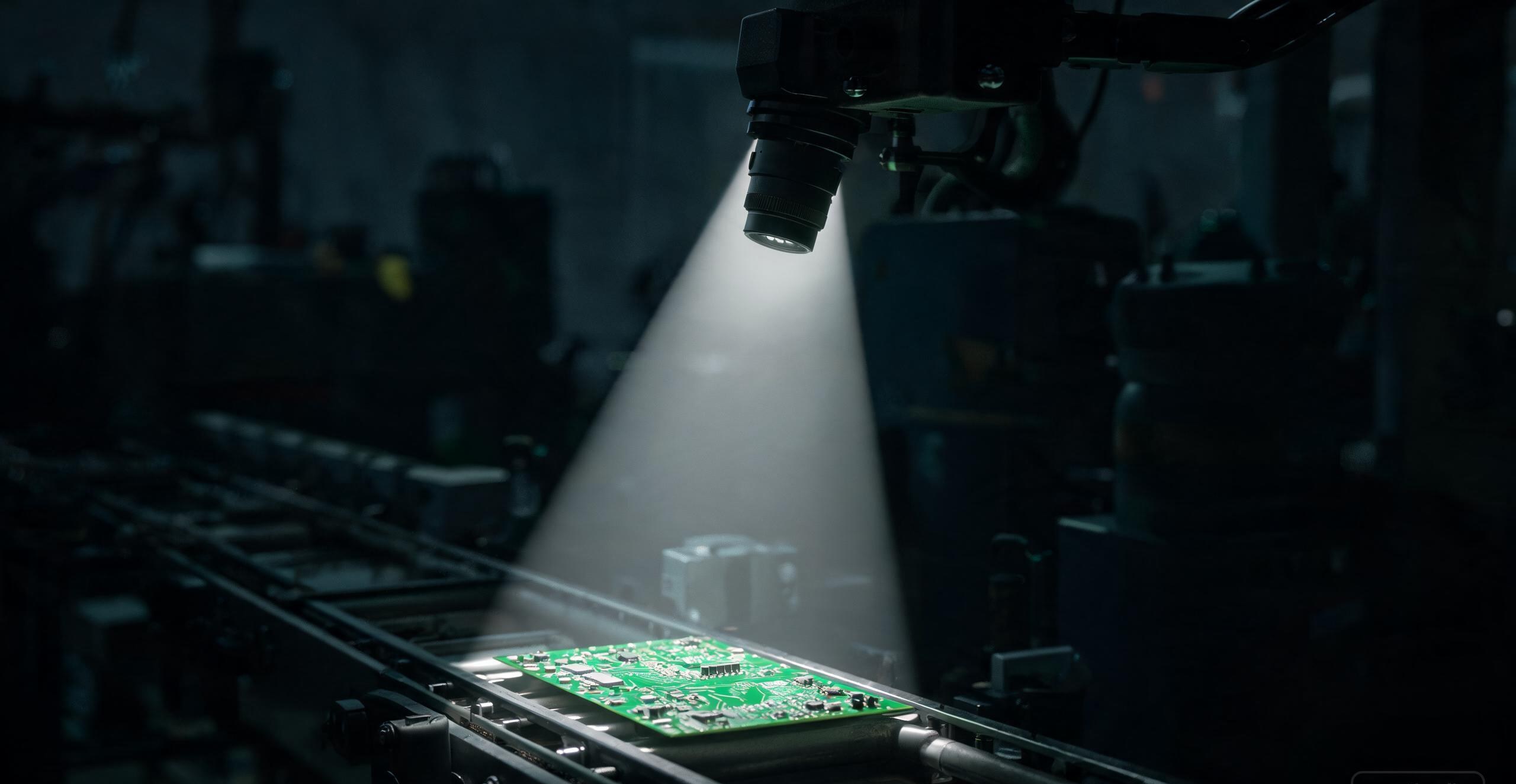
When product moves faster than a camera shutter can freeze, continuous lighting produces blur that no software can fully recover. This project shows how pulsed LED strobe illumination — 15-microsecond flashes overdriven to 8× rated current — made reliable high-speed inspection possible at 60,000 units per hour.
Application Background
A beverage canning plant running two high-speed lines needed 100% surface inspection of can ends and closures — checking for dents, coating defects, and misaligned seams before palletizing. The vision integrator’s first build used continuous LED area lights with a global-shutter camera, and it failed in a predictable way:
- At 3.2 m/s line speed, even a 1 ms camera exposure smears the image by 3.2 mm — defect features under 0.3 mm simply vanish into motion blur
- Shortening the camera exposure to 20 µs required a continuous light intensity the fixtures could not deliver without unacceptable heat and glare on the line
- Line-speed variation between product changeovers kept changing the effective blur, forcing constant re-tuning
Manual sampling caught only a fraction of the defects; customer complaints traced to coating micro-cracks were trending upward.
Engineering Challenge
The physics of the problem pointed to strobed illumination — putting the light energy into the exposure window instead of running it continuously:
- To freeze 3.2 m/s motion below 0.1 mm of blur, the effective exposure had to be under 31 µs; the design target was a 15 µs pulse
- Delivering enough photons in 15 µs demands overdriving the LEDs to 6–8× their continuous current rating — safe only because the junction’s thermal time constant is orders of magnitude longer than the pulse
- The strobe controller had to synchronize to the camera’s exposure output with < 1 µs jitter, and re-arm at the encoder-triggered inspection rate
- Pulse wavelength had to suppress specular glare from polished aluminum ends while keeping coating defects visible
Solution & Key Components
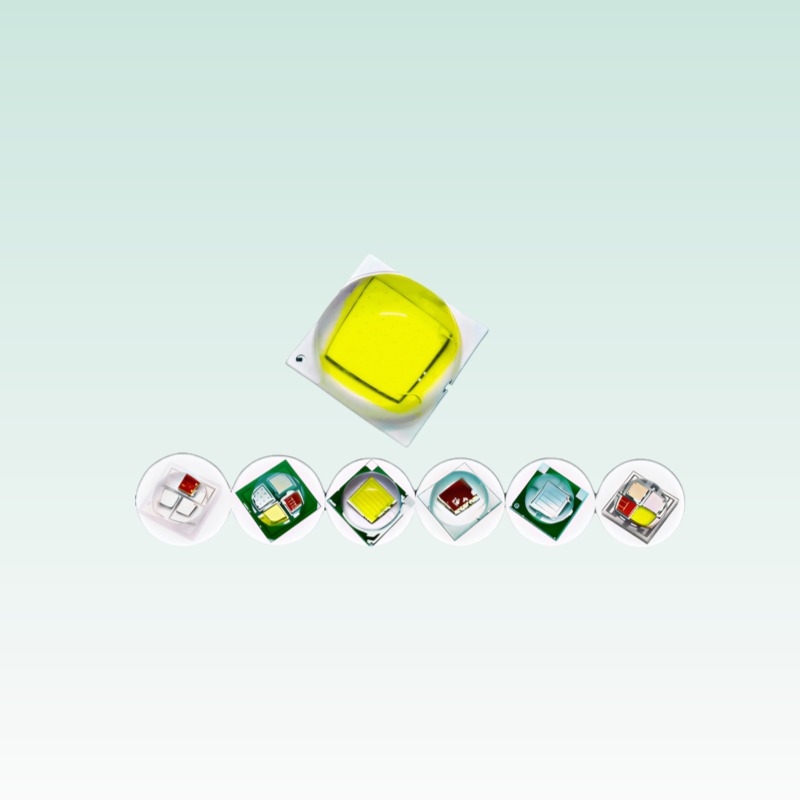
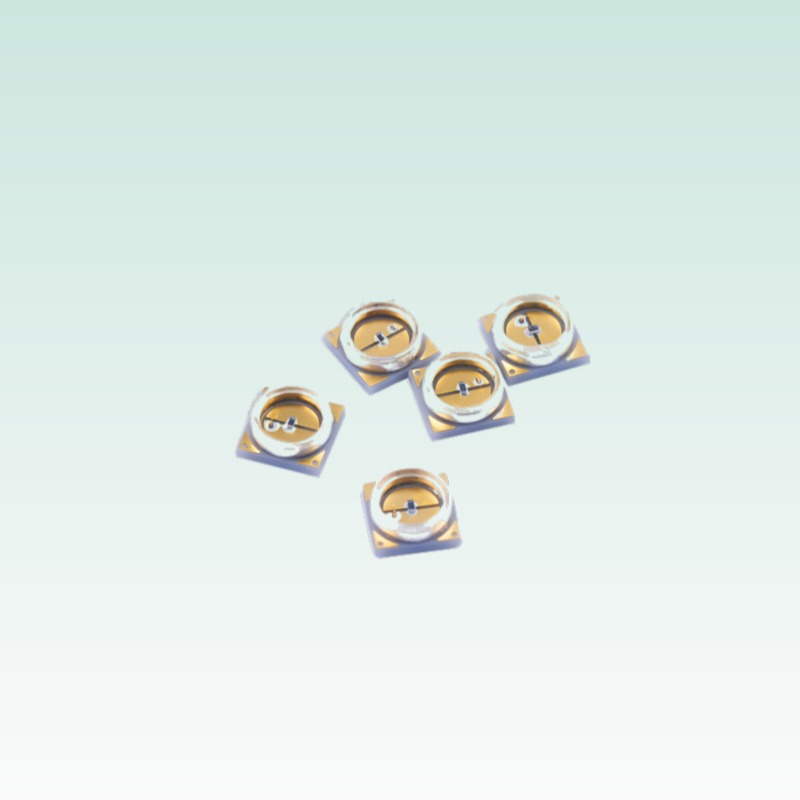
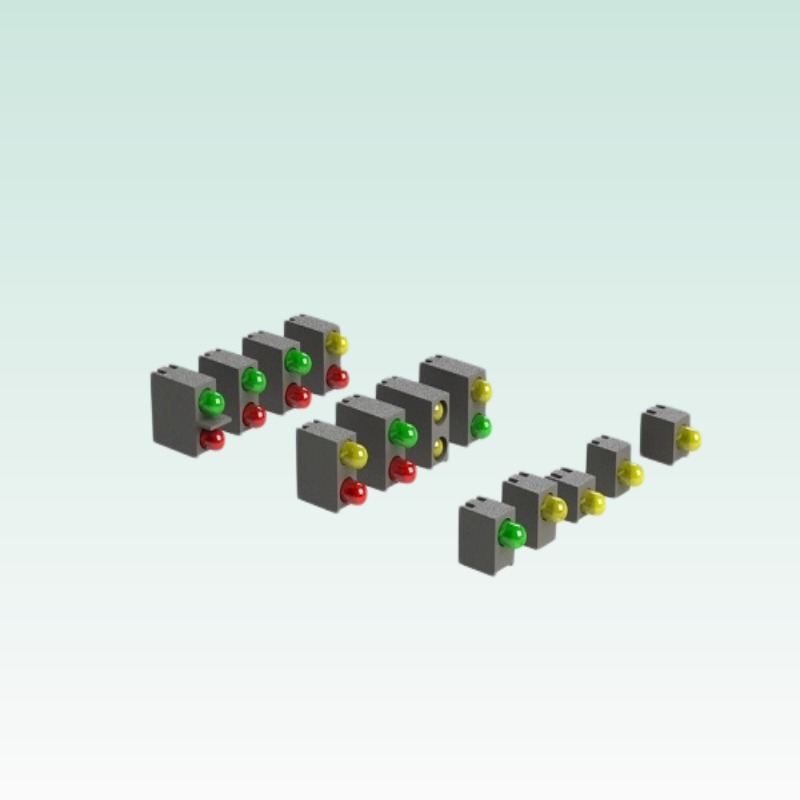
Queendom supplied strobe-ready illumination modules built on the 3535 high-radiance platform, validated for pulsed overdrive duty:
| Parameter | Value | Design Note |
|---|---|---|
| Pulse width | 15 µs (programmable 5–100 µs) | Freezes 3.2 m/s to 0.06 mm blur |
| Peak drive current | 8× continuous rating | Junction thermal time constant ≫ pulse width |
| Trigger synchronization | < 1 µs jitter, opto-isolated TTL | Direct wiring to camera exposure-out |
| Wavelength options | 660 nm red / 470 nm blue / white / 850 nm IR | Red + diffuser tames specular metal glare |
| Duty cycle protection | Hardware interlock, max 2% duty | Prevents overdrive abuse during setup |
| Service lifetime | 50,000 h (L70) at rated pulse duty | Validated by pulsed-life qualification |
Integration notes for machine builders: the modules accept the camera’s exposure-sync signal directly, so no separate timing controller is needed on simple lines; an encoder input is available for distance-triggered firing on variable-speed conveyors. IR versions let inspection run without visible distraction for line operators.
Results
After commissioning, the inspection station detected coating micro-cracks as small as 0.15 mm at full production speed, and the vision recipe stayed stable across product changeovers because blur no longer depended on line speed. The plant retired its manual sampling station.
Recommended Products
Frequently Asked Questions
Why not just use a faster camera shutter instead of strobing?
Short camera exposures need enormous continuous irradiance to keep the image bright — the light fixtures run hot, waste energy, and create glare. Strobing concentrates the same photon budget into the exposure window, so average power and heat stay low while peak brightness is 8× higher.
Does 8× overdrive shorten LED life?
Not when the pulse is short relative to the junction’s thermal time constant. A 15 µs pulse ends long before the junction can heat to its limit, and the 2% duty-cycle interlock keeps average power inside the package’s rating. Pulsed-life testing confirms the same L70 curve as continuous operation.
Which wavelength works best on shiny metal surfaces?
660 nm red behind a diffuser reduces the specular hot spots that wash out defect contrast on polished aluminum. Blue improves contrast on copper and some coatings, and 850 nm infrared versions allow inspection without any visible light on the line.