
 English
 Afrikaans
 Albanian
 Amharic
 Arabic
 Armenian
 Azerbaijani
 Basque
 Belarusian
 Bengali
 Bosnian
 Bulgarian
 Catalan
 Cebuano
 Chichewa
 Corsican
 Croatian
 Czech
Czech Danish
 Dutch
Dutch Esperanto
 Estonian
 Filipino
 Finnish
 French
 Frisian
 Galician
 Georgian
 German
 Greek
Greek Gujarati
 Haitian Creole
 Hausa
Hausa Hawaiian
 Hebrew
 Hindi
Hindi Hmong
Hmong Hungarian
 Icelandic
 Igbo
Igbo Indonesian
 Irish
Irish Italian
 Japanese
 Javanese
 Kannada
 Kazakh
 Khmer
Khmer Korean
 Kurdish (Kurmanji)
 Kyrgyz
 Lao
Lao Latin
Latin Latvian
 Lithuanian
 Luxembourgish
 Macedonian
 Malagasy
 Malay
Malay Malayalam
 Maltese
 Maori
Maori Marathi
 Mongolian
 Myanmar (Burmese)
 Nepali
 Norwegian
 Pashto
 Persian
 Polish
 Portuguese
 Punjabi
 Romanian
 Russian
 Samoan
 Scottish Gaelic
 Serbian
 Sesotho
 Shona
Shona Sindhi
 Sinhala
 Slovak
 Slovenian
 Somali
 Spanish
 Sudanese
 Swahili
 Swedish
 Tajik
Tajik Tamil
Tamil Telugu
 Thai
Thai Turkish
 Ukrainian
 Urdu
Urdu Uzbek
Uzbek Vietnamese
 Welsh
Welsh Xhosa
Xhosa Yiddish
 Yoruba
 Zulu
Zulu
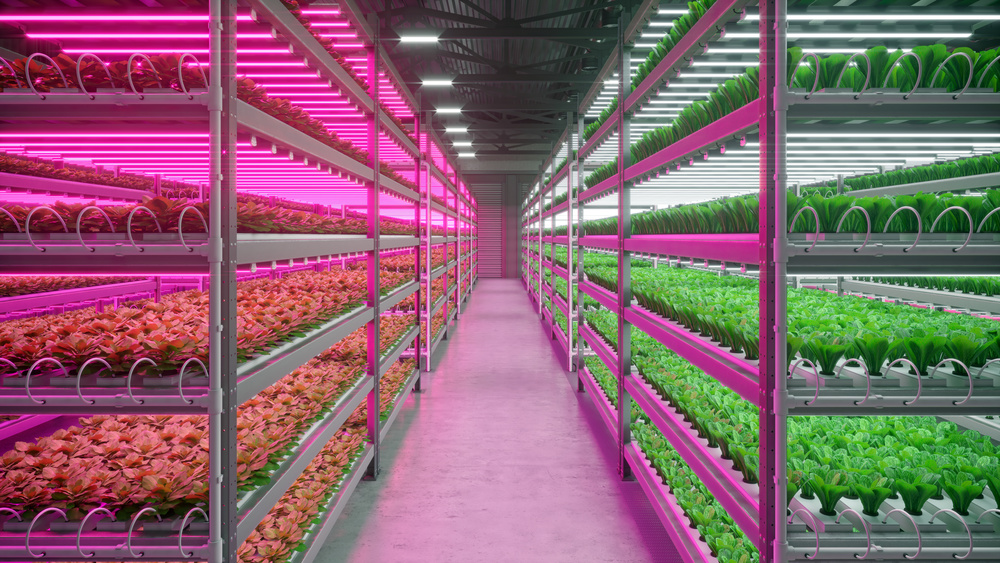



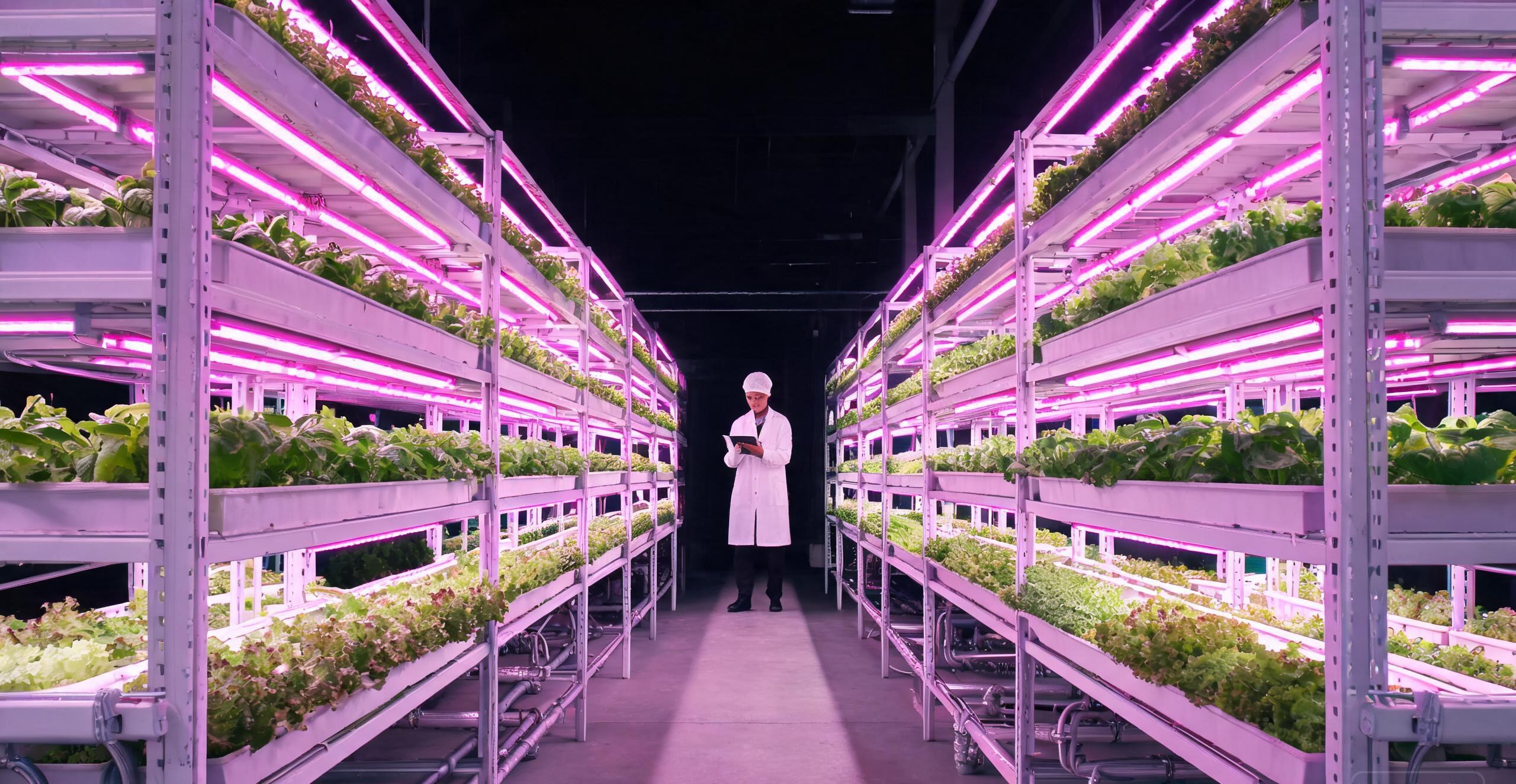
In a vertical farm, light is the only climate the crop ever knows — there is no sun to fall back on. This project shows how linear LED grow lighting on six-tier hydroponic racks delivered a stable daily light integral with 87% tier-to-tier uniformity, lifting yield per rack by 28% while cutting lighting energy by 40%.
Application Background
A vertical farming operator growing butterhead lettuce and Genovese basil on eighteen six-tier hydroponic racks was being held back by its T5HO fluorescent retrofit:
- Energy burn — T5HO fluorescent delivers roughly 1.0 µmol/J of plant-visible efficacy, so hitting target light levels meant a lighting power bill that dominated the farm’s operating cost
- Heat the crop never ordered — every extra lighting watt became HVAC load, and the compact farm’s climate system was running near capacity just to remove lamp heat
- Uniformity gaps — the fluorescent layout left tier edges 30% darker than tier centers, so edge trays matured days behind and harvest planning carried a buffer that wasted rack-days
- Lamp replacement treadmill — hundreds of tube positions on a 12-month replacement cycle, with lumen drift between changes quietly eroding the DLI the crop actually received
- No crop steering — a fixed spectrum and no dimming meant germination, growth, and finishing phases all ran under the same light
Engineering Challenge
Vertical farm lighting is a dense optimization problem — every photon costs money twice, once at the meter and once at the HVAC coil:
- DLI discipline: leafy greens thrive at 12–17 mol/m²/day; the design had to hold the target DLI day after day, not just on commissioning day
- PPFD and photoperiod work as a pair — 250 µmol/m²/s held for 16 hours delivers ≈ 14.4 mol/m²/day, right in the lettuce sweet spot, with dimming headroom for basil’s quality spectrum
- Tier uniformity ≥ 85% so every tray on every tier reaches harvest in the same window — linear bars spaced across the tier width, not a single strip down the center
- Efficacy: LED bars at 2.6 µmol/J generate the same DLI for well under half the watts of the T5HO baseline, and every avoided watt is also avoided cooling
- Humidity survival: grow rooms run 70–85% RH with condensation events, so sealed IP54+ construction is a reliability requirement, not a nice-to-have
- Phase control: germination wants lower intensity, growth wants full PPFD — dimmable drivers let one fixture family serve every phase
Solution & Key Components
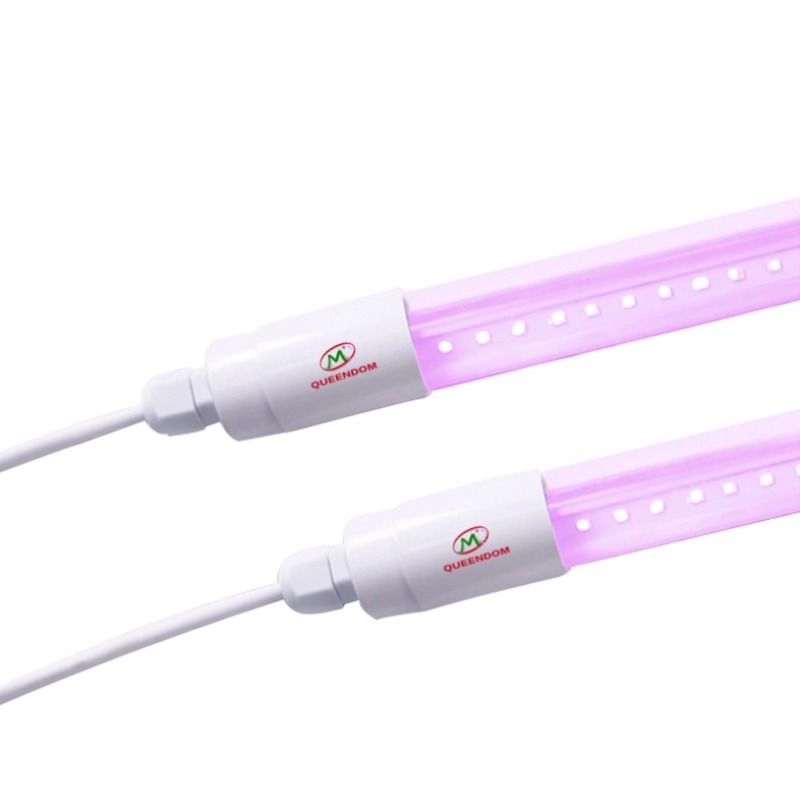
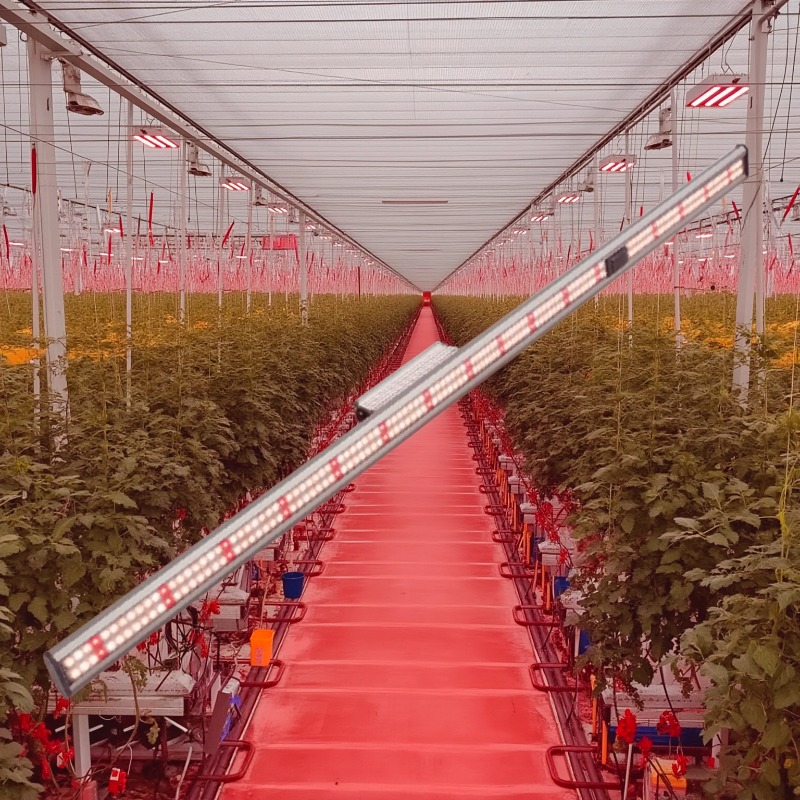
Queendom supplied dimmable linear LED grow bars in a two-bar-per-tier layout, with a full-spectrum panel option for the basil quality trials:
| Parameter | Value | Design Note |
|---|---|---|
| Spectrum | Red-blue grow spectrum, R:B ≈ 4:1 | Efficient photosynthesis; full-spectrum option for basil quality |
| PPFD at canopy | 250 µmol/m²/s, dimmable | Germination ~100 → growth phase 250 |
| Photoperiod | 16 h/day | DLI ≈ 14.4 mol/m²/day — steady in the leafy-greens band |
| Tier uniformity | > 85% across each tier | Two-bar layout spreads light to tray edges |
| Fixture efficacy | 2.6 µmol/J | vs ≈ 1.0 µmol/J for the T5HO baseline |
| Rating | Sealed IP54 bar construction | Survives 70–85% RH and condensation events |
| Service life | 50,000 h to L90 | Ends the 12-month tube replacement cycle |
Integration notes for growers: bars mount to the rack frame above each tier with tool-free clips, dimming runs from the same room controller that schedules irrigation and climate, and spectrum strategy differs by crop family — the approach we documented for specialty species in the mushroom farm LED spectrum case applies the same phase-timing logic. Greenhouse growers blending LED with daylight can see the supplemental approach in our greenhouse tomato grow light case.
Results
With every tray on a tier now reaching its DLI in the same window, harvest planning runs on whole-tier batches instead of staggered edge trims, and the buffer rack-days came out of the schedule entirely. The climate system, freed from lamp heat, now spends its capacity where the crop actually wants it — on transpiration control during the finishing phase.
Recommended Products
Frequently Asked Questions
What DLI do leafy greens actually need?
Most lettuce and salad greens perform best at 12–17 mol/m²/day; basil and other herbs sit in a similar band but respond to spectrum adjustments for aroma and color. What matters commercially is hitting your chosen DLI consistently — which is why we design around PPFD × photoperiod with dimming headroom, rather than a fixed full-power burn.
Why linear bars instead of panels on multi-tier racks?
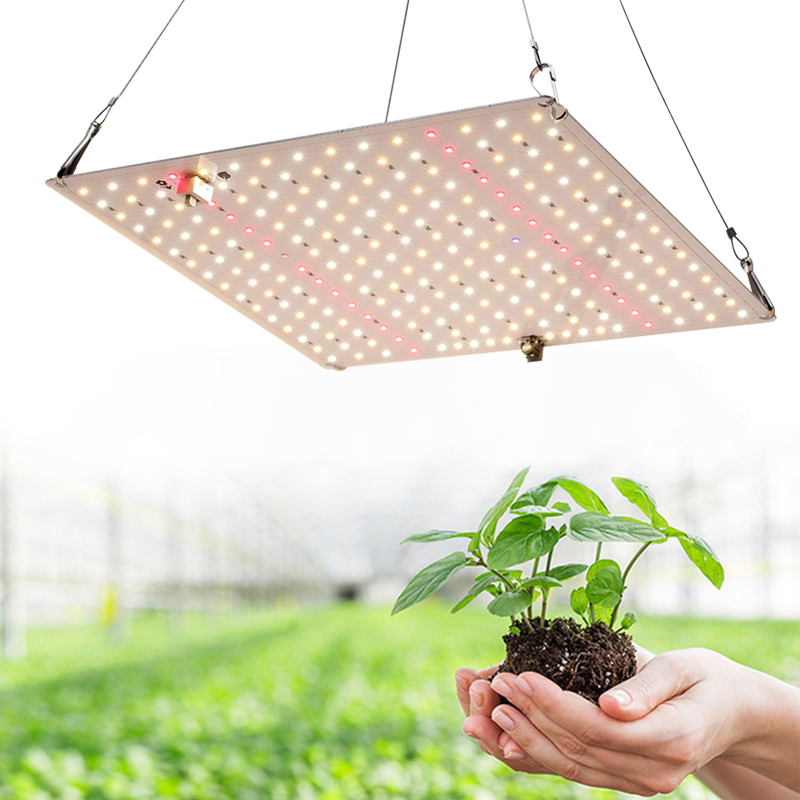
Bars give you spacing control. Two or three bars per tier let the layout push light to tray edges for uniformity, keep airflow moving between fixtures, and match rack widths exactly. Panels earn their place over benches, in deep canopies, or where a single wide source per tier is practical — many farms end up with both, bars on production tiers and panels for propagation.
Red-blue spectrum or full-spectrum white?
Red-blue delivers the most photons per watt for pure biomass, which is why production lettuce tiers run it. Full-spectrum white costs a little efficacy but renders crops naturally for grading and inspection, and supports species where spectrum quality drives secondary compounds — flavor in basil, coloration in specialty greens. Phase-based switching between the two is the pattern we recommend for mixed-species farms.
Do LED grow lights eliminate heat problems?
No light source is heat-free, but the physics favor LEDs twice: at 2.6 µmol/J versus 1.0 for T5HO fluorescent, the same crop light costs under half the watts, and the heat that remains leaves through the bar’s rear surface above the canopy instead of radiating down onto the crop. In this project the climate system’s freed capacity became the finishing-phase control it was missing.