
 English
 Afrikaans
 Albanian
 Amharic
 Arabic
 Armenian
 Azerbaijani
 Basque
 Belarusian
 Bengali
 Bosnian
 Bulgarian
 Catalan
 Cebuano
 Chichewa
 Corsican
 Croatian
 Czech
Czech Danish
 Dutch
Dutch Esperanto
 Estonian
 Filipino
 Finnish
 French
 Frisian
 Galician
 Georgian
 German
 Greek
Greek Gujarati
 Haitian Creole
 Hausa
Hausa Hawaiian
 Hebrew
 Hindi
Hindi Hmong
Hmong Hungarian
 Icelandic
 Igbo
Igbo Indonesian
 Irish
Irish Italian
 Japanese
 Javanese
 Kannada
 Kazakh
 Khmer
Khmer Korean
 Kurdish (Kurmanji)
 Kyrgyz
 Lao
Lao Latin
Latin Latvian
 Lithuanian
 Luxembourgish
 Macedonian
 Malagasy
 Malay
Malay Malayalam
 Maltese
 Maori
Maori Marathi
 Mongolian
 Myanmar (Burmese)
 Nepali
 Norwegian
 Pashto
 Persian
 Polish
 Portuguese
 Punjabi
 Romanian
 Russian
 Samoan
 Scottish Gaelic
 Serbian
 Sesotho
 Shona
Shona Sindhi
 Sinhala
 Slovak
 Slovenian
 Somali
 Spanish
 Sudanese
 Swahili
 Swedish
 Tajik
Tajik Tamil
Tamil Telugu
 Thai
Thai Turkish
 Ukrainian
 Urdu
Urdu Uzbek
Uzbek Vietnamese
 Welsh
Welsh Xhosa
Xhosa Yiddish
 Yoruba
 Zulu
Zulu





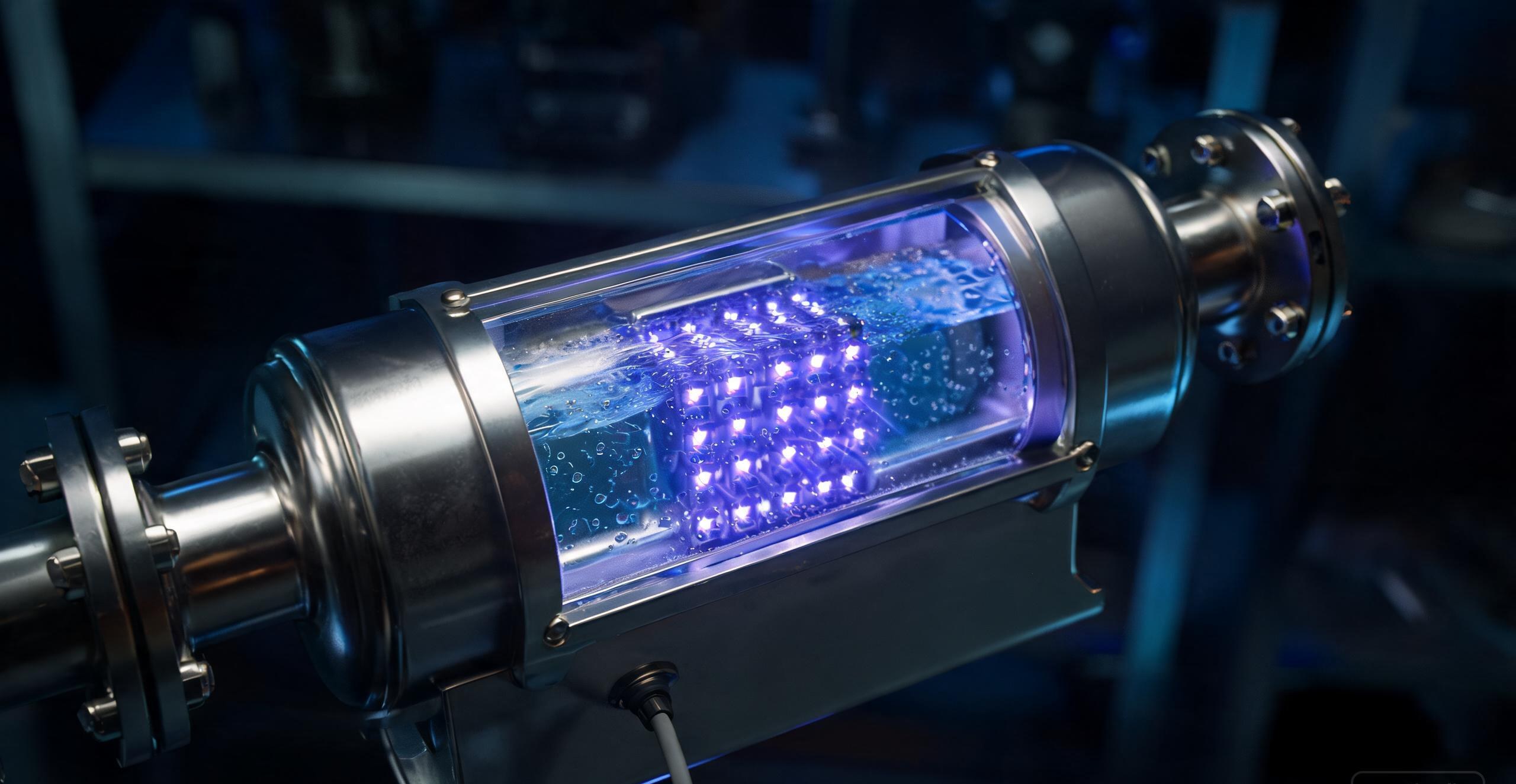
Germicidal UV has cleaned water for decades — but the mercury lamp that delivered it brought warm-up delays, fragile quartz, and a hazardous-material disposal stream along for the ride. This project shows how 275nm UVC LED modules in a compact flow-through reactor achieved 4-log E. coli inactivation for a point-of-use drinking water skid, with zero mercury and zero warm-up.
Application Background
A water treatment OEM building point-of-use drinking water skids for institutional kitchens and commercial buildings wanted to drop the low-pressure mercury lamps at the heart of its disinfection stage:
- Warm-up gaps — mercury lamps need minutes to reach germicidal output, so every cold start treated water at less than rated dose, forcing the control system into flow-delay logic that users perceived as “slow water”
- Fragility — quartz sleeves and lamp glass turned routine shipping and service calls into breakage incidents with mercury cleanup procedures attached
- Disposal burden — spent lamps are hazardous waste in the OEM’s key markets, adding reverse-logistics cost to every service contract
- Duty-cycle mismatch — POU systems run intermittently all day, a pattern that ages mercury lamps faster than their rated hours suggest, while offering no benefit from the lamp’s ability to run continuously
- Design ceiling — high-voltage ballasts and lamp form factors set a floor on how compact and how battery-friendly the skid could be
Engineering Challenge
UVC LED water treatment succeeds or fails on reactor physics and thermal discipline:
- Wavelength advantage — 275nm sits close to the DNA/RNA absorption peak, so each photon inactivates efficiently; system design must convert that per-photon effectiveness into delivered dose
- Dose discipline — the reactor must deliver roughly 10–20 mJ/cm² at 275nm for 4-log E. coli inactivation, sustained at the rated 12 L/min flow, not only in a laboratory beaker
- UVT reality — water absorbs germicidal UV; the design target assumed UV transmittance ≥ 90% at the design wavelength, with a UV sensor to flag conditions outside the envelope instead of silently under-dosing
- Dwell geometry — chamber volume, flow path, and emitter placement must guarantee that every water parcel sees the dose, with no short-circuit paths from inlet to outlet
- Thermal management — UVC LEDs convert only a small fraction of input power to germicidal light; the rest must exit through the heatsink, with junction temperature held well below ratings or lifetime collapses
- Interlock logic — emitters run only when flow is present, and a UV sensor verifies output, so the system fails safe rather than passing untreated water
Solution & Key Components
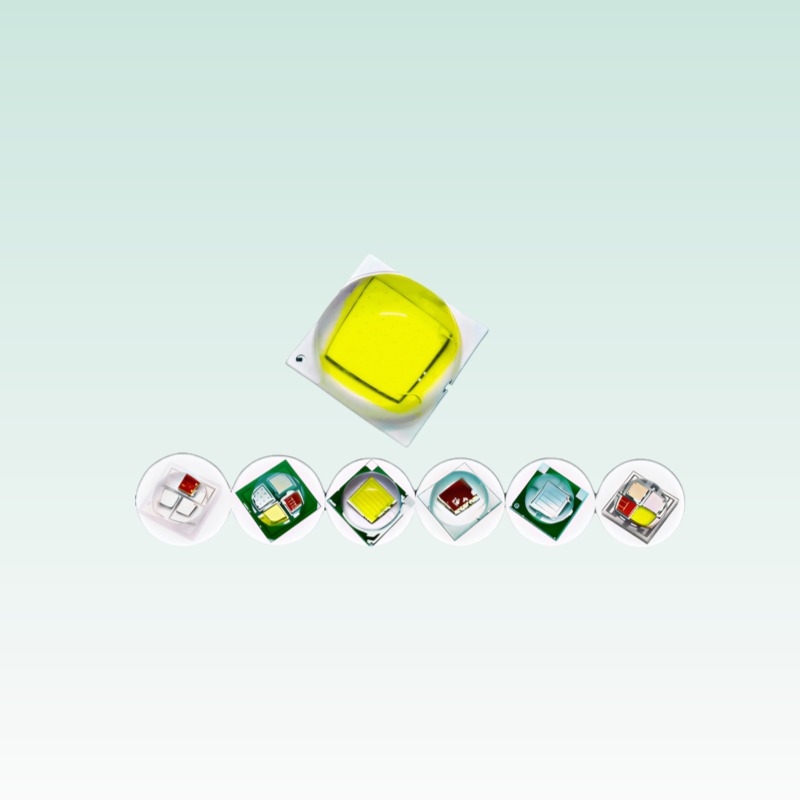
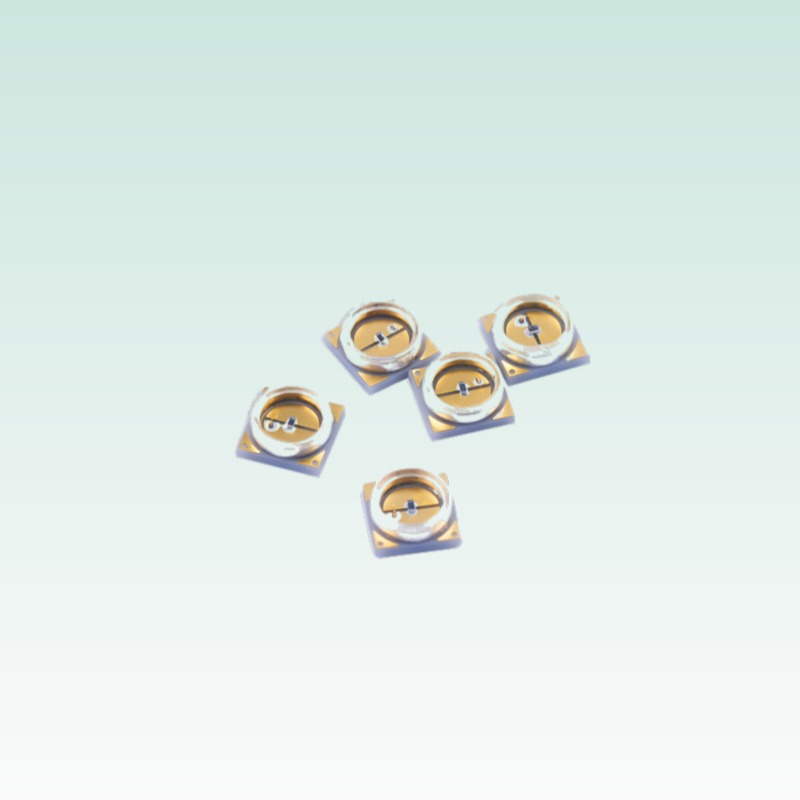
Queendom supplied 275nm UVC LED modules built on 3535 UVC emitters, integrated into a stainless flow-through reactor with sensor feedback:
| Parameter | Value | Design Note |
|---|---|---|
| Wavelength | 275 nm UVC | Near the DNA/RNA absorption peak — high germicidal effectiveness per photon |
| Delivered dose | ≥ 15 mJ/cm² at rated flow | 4-log E. coli inactivation with margin |
| Rated flow | 12 L/min | Chamber dwell geometry sized to dose |
| Water quality envelope | Design UVT ≥ 90% | UV sensor flags out-of-envelope conditions |
| Thermal design | Aluminum heatsink, junction below 60 °C | Protects UVC LED lifetime under continuous flow |
| Control | Instant on/off · flow-switch interlock · UV monitor | No treatment without flow; output verified, not assumed |
| Rated life | 10,000 h with end-of-life dose margin | Gradual, predictable degradation — no sudden lamp failure |
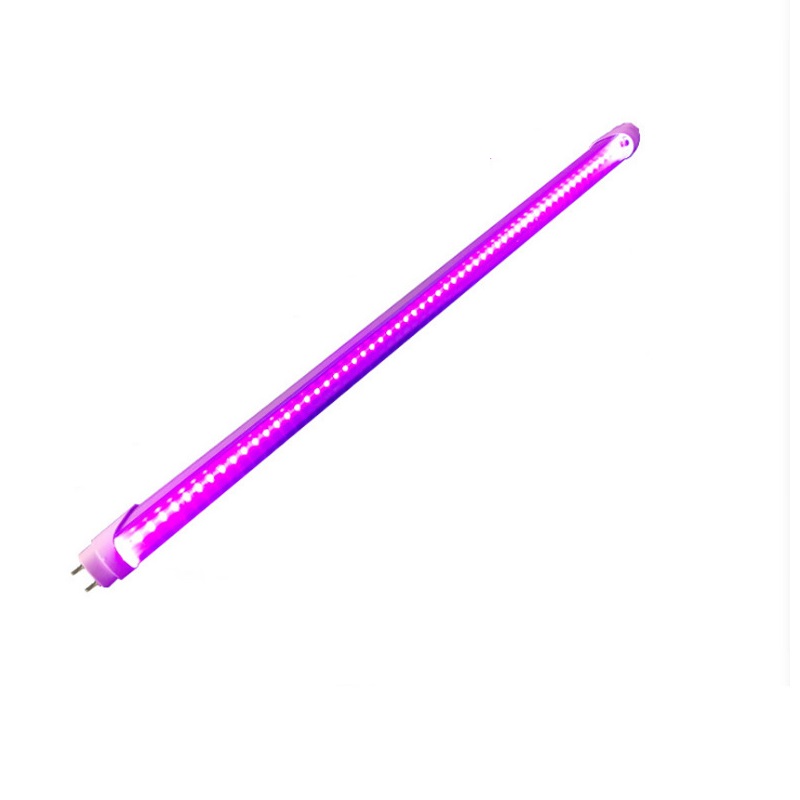
Integration notes for OEMs: the module’s DC drive and instant response let the skid treat water the moment flow starts, cutting the cold-start delay entirely, and the 3535 UVC emitter family behind the reactor is documented on the 3535 UV LEDs product page. For surface and air disinfection variants built on the same emitter platform, the T8 UV LED tubes line covers flow-through and duct installations.
Results
The OEM retired its warm-up flow-delay logic, shipped the skid into markets where mercury devices face regulatory friction, and turned the service model from lamp replacement into a scheduled emitter module refresh tracked by the UV monitor. Validation ran against challenge organisms at an accredited water lab before the design froze.
Recommended Products

Frequently Asked Questions
Is 275nm UVC as effective as the 254nm from mercury lamps?
Per unit of delivered dose, yes — in many challenge studies 275nm performs equal to or better than 254nm against common waterborne bacteria, because it sits close to peak DNA/RNA absorption. What matters is the system: the dose your reactor actually delivers at your flow rate and water quality. That is why we validate with challenge organisms rather than quoting wavelength alone.
What UV dose does 4-log E. coli inactivation need?
At 275nm, roughly 10–20 mJ/cm² covers 99.99% reduction of E. coli in typical drinking water conditions; protozoa and viruses sit higher on the dose scale. Reactors should be sized with margin above the target organism’s requirement and monitored so degradation never silently eats the margin.
What happens when water UV transmittance drops?
Dose falls with transmittance — turbid or colored water shields organisms from the light. Good practice is a prefilter ahead of the reactor and a UV sensor in the chamber: the sensor detects when conditions leave the validated envelope and the system alerts rather than pretending to treat. Designing for a UVT floor of 90% keeps the envelope wide.
How long do UVC LEDs actually last in water treatment?
UVC LED output degrades gradually with operating hours and junction temperature — a well-cooled module holds useful germicidal output past 10,000 hours, with the curve predictable enough to design in end-of-life margin. The practical difference from a mercury lamp is the failure mode: LEDs dim on schedule, while a lamp can quit without warning, and a UV-sensored system sees either one coming.