
 English
 Afrikaans
 Albanian
 Amharic
 Arabic
 Armenian
 Azerbaijani
 Basque
 Belarusian
 Bengali
 Bosnian
 Bulgarian
 Catalan
 Cebuano
 Chichewa
 Corsican
 Croatian
 Czech
Czech Danish
 Dutch
Dutch Esperanto
 Estonian
 Filipino
 Finnish
 French
 Frisian
 Galician
 Georgian
 German
 Greek
Greek Gujarati
 Haitian Creole
 Hausa
Hausa Hawaiian
 Hebrew
 Hindi
Hindi Hmong
Hmong Hungarian
 Icelandic
 Igbo
Igbo Indonesian
 Irish
Irish Italian
 Japanese
 Javanese
 Kannada
 Kazakh
 Khmer
Khmer Korean
 Kurdish (Kurmanji)
 Kyrgyz
 Lao
Lao Latin
Latin Latvian
 Lithuanian
 Luxembourgish
 Macedonian
 Malagasy
 Malay
Malay Malayalam
 Maltese
 Maori
Maori Marathi
 Mongolian
 Myanmar (Burmese)
 Nepali
 Norwegian
 Pashto
 Persian
 Polish
 Portuguese
 Punjabi
 Romanian
 Russian
 Samoan
 Scottish Gaelic
 Serbian
 Sesotho
 Shona
Shona Sindhi
 Sinhala
 Slovak
 Slovenian
 Somali
 Spanish
 Sudanese
 Swahili
 Swedish
 Tajik
Tajik Tamil
Tamil Telugu
 Thai
Thai Turkish
 Ukrainian
 Urdu
Urdu Uzbek
Uzbek Vietnamese
 Welsh
Welsh Xhosa
Xhosa Yiddish
 Yoruba
 Zulu
Zulu


Transportation Lighting Solutions
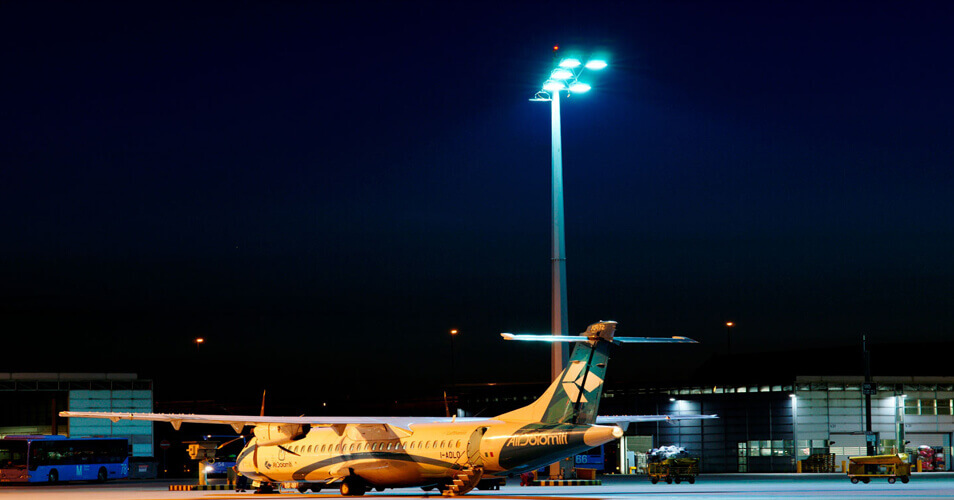
Transportation infrastructure lighting, including tunnels, metro stations, airports, and rail platforms, must deliver safe, uniform illumination in environments with vibration, dust, humidity, and 24/7 operation. Key challenges include anti-glare control for driver safety in tunnels, vandal resistance in public transit areas, and maintaining visibility during emergency power transitions. Tunnel lighting requires asymmetrical light distribution and threshold/transition zone luminance control per CIE 88.
Queendom Solution
Queendom provides Transportation Lighting solutions with TL-IP65-AntiGlare series featuring asymmetrical optics for tunnel threshold/transition zones, IP65 vandal-resistant housings (IK10), and 0-10V/DALI dimming for adaptive lighting control. Emergency battery backup ensures 3-hour minimum illumination during power failures.
Key Advantages:
- Tunnel optics: Asymmetrical CIE 88 compliant distribution
- IP65 + IK10: Vandal and moisture resistant
- Emergency backup: 3-hour battery (LiFePO4)
- Anti-glare: UGR<22 for driver safety
- Vibration resistant: IEC 60068-2-6 (5-500Hz, 2g)

Product Specifications
| Parameter | Specification |
|---|---|
| Application | Tunnel / Metro / Airport / Railway Platform |
| Power | 40W – 240W |
| Luminous Efficacy | ≥ 150 lm/W |
| CCT | 4,000K / 5,000K / 6,000K |
| CRI | ≥ 70 |
| UGR | < 22 (anti-glare) |
| IP Rating | IP65 / IK10 (vandal resistant) |
| Vibration | IEC 60068-2-6 (5-500Hz, 2g) |
| Emergency | 3-hour battery backup (LiFePO4) |
| Dimming | 0-10V / DALI-2 / astronomical timer |
| Certifications | CE / RoHS / IP65 / IK10 / CIE 88 (tunnel) |
Case Study Direction
Metro station lighting renovation: IP65 anti-glare luminaires with emergency backup, improving safety and visual clarity for passengers, with adaptive dimming reducing daytime energy use by 40%.
Related Links
Product: Outdoor Lighting Products
Solutions: LEDs Solutions | Lighting Solutions
Tunnel Lighting: Luminance Zones and Driver Design
Professional road-tunnel lighting follows the CIE 88 zone model — threshold, transition, interior, and exit zones — where each zone carries distinct luminance targets set by the approaching daylight level and design speed. Our LED tunnel luminaires support staged dimming per zone, holding road-surface uniformity (U₀) above 0.4 while cutting energy consumption up to 60% compared with legacy high-pressure sodium systems. Wide-range AC86-265V drivers absorb the grid fluctuations typical of remote portal substations, and integrated 10 kV surge protection guards against switching transients from heavy traction loads.
- Threshold zone: 3–10 cd/m² depending on approach speed (60–100 km/h design speed)
- Transition zone: stepped luminance reduction following CIE adaptation curves
- Interior zone: 1.5–3 cd/m² for continuous 24/7 operation
- IP66 die-cast housings with 316 stainless fasteners for salt-spray portal environments
Metro and Rail Platform Lighting
Platform lighting must balance passenger comfort, CCTV image quality, and maintenance access in confined ceiling voids. A typical metro retrofit achieves 200 lux average platform illuminance with UGR below 19 and a maintenance factor of 0.85 at 50,000 hours. Anti-vibration mounts rated 5–500 Hz keep optical alignment stable under passing-train loads. Our Metro Station Lighting case study documents a measured deployment with before/after photometric data.
Port, Airport and Checkpoint Lighting
Coastal and airside installations add salt fog, jet-fuel vapor, and 24/7 security-camera coverage to the standard vibration profile. Marine-grade coatings tested to ISO 9227 (720-hour neutral salt spray) and upward light output ratios below 5% support dark-sky and wildlife-sensitive shoreline projects. See the Port and Marine Lighting case study for quay-crane and apron illuminance results, and the explosion-proof coal mine lighting case for ATEX-zone equivalents.
Selection Checklist for Transportation Projects
| Criterion | Minimum Spec | Why It Matters |
|---|---|---|
| Ingress / impact protection | IP66 + IK10 | Wash-down tunnels, platform-edge impact |
| Driver input range | AC86-265V, 10 kV surge | Remote substations, traction transients |
| Photometric life | L90B10 at 50,000 h | Portal access requires relamping trucks and lane closures |
| CCT and color rendering | 5000–5700 K, CRI ≥ 70 | CCTV color accuracy, driver alertness |
| Controls | 1-10V / DALI-2 staged dimming | Daylight-linked zone dimming |
| Operating temperature | −30 °C to +50 °C | Cold portals, hot machine rooms |
Frequently Asked Questions
What luminance level does a road tunnel threshold zone need?
For a 60–80 km/h design speed with bright approach daylight, plan 3–5 cd/m²; raise this to 8–10 cd/m² for 100 km/h highways. The value scales with the 20-degree stopping-distance luminance measured at the portal, per CIE 88.
Why specify AC86-265V drivers in tunnel lights?
Portal substations often sit at the end of long rural feeders where voltage sags and swells exceed the 220V ±10% band. An 86–265V input window keeps output current — and therefore luminance — stable, preventing the visible flicker recorded by enforcement cameras.
How often do LED tunnel luminaires need cleaning?
Plan a 12-month cycle in exhaust-heavy bores and 24 months in twin-bore fresh-air tunnels. The IP66 optical cover maintains a 0.85 maintenance factor between cleanings.