







The problem as it presented itself
The customer arrived with a working prototype and a production problem: the LEDs that passed the bench test were not the ones that survived the line. Nothing in the data was out of spec — the failures were spread across batches rather than concentrated in one lot, which ruled out a supplier problem and pointed at the process instead.
Three measurements separated the causes. First, forward voltage at a fixed low current across a sample of each batch, which showed whether the die set was consistent. Second, case temperature under the real drive condition, which showed whether the thermal path matched the assumption in the design. Third, the reflow profile logged on the line, which showed whether the assembly process stayed inside the qualified window.
The first two came back clean. The profile log showed the peak temperature sitting close enough to the limit that normal line-to-line variation pushed parts past it. This is the most common way a qualified component becomes an unqualified assembly, and it is invisible on the datasheet.
- Measure the process, not just the part. A component that meets its specification can still be assembled outside its qualification.
- Log the profile, do not assume it. Reflow profiles drift as boards and fixtures change.
- Look at failure distribution first. Failures spread across batches point at the process; failures concentrated in one batch point at the supply.
Once the profile was corrected and re-qualified, the field return rate dropped to the level the component datasheet predicts. The component never changed — only the process around it.
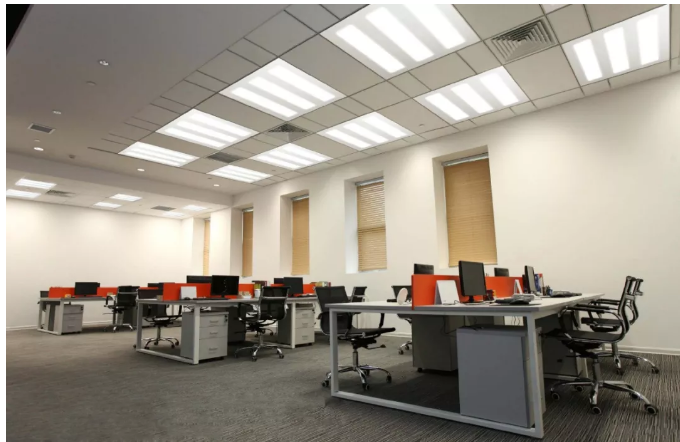
A 50,000 sq ft commercial office building required smart lighting with remote management, occupancy-based dimming, and daylight harvesting. Existing fluorescent fixtures consumed 40W each and required manual control.
Queendom Solution
Queendom deployed SMD-2835-ZB based smart panel lights with Zigbee 3.0 connectivity, integrated microwave motion sensors, and 0-10V dimming drivers. A central gateway managed 800+ fixtures across 4 floors.
Key Advantages:
- Zigbee 3.0 mesh: 800+ fixtures, self-healing network
- Occupancy sensing: Microwave + PIR dual-tech, 360 coverage
- Daylight harvesting: Photosensor-linked dimming
- Energy monitoring: Real-time per-fixture reporting
- 22% energy savings measured over 12-month period

Product Specifications
| Parameter | Specification |
|---|---|
| LED Package | SMD 2835-ZB (Zigbee-optimized) |
| Fixture Power | 36W / 48W (panel) |
| CRI | Ra80 |
| Dimming Range | 0.1% – 100% (flicker-free) |
| Protocol | Zigbee 3.0 (mesh) |
| Network Scale | 800+ fixtures per gateway |
| Energy Savings | 22% (measured, 12-month) |
| Certifications | CE / RoHS / Zigbee 3.0 |
Application Scenarios
Open Office Floor
200 fixtures, 25% energy savings
Conference Rooms
Scene-based control, 40% savings
Corridors
Motion-triggered, 55% savings
Case Direction
Smart office building: Zigbee-controlled luminaires with remote management, 22% energy savings through daylight harvesting and occupancy dimming.
Related Links
Solution: Smart Lighting LEDs Solutions
Product: SMD LED Products
Case Studies: PCBA LED Case | Street LED Lighting Case
Discover how Queendom LED solutions can transform your application.
Contact Us