
 English
 Afrikaans
 Albanian
 Amharic
 Arabic
 Armenian
 Azerbaijani
 Basque
 Belarusian
 Bengali
 Bosnian
 Bulgarian
 Catalan
 Cebuano
 Chichewa
 Corsican
 Croatian
 Czech
Czech Danish
 Dutch
Dutch Esperanto
 Estonian
 Filipino
 Finnish
 French
 Frisian
 Galician
 Georgian
 German
 Greek
Greek Gujarati
 Haitian Creole
 Hausa
Hausa Hawaiian
 Hebrew
 Hindi
Hindi Hmong
Hmong Hungarian
 Icelandic
 Igbo
Igbo Indonesian
 Irish
Irish Italian
 Japanese
 Javanese
 Kannada
 Kazakh
 Khmer
Khmer Korean
 Kurdish (Kurmanji)
 Kyrgyz
 Lao
Lao Latin
Latin Latvian
 Lithuanian
 Luxembourgish
 Macedonian
 Malagasy
 Malay
Malay Malayalam
 Maltese
 Maori
Maori Marathi
 Mongolian
 Myanmar (Burmese)
 Nepali
 Norwegian
 Pashto
 Persian
 Polish
 Portuguese
 Punjabi
 Romanian
 Russian
 Samoan
 Scottish Gaelic
 Serbian
 Sesotho
 Shona
Shona Sindhi
 Sinhala
 Slovak
 Slovenian
 Somali
 Spanish
 Sudanese
 Swahili
 Swedish
 Tajik
Tajik Tamil
Tamil Telugu
 Thai
Thai Turkish
 Ukrainian
 Urdu
Urdu Uzbek
Uzbek Vietnamese
 Welsh
Welsh Xhosa
Xhosa Yiddish
 Yoruba
 Zulu
Zulu

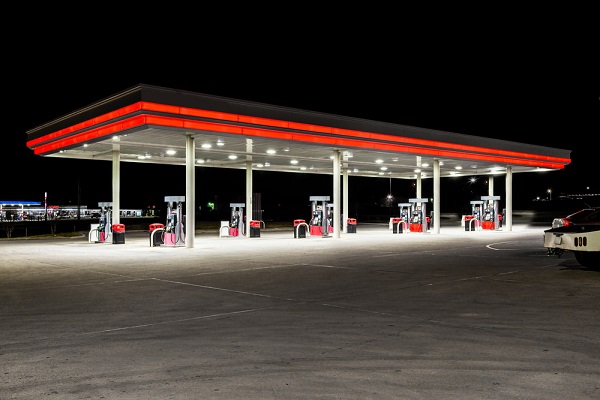




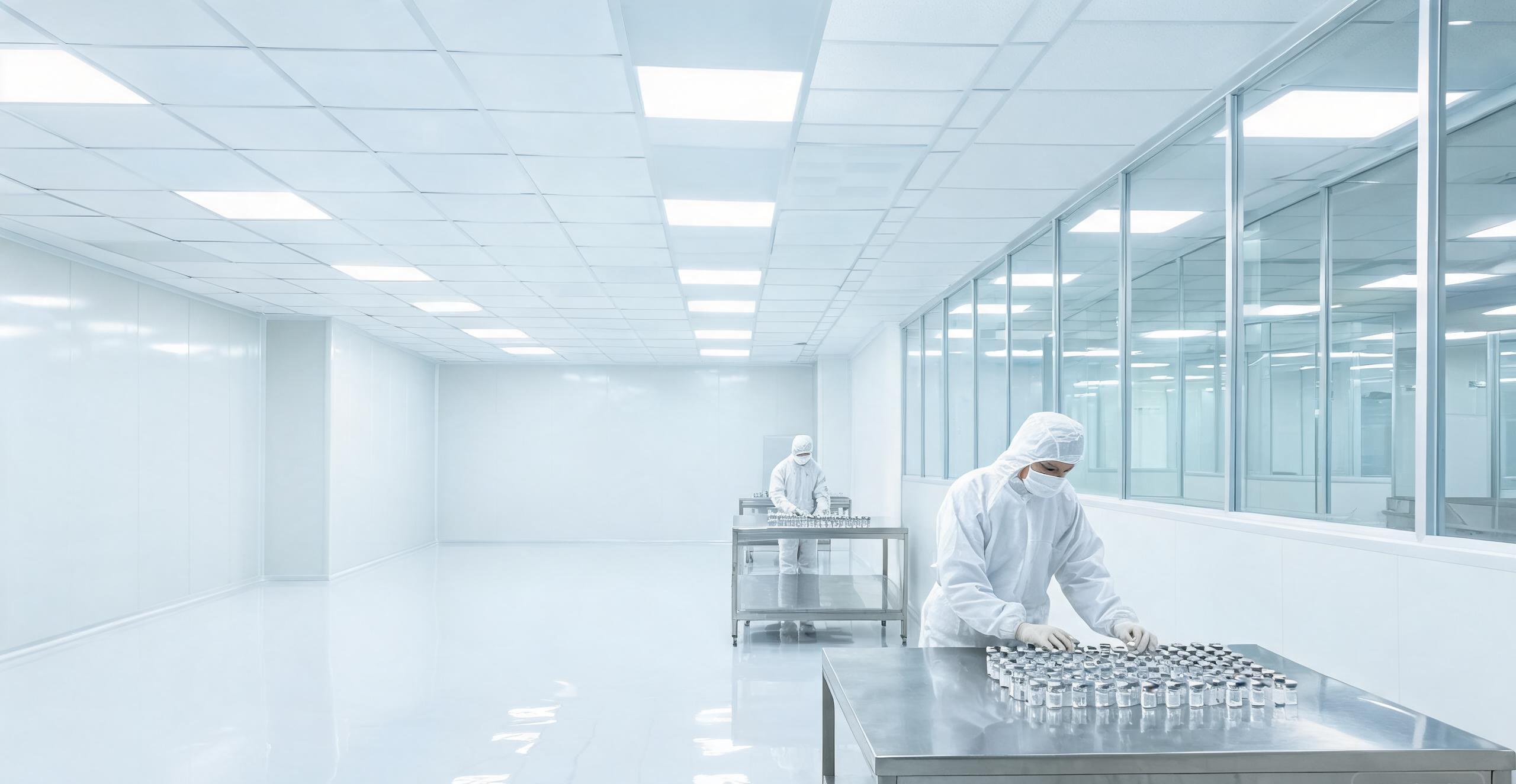
In a GMP facility, the ceiling is part of the process. Every luminaire hanging above a Grade C packaging suite is a potential particle source, a cleaning burden, and a maintenance risk. This project shows how sealed IP65 cleanroom LED panel lighting eliminated fixture-related particle excursions in an oral-solid-dose packaging area while cutting lighting energy by 58%.
Application Background
A pharmaceutical manufacturer was fighting its own lighting in a 1,400 m² Grade C (ISO Class 7) packaging suite for tablets and blister packs. The suite ran on aging fluorescent troffers that had never been designed for cleanroom duty:
- Particle excursions traced to fixtures — louvered troffer bodies and aging gaskets trapped product dust, and three to four particle-count excursions per year were attributed to the ceiling during root-cause investigations
- Cleaning overhead — every shutdown, gowning crews wiped fixture exteriors that were never designed to be cleaned; crevices and exposed fasteners made the job slow and incomplete
- Color checks under CRI-62 light made visual comparison of blister foils and coated tablets unreliable, pushing borderline batches to a second inspector
- Visible flicker from aging ballasts interfered with the suite’s camera-based print-verification station
- Lamp replacements every 12–18 months meant scheduled gowned entries, each one a contamination event risk with full re-clean of the work area below
Engineering Challenge
Cleanroom lighting is specified by what the fixture must not do — shed, trap, or outgas:
- No particle generation or retention: smooth, crevice-free housings, IP65-sealed against ingress, and no exposed fasteners or louvers anywhere in the air stream
- Flush installation — the luminaire face must sit level with the cleanroom ceiling system so there is no horizontal ledge to collect dust
- Chemical resistance to the site’s vaporized hydrogen peroxide (VHP) disinfection cycles, without hazing or embrittling the diffuser
- Correct light levels: general GMP areas commonly target around 500 lux on the work plane, while dedicated visual inspection booths require 3,000+ lux with CRI ≥ 90 for reliable color judgment
- Flicker performance compatible with high-speed vision cameras — percent flicker below 1% keeps inspection images stable
- Long service life, because in a cleanroom every maintenance hour costs multiple hours of gowning, supervision, and re-cleaning
Solution & Key Components
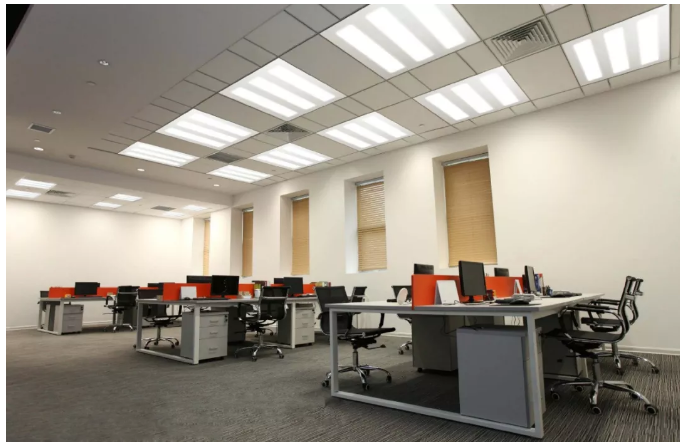
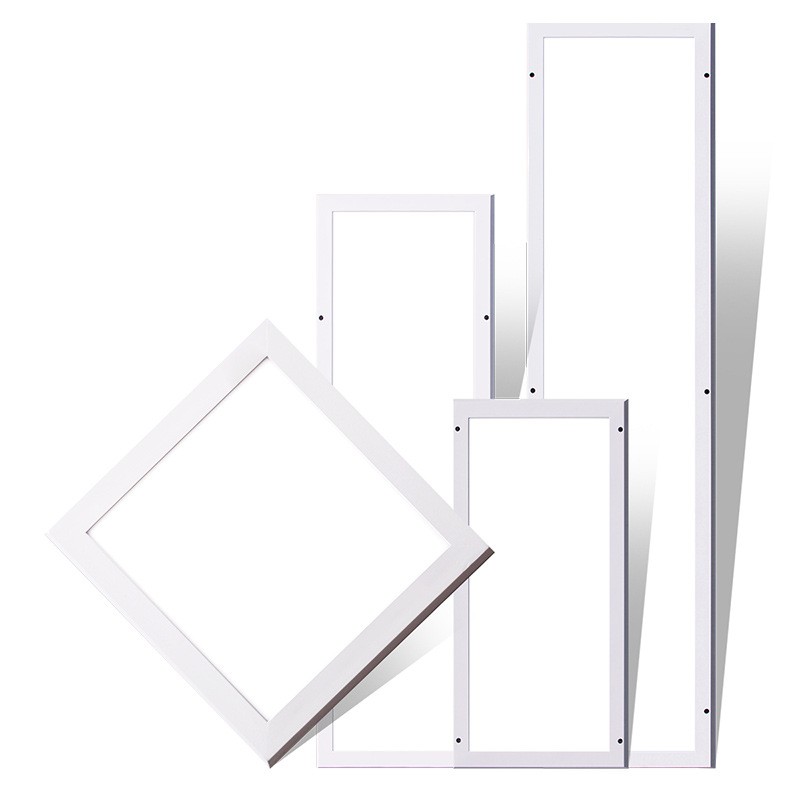
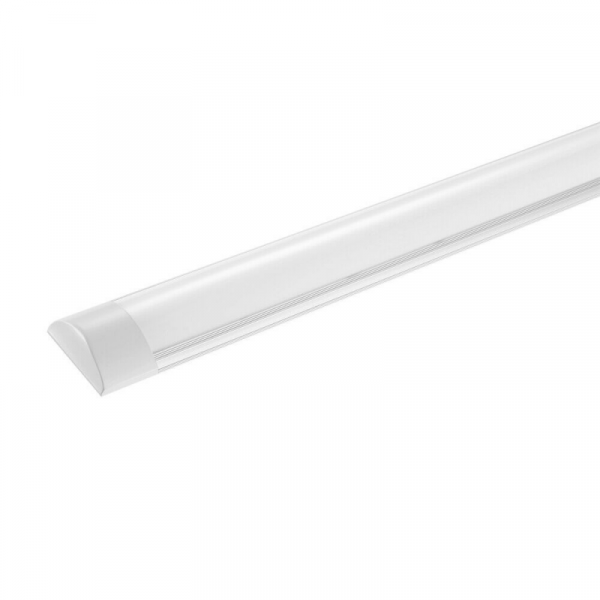
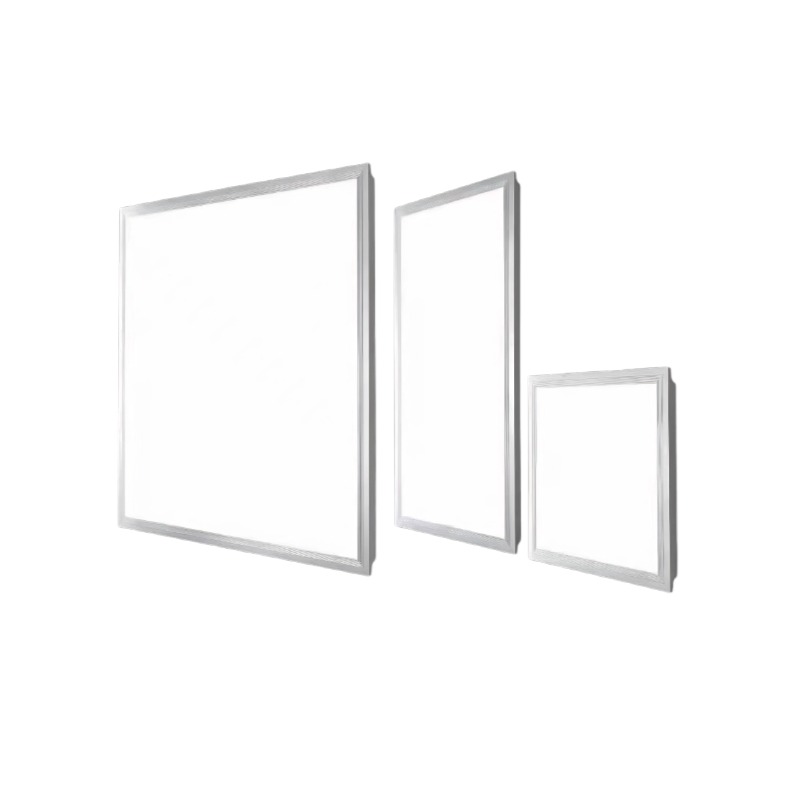
Queendom supplied sealed cleanroom LED panel lights, mounted flush into the ceiling grid with continuous silicone gaskets, plus dedicated high-lux task lighting for the inspection booths:
| Parameter | Value | Design Note |
|---|---|---|
| Luminaire type | Cleanroom LED panel, flush-mount | Smooth sealed body — no particle traps |
| Sealing | IP65, continuous silicone gasket | Withstands wipe-down and VHP cycles |
| Illuminance | ~500 lux general · 3,000 lux inspection booths | Matches GMP visual inspection practice |
| Color rendering | CRI ≥ 80 general · ≥ 90 inspection | Reliable foil and tablet color checks |
| Flicker | < 1% percent flicker | Stable images for vision inspection |
| Thermal behavior | Low-radiant-heat LED source | Reduced convective plumes above open product |
| Service life | 50,000 h to L80 | 3× fewer gowned maintenance entries |
Integration notes for pharma projects: panels sit flush with the cleanroom ceiling system so wipe-down passes are continuous, dimmable tuning lets the commissioning team trim general areas to exactly the lux specified in the room qualification documents, and the inspection booths use the same sealed housing family at higher output so the maintenance spares list stays short. A related controlled-environment project is described in our PCR laboratory lighting case.
Results
Since commissioning, two consecutive annual environmental-monitoring reviews have closed with zero ceiling-attributed particle findings, and the suite’s deviation log no longer carries lighting among its root-cause candidates. The reduced heat load also trimmed the HVAC extraction requirement above the packaging lines, an unplanned but welcome gain.
Recommended Products
Frequently Asked Questions
Why do cleanroom light fixtures need IP65 if the room is dry?
The rating is about cleaning and ingress, not washdown. Sealed IP65 construction means disinfectant wipes and VHP cycles never carry contaminants into the fixture body through joints or gasket gaps — and nothing inside the fixture can migrate out into the classified space. It also protects the LED driver from the humidity swings that come with disinfection procedures.
What light levels does GMP production actually require?
General manufacturing and packaging areas are commonly specified around 500 lux at the work plane, which is what this suite targeted. Manual visual inspection is a different category — practices such as USP <790> for injectables call for 3,000+ lux with high color rendering, which is why the inspection booths received dedicated high-output, CRI-90 task lighting rather than boosting the whole ceiling.
Can LED panels really survive hydrogen peroxide (VHP) cycles?
Yes, when the housing and diffuser materials are selected for it. The polycarbonate and silicone materials used in cleanroom-rated panels resist the low concentrations used in room disinfection without hazing. For facilities running frequent or high-concentration cycles, we verify material compatibility against the specific agent and cycle count before specifying.
Do light fixtures measurably affect particle counts?
They can, in two ways: crevices and aging gaskets on unsuitable fixtures retain and release dust, and hot luminaires drive convective plumes that lift particles above open product. A sealed, low-radiant-heat LED panel addresses both — which is exactly what removed the ceiling from this facility’s excursion root-cause list.