




Lighting Solutions White Paper
A framework across agricultural, intelligent and industrial lighting
Queendom Lighting Solutions Group · Application Engineering
This paper describes how Queendom structures a lighting project across three application families — agricultural, intelligent and industrial — and where the engineering decisions in one family differ from the others. It is written as a framework rather than a catalogue: the reader should finish it able to place a project in the right family, name the binding constraint, and ask for the measurements that decide the outcome.
The three families share hardware and diverge sharply in what governs success. Agricultural lighting is governed by spectrum and photoperiod. Intelligent lighting is governed by the control architecture and by whether the building’s occupancy pattern can actually be modelled. Industrial lighting is governed by environmental survival. A solution that ignores the family boundary will be over-specified in one dimension and under-specified in another.
1. How the three families differ
| Family | Binding constraint | Primary metric | Dominant failure mode |
|---|---|---|---|
| Agricultural | Spectrum and photoperiod | Yield per unit energy (DLI, mol/m²/day) | Wrong spectrum for the growth stage |
| Intelligent | Control architecture and zoning | Energy per occupied hour | Control logic mismatched to real occupancy |
| Industrial | Environmental survival | Maintained illuminance at year five | Ingress, corrosion or thermal failure |
Reading a specification against the wrong row is the most common early error. A horticultural project judged on luminous efficacy (lm/W) rather than on photosynthetic photon efficacy (µmol/J) starts from a metric that does not describe what the crop receives.
2. Agricultural lighting
2.1 Spectrum is the product
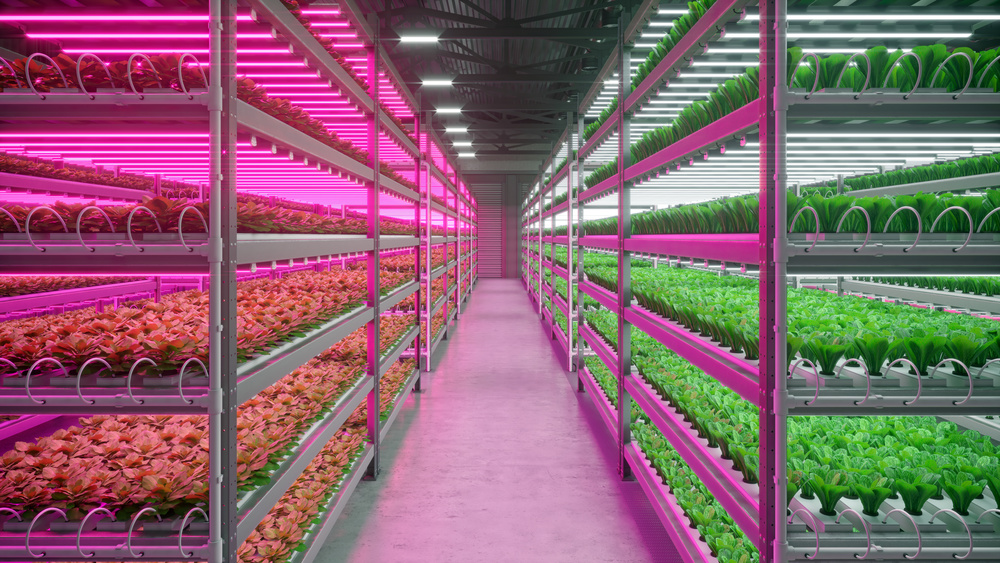
In horticultural lighting the spectral power distribution is the deliverable, not a characteristic of it. Blue photons (approximately 450–470 nm) drive vegetative expansion; red photons (approximately 630–660 nm) drive flowering and fruiting; far-red (around 730 nm) carries the phytochrome signal that governs stretch and flowering timing.
| Product class | Spectral coverage | Typical power | Application |
|---|---|---|---|
| Red-blue plant light | 450–470 nm + 630–660 nm | 50–200 W | Greenhouse supplementary, vertical farming |
| Full-spectrum plant light | 380–780 nm | 100–300 W | Fruit and vegetable cultivation, ornamentals |
| Livestock house light | 4000–5000 K broadband | 30–100 W | Poultry and cattle housing |
| Underwater LED | 450–550 nm | 20–80 W | Aquaculture raceways and tanks |
| Cold-store luminaire | 5000–6500 K | 50–150 W | Chilled and frozen storage |
A full-spectrum luminaire is not automatically better than a red-blue one. Full spectrum is easier to audit visually, which matters where people work under it; red-blue is more photon-efficient per watt of installed load. The correct choice depends on whether the installation is judged by crop response, by human working conditions, or by both.
2.2 Photoperiod and DLI
Daily light integral (DLI) is the total photosynthetic photon flux delivered per square metre per day, in mol/m²/day. It is the quantity the crop integrates, and it combines instantaneous intensity with photoperiod. A specification that fixes illuminance but leaves photoperiod open has fixed half of the variable.
| Crop group | Typical DLI target (mol/m²/day) | Photoperiod note |
|---|---|---|
| Leafy greens, lettuce | 12–17 | Long photoperiod tolerated; watch tip burn |
| Tomato, pepper | 20–30 | Supplement to a 16–18 h target including daylight |
| Herbs, microgreens | 10–15 | Short cycles; spectrum quality matters more than peak intensity |
| Ornamental flowering | 12–20 | Far-red ratio sets flowering timing and stem length |
DLI is not illuminance and it is not PPFD. Illuminance (lux) is photometric and weighted to the human eye; PPFD is photosynthetic and weighted to the plant; DLI integrates PPFD over the day. Substituting one for another is a category error that survives surprisingly deep into a project.
2.3 Livestock and aquaculture
Animal housing lighting is a welfare and productivity intervention, not a photometric one. The objectives are a stable photoperiod, an even distribution at animal eye level, and a spectrum that does not produce flicker or an aversive colour cast. Where a cattle house specification applies, it typically sets illuminance at the feed face and at lying areas separately, and it constrains flicker rather than luminous efficacy.
Aquaculture lighting runs at the opposite end of the spectrum: the wavelength has to penetrate the water column, which is why blue-green coverage (450–550 nm) dominates underwater fixtures. Ingress protection is not optional and is usually the binding constraint on service life.
3. Intelligent lighting
3.1 The control architecture comes first
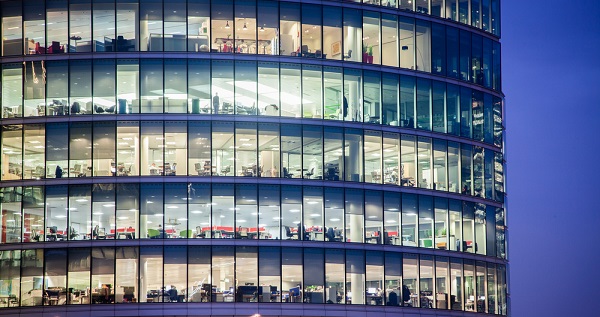
An intelligent installation is a control system with luminaires attached. The architecture — which device decides, what it can sense, and what happens when the network is unavailable — determines the outcome more than the fitting does.
| Layer | Function | Design question to settle |
|---|---|---|
| Sensing | Occupancy, daylight, time | What is the smallest zone that can be controlled without objection? |
| Decision | Standalone, room, or building level | Where does the fallback behaviour live if the network drops? |
| Transport | DALI-2, 0–10 V, wireless mesh | Which protocol does the installed base already speak? |
| Supervision | Dashboards, energy reporting, alarms | Who acts on the alarm, and within what time? |
| Integration | BMS, access control, AV | Which system is the source of truth for occupancy? |
Zoning is the decision that most often determines whether a control scheme saves energy. A zone larger than the occupancy pattern it is meant to track will simply be lit whenever any part of it is occupied, and no amount of protocol sophistication will recover the difference.
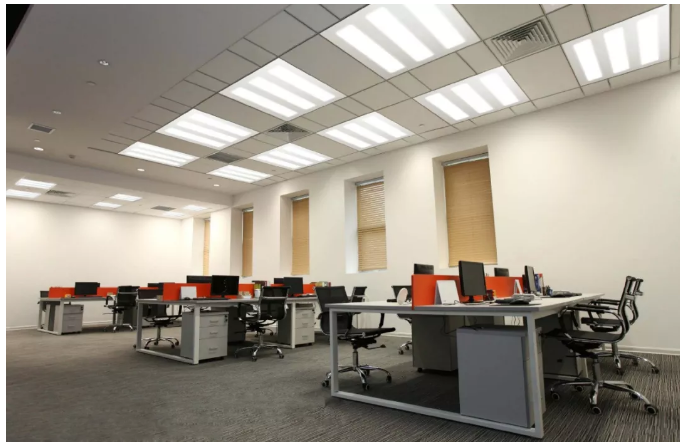
3.2 Human-facing performance
- Illuminance at the task plane, not at the ceiling.
- Flicker: percentage modulation should be low enough not to be perceptible, and this is a driver property before it is a luminaire property.
- Glare: unified glare rating is a function of luminaire luminance and geometry, and rises as ceiling height falls.
- Colour rendering: a CRI of 80 or above where colour judgement is part of the task; higher where it is the task.
- Blue-light content in the evening hours, which is a scheduling question as much as a spectrum one.
4. Industrial lighting
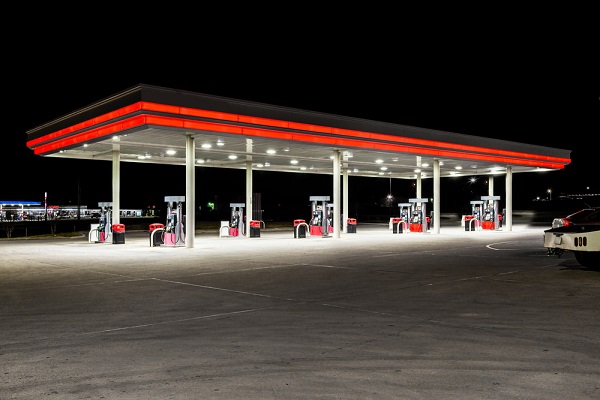
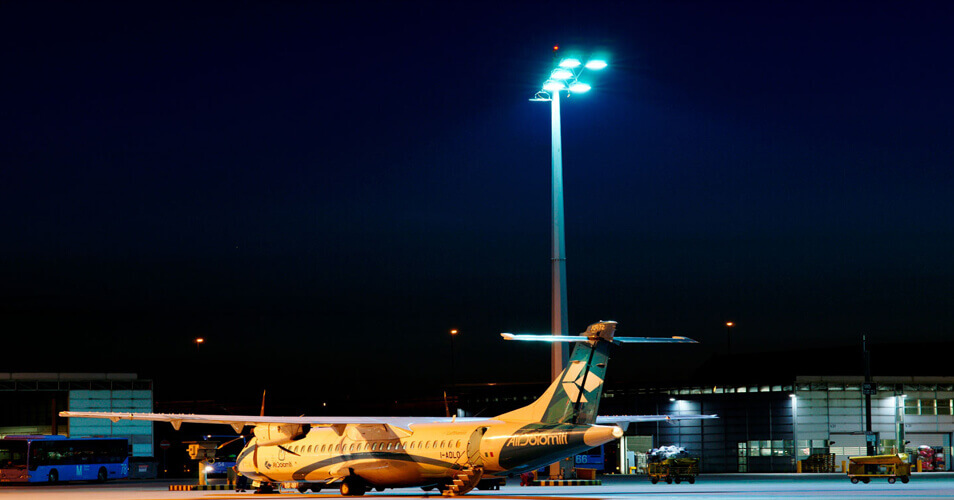
Industrial applications are covered in detail in the companion Industrial Lighting White Paper. The summary position, sufficient for placing a project in the framework, is that this family is governed by environmental survival and by access economics rather than by photometric finesse.
| Scene | Protection floor | Economic driver |
|---|---|---|
| Factory high bay | IP54 | Energy per unit output, plus glare control at low mounting heights |
| Warehouse and logistics | IP65 / IK08 | Avoided relamp access cost dominates the business case |
| Metallurgy and chemical | IP65/IP67, C4, hazardous zoning where applicable | Compliance and downtime, not energy |
| Cold storage | IP65 with sub-zero starting | Food integrity and defrost-cycle reliability |
5. What the three families share
Hardware overlap across the families is real, and the shared elements are the ones that most reliably determine whether an installation is still performing in year five.
| Shared element | Why it is shared | Where it is most often compromised |
|---|---|---|
| Thermal path | Every LED failure is ultimately a junction-temperature story | Concealed luminaires in insulated ceilings |
| Driver quality | Electrolytic life, surge rating and dimming behaviour are all driver properties | Specifying the luminaire and forgetting the driver |
| Ingress sealing | Seals fail before LEDs do in every humid or cold environment | Cold stores, wash-down areas |
| Optical material | Yellowing of covers degrades maintained illuminance silently | Dusty or UV-rich environments |
| Photometric files | Design, commissioning and dispute resolution all depend on them | Installations quoted from a catalogue rather than a file |
6. Worked example — choosing between two solutions
A 3,000 m² greenhouse and a 3,000 m² chilled distribution centre each require a lighting solution. Both look, at first glance, like “a retrofit”. They are not the same project and the framework separates them immediately.
| Question | Greenhouse | Chilled distribution centre |
|---|---|---|
| Family | Agricultural | Industrial |
| Binding constraint | DLI target of 20 mol/m²/day over a 16 h window | IP65 with −40 °C starting, 12 m mounting |
| Primary metric | Photosynthetic photon efficacy (µmol/J) | Maintained illuminance at year five |
| Optimisation target | Spectrum and intensity distribution | Thermal derating and access cost |
| Wrong metric to specify on | Luminous efficacy (lm/W) | Initial lumens at 25 °C |
| Acceptance test | Crop response over a full cycle | Illuminance grid after the first defrost cycle |
The two columns are not variants of one answer. They differ in the metric that defines success, and therefore in the evidence a supplier must supply. Asking a single luminaire family to carry both projects is how a solution ends up excellent at one and marginal at the other.
7. Common mistakes across all three families
- Adopting a metric from the wrong family — luminous efficacy for a horticultural project, or PPFD for a warehouse.
- Specifying the luminaire and leaving the driver, the optics and the control logic unstated.
- Treating the photometric file as a marketing attachment rather than the design input.
- Assuming a control system compensates for poor zoning. It amplifies zoning; it does not fix it.
- Omitting the maintenance factor, or taking the factory figure for a hostile environment.
- Reading L70 life as a warranty. It is a population statistic under stated conditions.
- Designing without the commissioning measurement in mind, so that acceptance becomes a matter of opinion.
8. Specification checklist
The same eight lines apply across the three families; only the acceptable answers change.
- Application family, named explicitly, and the binding constraint that follows from it.
- Primary metric appropriate to that family, and the target value.
- Photometric or spectral distribution required, not merely an output figure.
- Environmental range: ambient temperature, humidity, corrosive class, ingress rating.
- Mounting height, spacing and the optical distribution that makes them work together.
- Control architecture, including fallback behaviour with the network unavailable.
- Maintenance factor and cleaning interval assumed in the design.
- The acceptance measurement: what is measured, at what plane, and against which threshold.
9. Conclusion
A lighting solution is well-formed when the family is named, the binding constraint is stated as a number, and the acceptance test measures that number. Where those three are present, the choice of luminaire is a short conversation. Where they are absent, the project substitutes a comparison of catalogue outputs for an engineering decision, and the substitution is usually discovered at commissioning. The three families described here share components and diverge in their definition of success; keeping that distinction visible from the first page of the specification is the whole of the method.
Download the full white paper
Lighting Solutions White Paper — complete edition with the full photometric tables, the worked examples and the site checklist.
PDF: Lighting Solutions White Paper
Contains the full spectral selection tables, the DLI worksheet and the cross-family specification checklist in a single printable document.
Queendom · figures in this paper are typical values for the series named and are subject to the measurement conditions stated. Product commitments are made on the datasheet and in the contract, not here.