

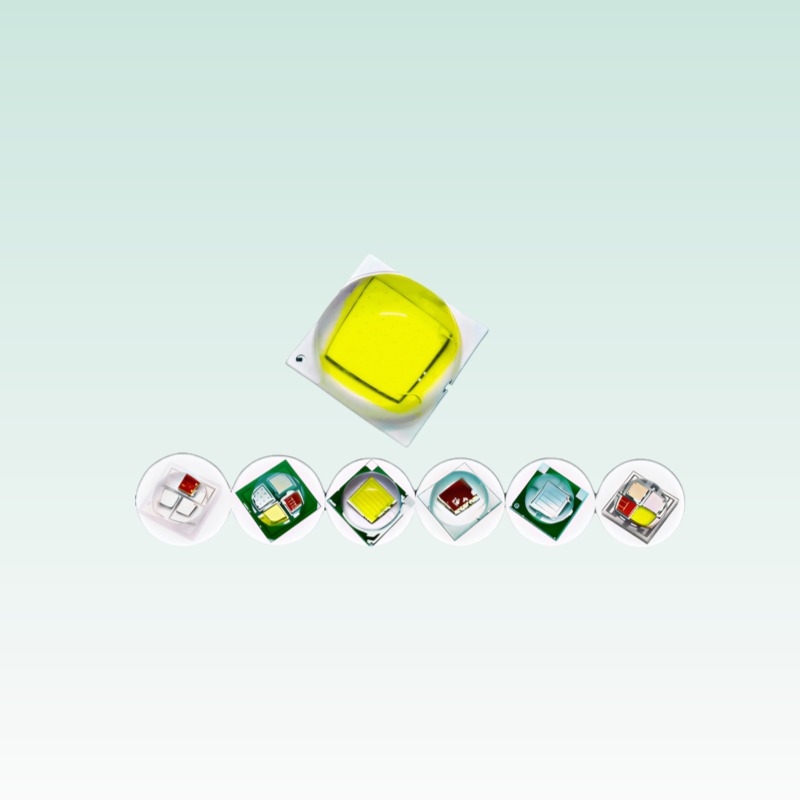
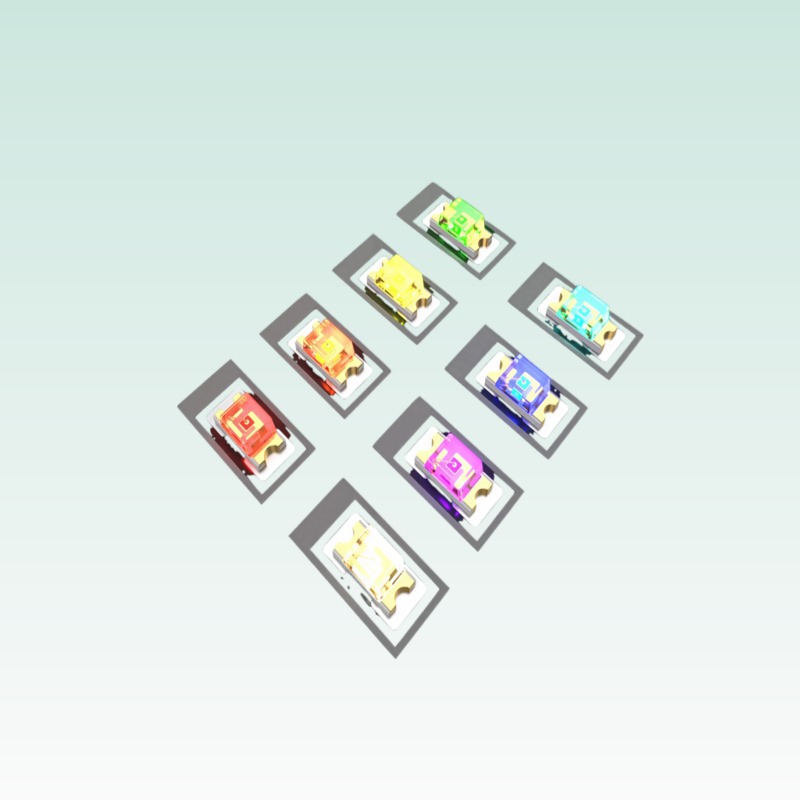
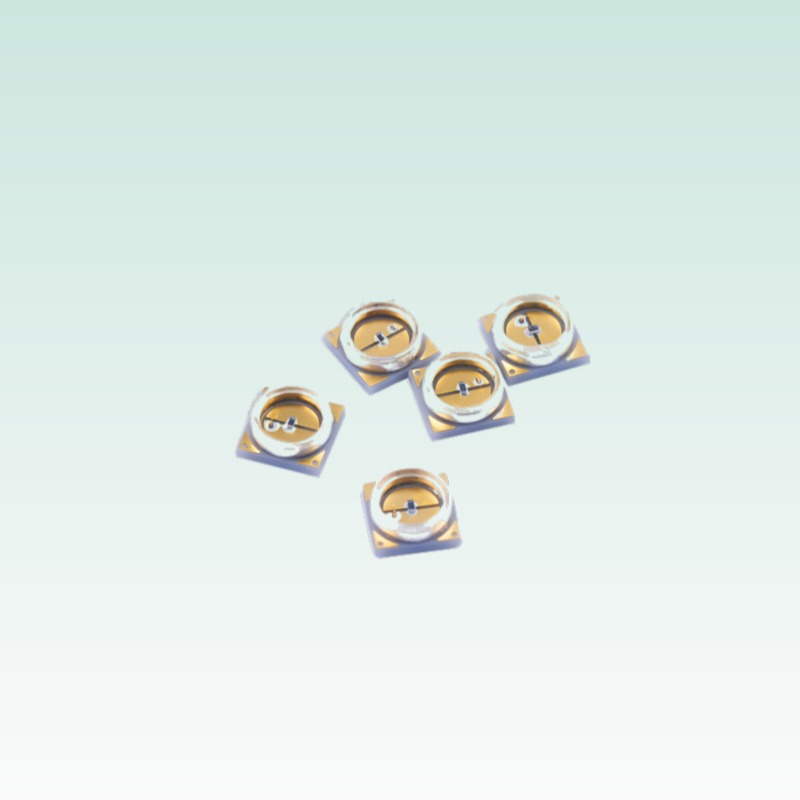







This section gathers five pages on the ceramic package LED range. They follow a deliberate reading order: what the package is, what its limits are, how to read its characteristics, how to assemble and protect it, and finally how to choose a part. Each page stands on its own, so you can arrive at the one that answers your question without reading the rest.
1. What is in this section
- #360492
Ceramic Package LED: Technical Overview
What the ceramic package changes relative to a plastic one, how the eighteen series map, and how to choose between a ceramic and a plastic package. Start here if the application is new to you. - #360493
Ceramic LED Absolute Maximum Ratings and Current Derating
The limits themselves: forward current, peak current, power dissipation, reverse voltage, junction temperature, thermal resistance, temperature ranges, reflow and ESD. Start here if you need to know what a part may be asked to survive. - #360494
Ceramic Package Electrical and Optical Characteristics: How to Read Them
Forward voltage by die configuration and colour band, flux ranges at a stated test current, wavelength versus CCT versus CRI, viewing angle, radiant flux, and how to verify a derived efficacy figure against its own limits. - #360495
Ceramic Package Reliability and Soldering: Reflow, Thermal Cycling and ESD
The reflow rating read as a peak limit with a dwell time, thermal cycling and solder fatigue, the ESD rating as a qualification figure rather than an exemption, and what to request before committing to a part. - #360496
Ceramic Package Selection Guide: Choosing by Package, Power, Colour and Application
The four questions that narrow a choice, footprint families and their power classes, the colour and voltage bands, what to do when a part is not in the catalogue, and four worked examples. Start here if you already know the series and want to pick a part number.
2. Where to start
The five pages answer different questions rather than repeating one another, and picking the wrong entry point is the usual reason a technical page does not settle a question.
- New to ceramic packages — start with the technical overview. It explains what the substrate changes and maps the series.
- Defining a specification — go to the absolute maximum ratings first. Every limit a design has to respect is there.
- Reading a datasheet — the electrical and optical characteristics page explains the columns, including why forward voltage depends on both the die configuration and the colour.
- Designing the assembly — the reliability and soldering page covers the reflow rating, thermal cycling and ESD handling.
- Choosing a part number — the selection guide reduces the range to four questions and answers them with worked examples.
If you are already holding a datasheet and want to know whether a value is safe to use, go to the ratings page. If you are choosing between packages, go to the selection guide. The three middle pages answer questions that come up once you have started reading in detail.
3. What the range covers
The series documented here span the ceramic packages the site publishes: the 3535 footprint in single-die monochrome, phosphor-converted white, RGB, RGBW and RGBY, bi-colour and the specialty emitters including UVA, UVC, UVB, PCR and infrared; the 5050 footprint in monochrome, multi-die white and the multi-channel parts; and the 7070 footprint in multi-die white and UVA.
The handbook behind these pages describes a wider set of series than the catalogue publishes. The gap is not a gap in availability — the series without their own product page are orderable through the sales office — but it does mean a part outside the published set will not have a page of its own here. The selection guide sets out which series fall into that group and what to request.
4. Two things that are worth knowing before you start
The first is that forward voltage is not a property of the package. It is set by how many dies are wired in series, and it also depends on the colour: the package pages group red, orange and yellow into a lower voltage band than green, blue, white and purple. A four-channel board built from these parts may therefore need two drive rails. The characteristics page has the numbers.
The second is that no lumen maintenance figure is published for these parts. Lifetime data is handled through the sales office for the specific part number, bin and drive current, because a single series-level figure would not describe any individual part. If a design needs a lifetime number, request it early rather than assuming one.