






1. What is in this section
A lighting white paper is written for the person who has to defend a lighting decision after it has been made — to a client, to a certification body, or to their own operations team. It carries the measurement method along with the number, because in lighting an unqualified number is worthless.
- Agricultural Lighting White Paper
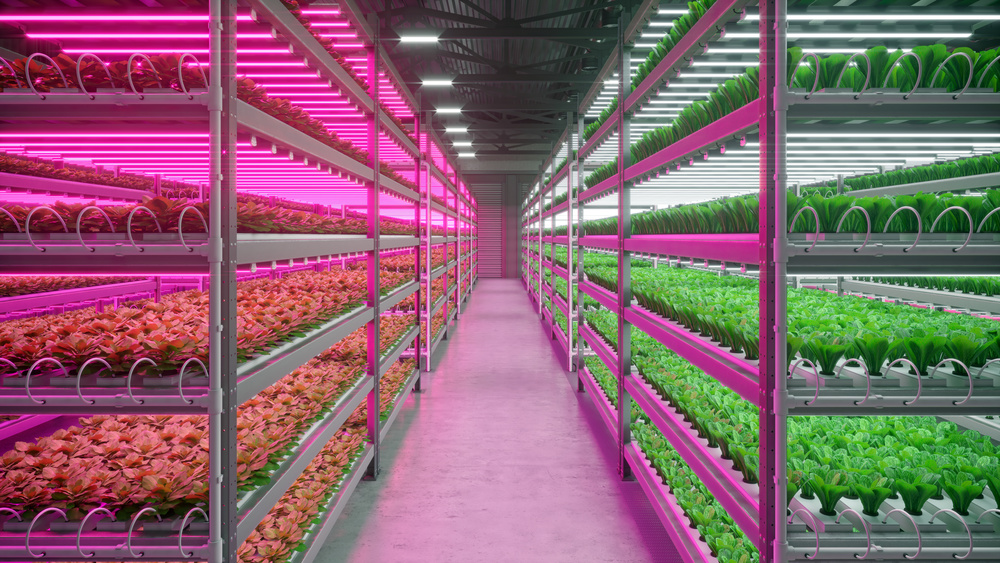
Full photometry, spectrum and economics of horticultural LED lighting, including four downloadable figures. Read this if you are specifying a grow room rather than a single fixture. - How to Use the Lighting White Papers
A short guide to the document set: which paper answers which question, and how to read the photometric and economic assumptions before you reuse them.
2. Where to start
Lighting decisions fail in three different places, and each has its own document. Start by identifying which one you are standing in.
| The decision you are making | What you actually need to settle | Start with |
|---|---|---|
| A fixture for a specific room | Illuminance, uniformity, glare class at the task plane | The engineering knowledge pages in this section |
| A grow facility | Photon budget, spectrum shape, DLI across the canopy | Agricultural Lighting White Paper |
| A retrofit with an existing ceiling height | Payback period under your own energy tariff | How to Use the Lighting White Papers |
Note the order: most people should read the engineering pages first and the white papers second. The papers assume you already know what a photometric file is.
3. What a white paper differs from a knowledge page
Both document types live in this resource centre. They are not interchangeable.
| Document type | Length | Written for | You use it when |
|---|---|---|---|
| Knowledge page | 2,000-2,700 words | A lighting engineer specifying a fixture | You need the method for one calculation |
| White paper (this section) | 1,000-3,100 words, with downloadable figures | A specifier or buyer defending a decision | You need to show the assumption, the method and the result together |
| Case study | 200-700 words | A buyer looking for a precedent | You want to know that the approach worked somewhere similar |
The distinction matters when a document is reused. A knowledge page is designed to be read once for one calculation. A white paper is designed to be extracted from — its assumptions and figures are meant to be lifted into your own specification.
4. What these documents do and do not settle
They do settle
- Measurement method — mounting height, measurement plane, and grid spacing stated for every photometric figure
- Economic assumptions — tariff, operating hours, maintenance cycle and the payback formula used
- Photometric definitions — maintenance factor and depreciation are handled explicitly, not silently
- How to reuse the figures — what you may change and what must stay fixed
They do not settle
- Local code compliance — certification requirements vary by jurisdiction
- Fixture supply and lead time — a commercial conversation
- On-site commissioning — lux readings from the actual installation
- Control system integration beyond the protocol — see the engineering pages for DALI-2 and Matter detail
5. Typical questions these papers answer
- How do I calculate payback for a high-bay retrofit? — the formula, the tariff input and the sensitivity that actually changes the answer
- What maintenance factor should I use? — why the number is a depreciation assumption, not a property of the LED
- Can I reuse these photometric files in a client specification? — what you must restate for it to be valid
- Does DLI mean the same thing as illuminance? — no, and the paper shows the conversion that keeps them separate
6. Related reading
The engineering pages under this section carry the per-topic methods. The white papers assume you have read them.
- Lighting Knowledge & Resources
The parent section: photometric quantities, colour quality, glare, energy codes and workflow. - Agricultural Lighting
Far-red spectrum, greenhouse DLI economics and the horticultural glossary. - Industrial Applications
High-bay uniformity, cleanroom GMP and tri-proof luminaires.