











This is a reference rather than a topic: a set of definitions for the terms used across the package, reliability and specification pages on this site. It is useful when a datasheet uses a word that has more than one accepted meaning, and when a specification has to be written so that two people reading it mean the same thing.
1. What is in this section
- LED Package and Reliability Glossary
Package and die terminology, binning, reliability and lifetime terms, and the terms that are most often confused with one another.
2. How to use it
Read it when a term is ambiguous rather than reading it front to back. The sections are independent, so a single definition can be looked up without working through the others.
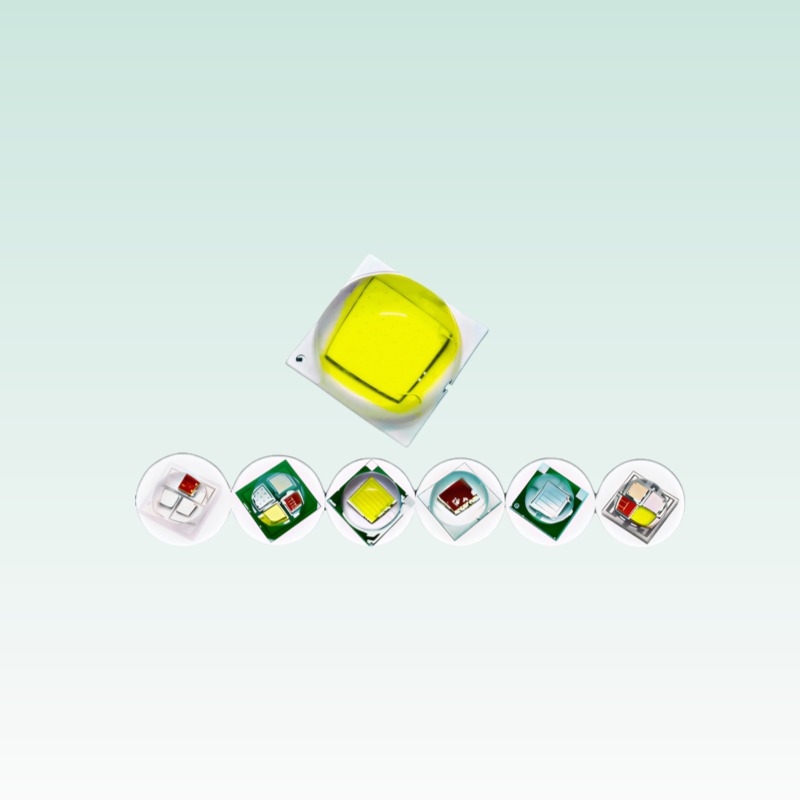
- Package and chip terms — the physical description: substrate, bonding, phosphor, die count, package family.
- Electrical terms — forward voltage, current classes, pulse allowances, reverse rating.
- Binning — how parts are grouped for colour and flux, and what a rank code does and does not guarantee.
- Reliability and lifetime — the difference between a rating, a qualification and a lifetime claim.
- Commonly confused terms — the pairs that get mixed up in specifications, with what separates them.
3. One thing worth knowing before you write a specification
The distinction that causes the most downstream argument is between a rating, a recommendation and a measurement. An absolute maximum is a boundary, a recommended value is a design target, and a measured figure belongs to a specific part at specific conditions. The glossary separates all three; using one word for all three is what makes a specification ambiguous.
4. Why this class is separate
A glossary is not a topic, so it does not sit alongside the application classes. It is a reference that those classes share, and the terms it defines are the ones that appear across all of them: the same word for a binning characteristic, a reliability figure and a package dimension is used differently by different suppliers.
Keeping it as its own class rather than folding it into one of the technical pages means it can be linked from anywhere without implying that it belongs to that application. That matters most for the terms that are commonly confused with one another, because those are exactly the terms a reader reaches for a definition of when they are already on another page.
Related categories and reading
The pages above are the core of this section. These adjacent sections come up in the same conversations, and the boundaries between them are where specifications most often go wrong.
- High-Power LEDs
The component classes where these terms are actually applied. - UV LEDs
Wavelength terminology in the UV range, including the safety context it carries. - Automotive LED AEC-Q102
Qualification vocabulary — AEC-Q102, grade, and what each level does and does not certify. - Industrial LED Reliability White Paper
The long-form treatment behind the reliability terms defined here.
Back to Knowledge & Resources — the full index of both component and lighting engineering sections.