
 English
 Afrikaans
 Albanian
 Amharic
 Arabic
 Armenian
 Azerbaijani
 Basque
 Belarusian
 Bengali
 Bosnian
 Bulgarian
 Catalan
 Cebuano
 Chichewa
 Corsican
 Croatian
 Czech
Czech Danish
 Dutch
Dutch Esperanto
 Estonian
 Filipino
 Finnish
 French
 Frisian
 Galician
 Georgian
 German
 Greek
Greek Gujarati
 Haitian Creole
 Hausa
Hausa Hawaiian
 Hebrew
 Hindi
Hindi Hmong
Hmong Hungarian
 Icelandic
 Igbo
Igbo Indonesian
 Irish
Irish Italian
 Japanese
 Javanese
 Kannada
 Kazakh
 Khmer
Khmer Korean
 Kurdish (Kurmanji)
 Kyrgyz
 Lao
Lao Latin
Latin Latvian
 Lithuanian
 Luxembourgish
 Macedonian
 Malagasy
 Malay
Malay Malayalam
 Maltese
 Maori
Maori Marathi
 Mongolian
 Myanmar (Burmese)
 Nepali
 Norwegian
 Pashto
 Persian
 Polish
 Portuguese
 Punjabi
 Romanian
 Russian
 Samoan
 Scottish Gaelic
 Serbian
 Sesotho
 Shona
Shona Sindhi
 Sinhala
 Slovak
 Slovenian
 Somali
 Spanish
 Sudanese
 Swahili
 Swedish
 Tajik
Tajik Tamil
Tamil Telugu
 Thai
Thai Turkish
 Ukrainian
 Urdu
Urdu Uzbek
Uzbek Vietnamese
 Welsh
Welsh Xhosa
Xhosa Yiddish
 Yoruba
 Zulu
Zulu
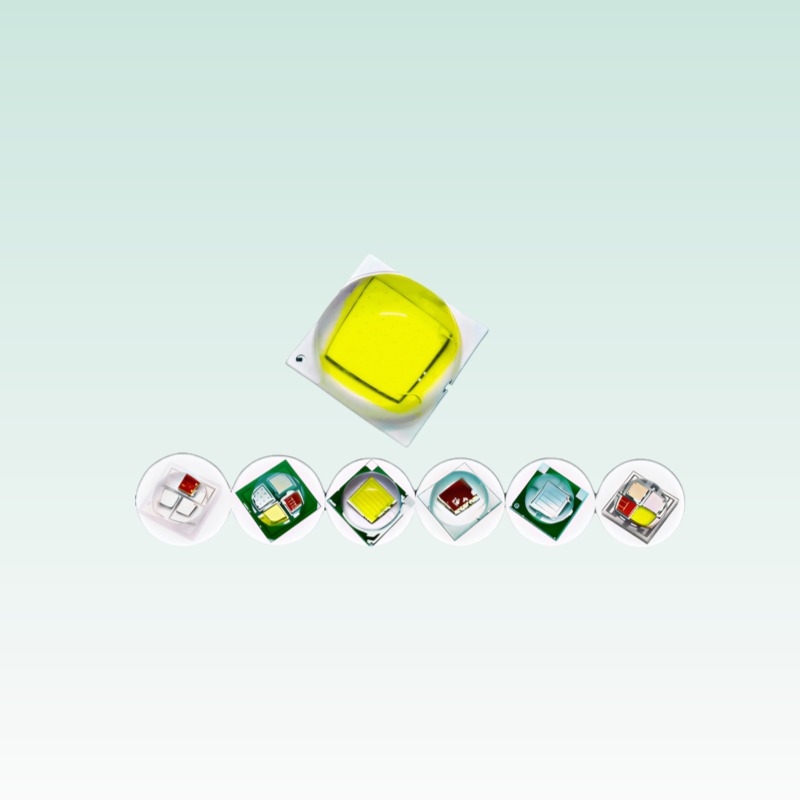
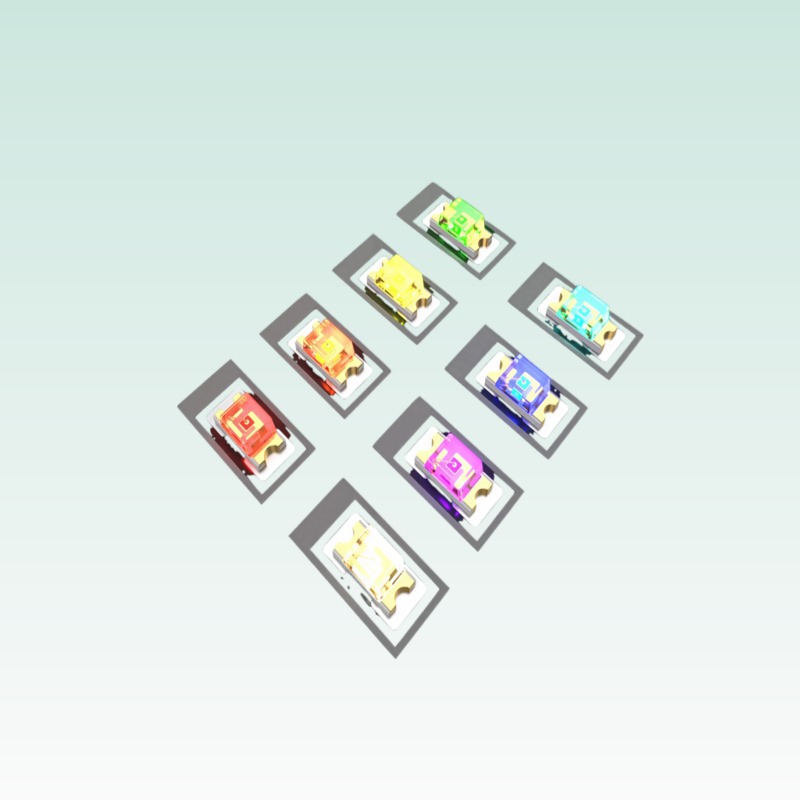





When a manufacturer claims “50,000-hour lifespan” for an industrial LED luminaire, how can a procurement team verify that figure before committing to a multi-thousand-unit order? The answer lies in a chain of standardized testing and certification protocols: IES LM-80 for measured lumen maintenance, IES TM-21 for projected lifespan extrapolation, and DLC V6.0 for North American energy-efficiency qualification. This guide explains each protocol, how they interconnect, and what B2B buyers should request from suppliers to substantiate lifespan claims with verifiable evidence.
1. Why Lifespan Claims Alone Are Insufficient
LED degradation is gradual — unlike conventional lamps that fail catastrophically, LEDs undergo lumen depreciation, slowly losing brightness over thousands of hours of operation. The industry threshold for “end of useful life” is L70: the point at which light output drops to 70% of initial value. A “50,000-hour lifespan” claim typically means L70 at 50,000 hours — but without standardized test data, this number is a marketing assertion, not a verified fact.
For industrial lighting — high-bay warehouse fixtures, cold-chain luminaires, horticultural grow lights — procurement decisions carry significant long-term cost implications. A luminaire that fails to maintain illuminance levels prematurely can compromise workplace safety compliance, crop yields, or facility uptime. Verifying the technical basis of lifespan claims is therefore a procurement responsibility, not a technical formality.
2. IES LM-80: The Foundation — Measured Lumen Maintenance
IES LM-80 (approved method for measuring lumen maintenance of LED packages, arrays, and modules) is the foundational test protocol developed by the Illuminating Engineering Society. The current revision, LM-80-22, specifies the following requirements:
| Parameter | LM-80 Requirement |
|---|---|
| Test temperatures | Three case-temperature points: typically 55°C, 85°C, and 105°C (or a manufacturer-specified third point) |
| Minimum test duration | 6,000 hours (measurements recorded every 1,000 hours) |
| Sample size | Minimum 20 LED packages per temperature condition |
| Lab accreditation | NVLAP-accredited (or equivalent) laboratory |
| Recorded data | Luminous flux, chromaticity coordinates, forward voltage, case temperature |
During testing, samples operate at constant current and specified ambient temperatures, with photometric readings taken at each 1,000-hour interval. The resulting data set captures the initial lumen depreciation curve under controlled thermal stress. Because LED degradation is temperature-dependent, testing at multiple temperature points allows engineers to model performance across different real-world operating conditions.
3. IES TM-21: From Measurement to Projection
IES TM-21 provides the mathematical framework for extrapolating long-term lumen maintenance from LM-80 test data. It uses an exponential decay model fitted to the measured data points to project the L70 (or L80, L90) threshold and the percentage of the LED population expected to reach it (B50, B10).
The Six-Time Rule
TM-21 imposes a six-time extrapolation limit: the projected lifespan cannot exceed six times the actual test duration. This means:
| LM-80 Test Duration | Maximum TM-21 Projection |
|---|---|
| 6,000 hours (minimum) | 36,000 hours |
| 8,334 hours | ~50,000 hours |
| 10,000 hours | 60,000 hours |
Therefore, a supplier claiming L70 = 50,000 hours must provide LM-80 data from at least 8,334 hours of testing — not the 6,000-hour minimum. This is one of the most commonly overlooked verification points in LED procurement.
- Request the full LM-80 test report (not just a summary certificate) from an NVLAP-accredited lab
- Confirm the test duration meets the six-time rule for the claimed lifespan
- Verify that the projected L70 value and B-code (B50 or B10) match the marketing claim
- Check which temperature condition the projection is based on — it should align with the intended application environment
4. DLC V6.0: North American Energy-Efficiency Qualification (2026 Update)
The DesignLights Consortium (DLC) maintains the Qualified Products List (QPL), which is the primary reference for utility rebate eligibility in the United States and Canada. Products not listed on the DLC QPL are effectively excluded from many municipal and commercial lighting rebate programs.
In 2026, DLC introduced SSL V6.0, a major standard revision with significantly raised requirements:
| Requirement | DLC V5.1 (Previous) | DLC V6.0 (2026) |
|---|---|---|
| Efficacy threshold | Baseline | Raised 12–14% on average |
| Minimum rated life | 36,000 hours | 36,000 hours (maintained) |
| Dimming (standard) | To 20% | To 20% (refined compatibility testing) |
| Dimming (premium) | To 10% | To 10% (broader driver coverage) |
| Warranty | 5-year minimum | 5-year minimum (enforced) |
| Transition deadline | — | Non-compliant products removed from QPL by December 2026 |
DLC qualification requires LM-79 photometric testing (for complete luminaire performance, including efficacy, light distribution, and color quality) in addition to LM-80/TM-21 component-level data. The LM-79 report is system-level — it tests the complete fixture including the driver, optics, and thermal management, not just the LED package. This distinction is critical: an LED package may pass LM-80 with excellent lumen maintenance, but a poorly designed luminaire with inadequate heat sinking can still degrade rapidly in the field.
5. Practical Procurement Verification Checklist
For B2B procurement teams evaluating industrial LED luminaires, the following checklist ensures lifespan claims are technically substantiated:
- Request LM-80 test reports — not certificates, but the full data report from an NVLAP-accredited laboratory. Confirm the LED package model, drive current, and temperature conditions match the product being quoted.
- Verify TM-21 extrapolation math — divide the claimed lifespan by six. If the result exceeds the actual LM-80 test hours shown in the report, the claim is non-compliant with TM-21 rules.
- Identify the L-code and B-code — L70/B50 means 50% of the population reaches 70% light output at the stated hour. L70/B10 is more conservative (only 10% fall below 70%). Confirm which the supplier is claiming.
- Check DLC QPL listing — search the product by model number at designlights.org/qpl. Confirm it is listed under V6.0 (not a legacy version slated for removal).
- Request the LM-79 report — this is the system-level test for the complete luminaire. Verify efficacy, light distribution, and color quality (CCT, CRI/Duv) match the datasheet.
- Review the thermal design — request junction temperature (Tj) data or thermal resistance values. Lower Tj under operating conditions correlates with longer lumen maintenance.
- Confirm the warranty terms — DLC requires a minimum 5-year warranty. Review what “warranty” covers: full replacement, prorated, or lumen-depreciation-based.
6. How Queendom Approaches Lifespan Verification
At Queendom, our industrial lighting products are designed with thermal management as a primary reliability driver. Our 20,000-square-meter manufacturing facility integrates an in-house testing laboratory exceeding 1,000 square meters, equipped with environmental testing chambers, salt-spray testing equipment, high-and-low-temperature cycling rigs, and photometric measurement instruments. Our quality management system is certified to ISO 9001:2000 by SGS, and our products comply with CE, RoHS, and REACH requirements.
For industrial lighting applications — including high-bay warehouse fixtures, logistics lighting, and cold-chain luminaires — we recommend that procurement teams request complete LM-80/TM-21 documentation for the specific LED packages used in each product family. We support this verification process by providing test data and compliance documentation as part of our technical pre-sales support.
Conclusion
LED lifespan is not a single number — it is a claim that must be backed by a chain of standardized evidence: LM-80 measured data, TM-21 compliant extrapolation, and for the North American market, DLC V6.0 qualification with LM-79 system-level testing. The 2026 DLC standard revision raises the bar for efficacy and compliance, making verification more important than ever. Procurement teams that request and review these documents will make better-informed decisions — and hold suppliers accountable to the technical standards behind their claims.
For technical documentation, compliance support, or product specifications, contact the Queendom technical team or browse our industrial lighting catalog.
Queendom LED is a professional LED manufacturer with over 25 years of industry experience, producing LED diodes, chips, and lighting fixtures for industrial, agricultural, specialty, and medical applications. Products are exported to over 60 countries. Learn more at our company profile.
Related Products
Further reading: LED Lifespan Testing Explained · LED Lifetime Standards for B2B Buying
