
 English
 Afrikaans
 Albanian
 Amharic
 Arabic
 Armenian
 Azerbaijani
 Basque
 Belarusian
 Bengali
 Bosnian
 Bulgarian
 Catalan
 Cebuano
 Chichewa
 Corsican
 Croatian
 Czech
Czech Danish
 Dutch
Dutch Esperanto
 Estonian
 Filipino
 Finnish
 French
 Frisian
 Galician
 Georgian
 German
 Greek
Greek Gujarati
 Haitian Creole
 Hausa
Hausa Hawaiian
 Hebrew
 Hindi
Hindi Hmong
Hmong Hungarian
 Icelandic
 Igbo
Igbo Indonesian
 Irish
Irish Italian
 Japanese
 Javanese
 Kannada
 Kazakh
 Khmer
Khmer Korean
 Kurdish (Kurmanji)
 Kyrgyz
 Lao
Lao Latin
Latin Latvian
 Lithuanian
 Luxembourgish
 Macedonian
 Malagasy
 Malay
Malay Malayalam
 Maltese
 Maori
Maori Marathi
 Mongolian
 Myanmar (Burmese)
 Nepali
 Norwegian
 Pashto
 Persian
 Polish
 Portuguese
 Punjabi
 Romanian
 Russian
 Samoan
 Scottish Gaelic
 Serbian
 Sesotho
 Shona
Shona Sindhi
 Sinhala
 Slovak
 Slovenian
 Somali
 Spanish
 Sudanese
 Swahili
 Swedish
 Tajik
Tajik Tamil
Tamil Telugu
 Thai
Thai Turkish
 Ukrainian
 Urdu
Urdu Uzbek
Uzbek Vietnamese
 Welsh
Welsh Xhosa
Xhosa Yiddish
 Yoruba
 Zulu
Zulu
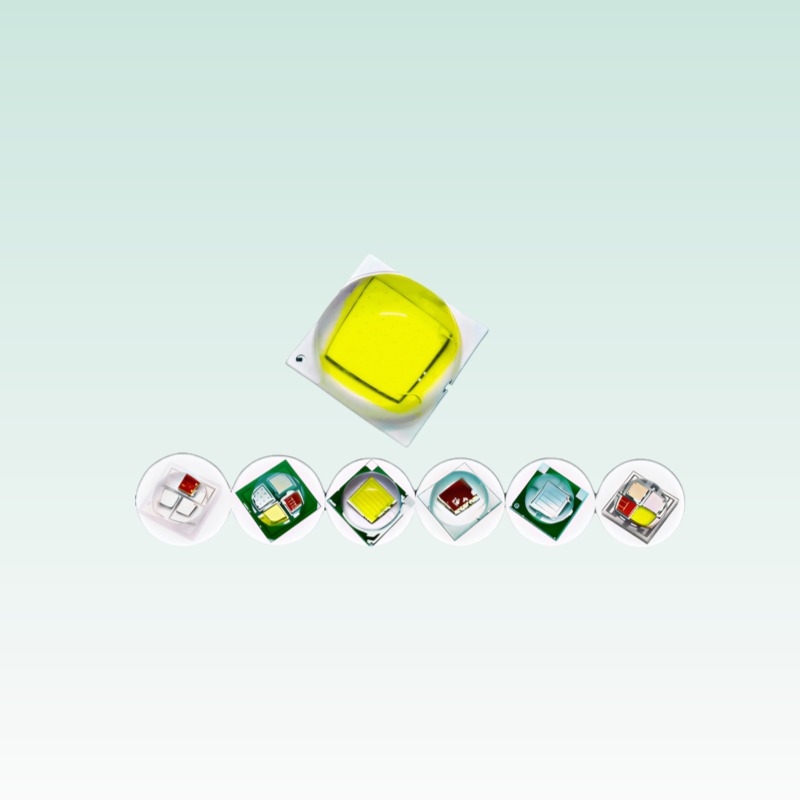

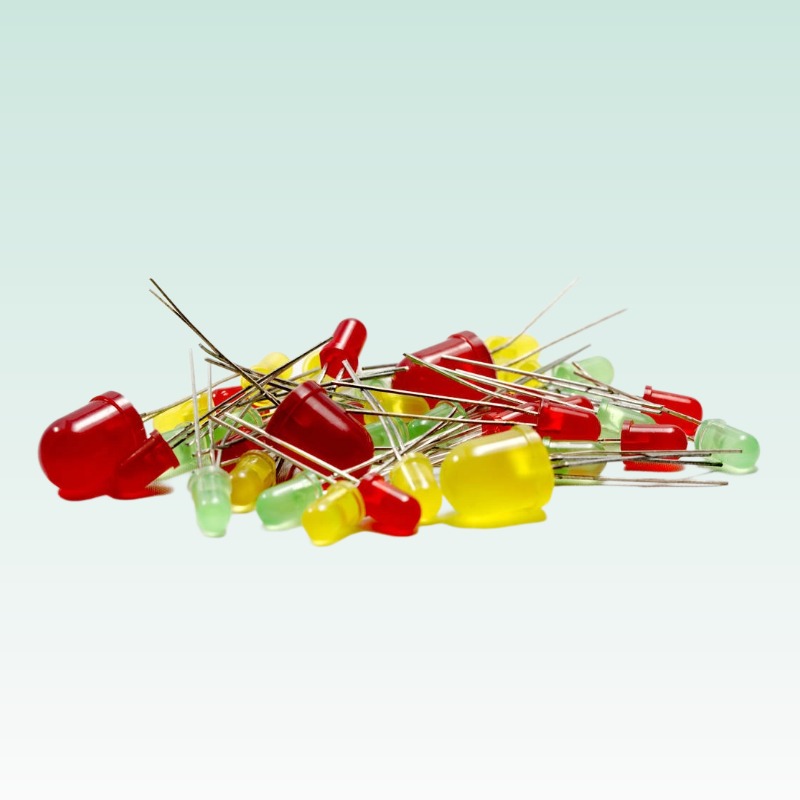
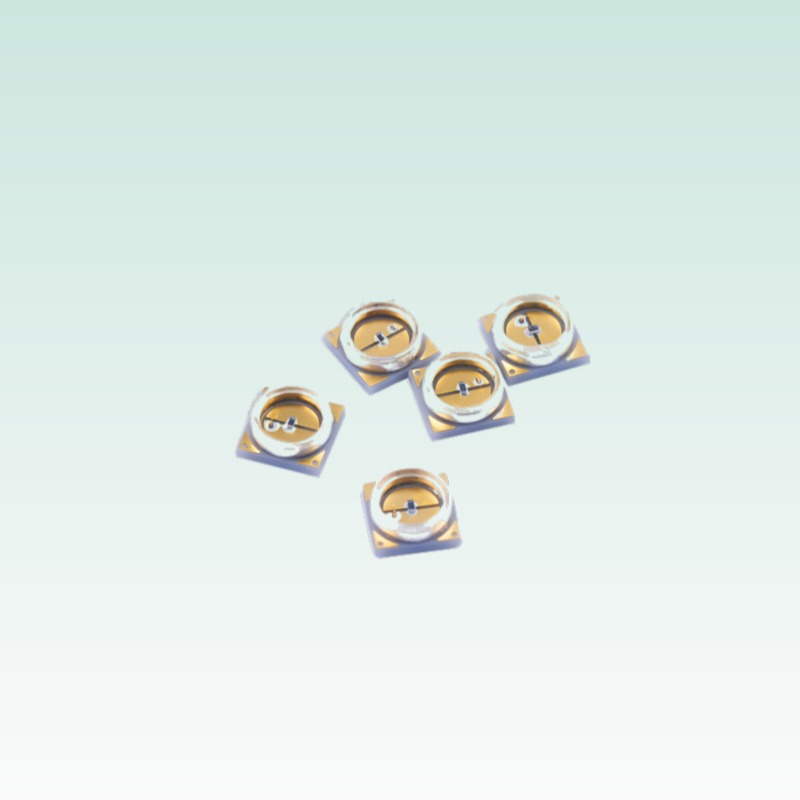
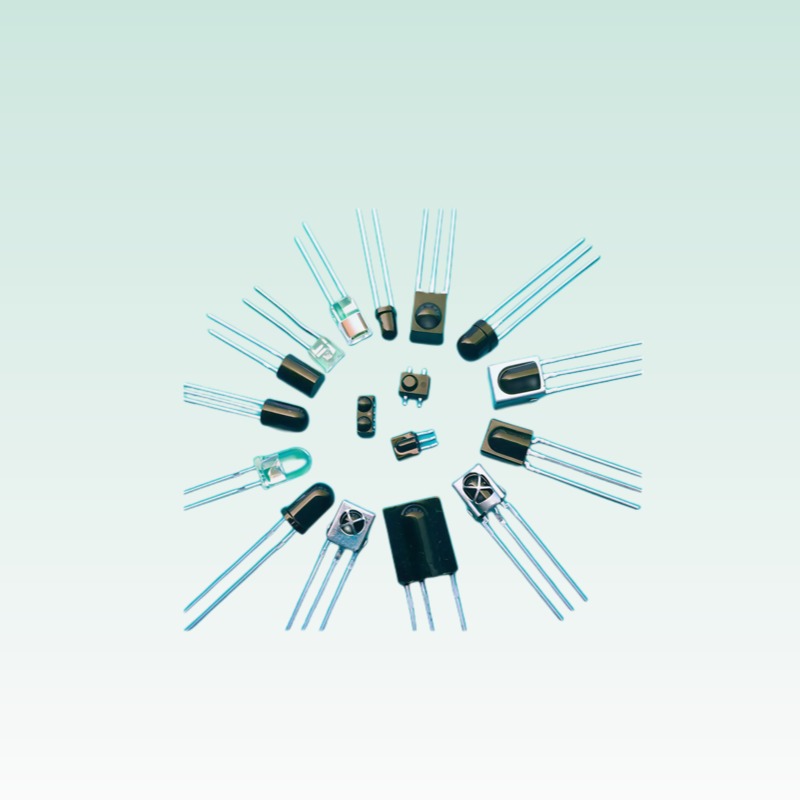





For B2B buyers specifying LED components and luminaires in regulated environments—pharmaceutical cleanrooms, hazardous-area industrial sites, horticulture facilities, and automotive-qualified systems—LED lifetime claims directly affect total cost of ownership, compliance status, and maintenance scheduling. Yet “50,000-hour lifetime” on a datasheet means little without the underlying test methodology behind it. This article explains the three standards that govern LED lifetime reporting—IES LM-80, IES TM-21, and the L70 lumen maintenance threshold—and shows how to evaluate supplier declarations against verifiable test data and certification requirements.
What Is LM-80 and Why It Matters
LM-80 is the Illuminating Engineering Society (IES) standard for measuring lumen maintenance of LED packages, arrays, and modules. Published as LM-80-08 and later revised as LM-80-20, it specifies the test conditions, temperature setpoints, drive current, and minimum duration required to produce comparable, reproducible lumen maintenance data.
Key parameters of an LM-80 test include:
- Case temperature (Ts): Typically tested at 55°C, 85°C, and 105°C to bracket real-world operating conditions.
- Drive current: The manufacturer’s rated or specified forward current.
- Test duration: Minimum 6,000 hours under LM-80-08; LM-80-20 extends the recommendation to 10,000 hours or more for improved projection accuracy.
- Relative luminous flux: Measured at regular intervals (typically every 1,000 hours) and normalized to the initial (0-hour) reading.
Without LM-80 data, a supplier’s lifetime figure is an estimate with no standardized basis. For procurement in regulated industries, an LM-80 test report from an accredited laboratory is the baseline requirement—not a premium feature.
TM-21: Projecting Lifetime Beyond the Test Window
IES TM-21-11 (“Projecting Long Term Lumen Maintenance of LED Light Sources”) defines the mathematical method for extrapolating lumen maintenance beyond the tested duration. Because a 6,000-hour or 10,000-hour test cannot directly measure 50,000 hours, TM-21 provides a standardized projection approach:
- Test data from the last 50% of the LM-80 measurement period is fitted to an exponential decay model.
- The projection covers up to 6× the tested duration (e.g., a 10,000-hour test supports projection to 60,000 hours).
- Projections beyond 6× are flagged as extrapolated and carry higher uncertainty.
- The output is expressed as Lp (e.g., L70) with a time value, such as L70(6K) > 36,000 hours, meaning that at the tested conditions, lumen maintenance stays above 70% for at least 36,000 hours.
When a supplier states “L70 > 50,000 hours,” the question to ask is: Based on how many tested hours, at what temperature, and what drive current? A projection from 6,000 hours of test data to 36,000 hours has a different confidence interval than one from 10,000 hours to 60,000 hours.
The L70, L80, and L90 Thresholds Explained
The “L” value defines the minimum percentage of initial luminous flux that a population of LEDs maintains at a given point in time. The most commonly cited thresholds are:
| Threshold | Definition | Typical Application |
|---|---|---|
| L70 | Light output remains at or above 70% of initial | General lighting; minimum acceptable for most commercial and industrial applications |
| L80 | Light output remains at or above 80% of initial | Horticulture and grow lighting where spectrum stability affects crop yield |
| L90 | Light output remains at or above 90% of initial | High-reliability applications: cleanroom lighting, medical environments, hazardous-area fixtures |
The letter “B” is sometimes appended (e.g., L70/B50), indicating that 50% of the population is expected to be below the stated threshold at that time. L70/B50 is the most common reporting format in DLC-qualified products.
How Certification Programs Use LM-80 and TM-21 Data
DLC Premium and DLC QPL
The DesignLights Consortium (DLC) Qualified Products List (QPL) requires lumen maintenance data for luminaires seeking Premium tier qualification. DLC evaluates the luminaire’s L70 claim against the LED package’s LM-80 and TM-21 reports, the thermal management design, and the driver specifications. Products on the DLC QPL have undergone this verification, and their listings can be searched and verified on the DLC website.
AEC-Q102 for Automotive LED Components
AEC-Q102 is the Automotive Electronics Council standard for stress-test qualification of discrete semiconductor optoelectronic components, including LED packages used in automotive lighting. Ceramic-packaged LEDs targeting AEC-Q102 qualification undergo additional stress tests beyond LM-80, including high-temperature operating life (HTOL), thermal shock, moisture resistance, and mechanical vibration. For automotive-qualified LED chip procurement, requesting the AEC-Q102 qualification summary and device-specific test data is standard practice.
ATEX-Certified LED Lighting
For LED luminaires deployed in explosive atmospheres (Zone 1, Zone 2, Zone 21, Zone 22), ATEX certification (per Directive 2014/34/EU) verifies the explosion protection measures—flameproof enclosures, increased safety, or intrinsic safety. Lifetime and lumen maintenance data become a maintenance and compliance issue: a luminaire that drops below its designed luminous intensity may need replacement to maintain the safety-rated illuminance levels. ATEX certification records can be verified through the EU notification body’s database using the certificate number.
GMP-Compliant and FDA-Compliant Cleanroom Lighting
In pharmaceutical and biotechnology cleanrooms governed by current Good Manufacturing Practice (GMP) and regulated by the FDA, lighting must meet specified illuminance levels, reduce particulate generation, and support cleanability. While there is no single “FDA certification” for LED luminaires, compliance is demonstrated through documentation: material certifications, cleanroom compatibility reports, and lumen maintenance projections that support the facility’s qualification and maintenance schedule. Suppliers should provide traceable test data rather than marketing claims.
Evaluating Supplier Lifetime Claims: A Procurement Checklist
When comparing LED suppliers for regulated or high-reliability applications, the following checklist separates verifiable data from marketing:
- Request the LM-80 test report—not just the summary. The full report includes the accredited laboratory name, test conditions, LED package identification, and raw measurement data.
- Verify the TM-21 projection basis: How many tested hours, at what temperature, and what drive current? A projection to 50,000 hours from 6,000 tested hours carries more uncertainty than one from 10,000+ hours.
- Match the test temperature to your application’s operating temperature. LM-80 data at 55°C does not directly predict behavior at 105°C case temperature. Request data at the temperature closest to your worst-case operating condition.
- Check DLC QPL listing for complete luminaires. If the product is listed, the lumen maintenance claim has been independently verified. If not listed, ask for the justification.
- For automotive-qualified components, request the AEC-Q102 qualification summary and confirm the device family and lot traceability.
- For hazardous-area luminaires, verify the ATEX certificate number in the notifying body’s database and confirm the equipment group, category, and protection type match your zone classification.
- For cleanroom applications, request material certifications, cleanroom classification compatibility, and lumen maintenance projections that align with your facility’s requalification interval.
- Avoid lifetime claims without test basis. Round-number lifetime figures presented without LM-80/TM-21 documentation are not verifiable and should not be used as the basis for procurement decisions or maintenance planning.
What an LM-80 Test Report Should Contain
A complete LM-80 test report from an accredited laboratory includes several data points that procurement engineers should verify:
- LED package identification: Manufacturer part number, package type (e.g., ceramic, PLCC), and lot or batch number for traceability.
- Test conditions: Drive current (If), case temperature setpoints (Ts), and ambient conditions for each test group.
- Measurement intervals: Photometric readings taken at regular intervals (typically every 1,000 hours) with the relative luminous flux normalized to hour zero.
- Chromaticity shift (Duv): LM-80 also reports color shift over time, which is critical for applications where color consistency matters—horticulture, medical lighting, and color-critical industrial inspection.
- Laboratory accreditation: ISO/IEC 17025 accreditation scope covering LM-80 testing, with the accreditation body identified (e.g., NVLAP, A2LA).
Reports that omit the raw data, present only summary numbers, or lack laboratory accreditation details should be treated as insufficient evidence for qualification decisions in regulated environments.
Thermal Management and Its Effect on Lifetime
LM-80 tests LEDs at controlled case temperatures, but real-world junction temperature (Tj) depends on the thermal design of the entire system—PCB material, heatsink, housing, ambient temperature, and airflow. A well-designed thermal management system keeps the junction temperature within the manufacturer’s rated maximum, preserving the lumen maintenance curve’s validity. Conversely, inadequate heat sinking can cause the junction temperature to exceed the rated maximum, accelerating lumen depreciation and invalidating the TM-21 projection.
For horticulture and grow lighting applications, where LEDs may operate 12-18 hours per day at elevated ambient temperatures, thermal design is particularly critical. DLC-qualified grow lights have been evaluated for thermal performance as part of the QPL listing process.
Conclusion: Data Over Claims
LED lifetime is not a single number—it is a projection based on standardized testing, reported under defined conditions, and validated through certification programs. For B2B procurement in regulated environments, the procurement decision should rest on:
- LM-80 test reports from accredited laboratories
- TM-21 projections with clearly stated test basis (hours, temperature, drive current)
- Appropriate L-value (L70, L80, or L90) for the application’s reliability requirements
- Verification through DLC QPL, AEC-Q102, ATEX, or GMP/FDA compliance documentation
- Thermal management design that keeps operating junction temperature within rated limits
For more information on LED chip specifications and lifetime data, visit our LED Diodes & Chips product pages. To discuss application-specific requirements for industrial and cleanroom lighting, see our Industrial Lighting Solutions. For certification documentation and technical inquiries, contact our team through the Contact page.
For related technical content, see our Lighting Q&A and LED Diode Q&A columns.
{
“@context”: “https://schema.org”,
“@type”: “Article”,
“headline”: “LED Lifetime Standards: LM-80, TM-21 & L70 for B2B Procurement”,
“description”: “Technical guide to IES LM-80, TM-21, and L70 lumen maintenance standards for evaluating LED lifetime claims in regulated B2B procurement environments including DLC QPL, AEC-Q102, ATEX, and GMP/FDA-compliant applications.”,
“author”: {
“@type”: “Organization”,
“name”: “Queendom LED”,
“url”: “https://www.queendomlamp.com”
},
“publisher”: {
“@type”: “Organization”,
“name”: “Queendom LED”,
“url”: “https://www.queendomlamp.com”
},
“datePublished”: “2026-09-18”,
“keywords”: [“LM-80”, “TM-21”, “L70”, “lumen maintenance”, “LED lifetime”, “DLC QPL”, “AEC-Q102”, “ATEX”, “GMP”, “B2B procurement”]
}
Related Products
Further reading: LM-80, TM-21 & DLC V6.0 Verification Guide · LED Lifespan Testing Explained
