
 English
 Afrikaans
 Albanian
 Amharic
 Arabic
 Armenian
 Azerbaijani
 Basque
 Belarusian
 Bengali
 Bosnian
 Bulgarian
 Catalan
 Cebuano
 Chichewa
 Corsican
 Croatian
 Czech
Czech Danish
 Dutch
Dutch Esperanto
 Estonian
 Filipino
 Finnish
 French
 Frisian
 Galician
 Georgian
 German
 Greek
Greek Gujarati
 Haitian Creole
 Hausa
Hausa Hawaiian
 Hebrew
 Hindi
Hindi Hmong
Hmong Hungarian
 Icelandic
 Igbo
Igbo Indonesian
 Irish
Irish Italian
 Japanese
 Javanese
 Kannada
 Kazakh
 Khmer
Khmer Korean
 Kurdish (Kurmanji)
 Kyrgyz
 Lao
Lao Latin
Latin Latvian
 Lithuanian
 Luxembourgish
 Macedonian
 Malagasy
 Malay
Malay Malayalam
 Maltese
 Maori
Maori Marathi
 Mongolian
 Myanmar (Burmese)
 Nepali
 Norwegian
 Pashto
 Persian
 Polish
 Portuguese
 Punjabi
 Romanian
 Russian
 Samoan
 Scottish Gaelic
 Serbian
 Sesotho
 Shona
Shona Sindhi
 Sinhala
 Slovak
 Slovenian
 Somali
 Spanish
 Sudanese
 Swahili
 Swedish
 Tajik
Tajik Tamil
Tamil Telugu
 Thai
Thai Turkish
 Ukrainian
 Urdu
Urdu Uzbek
Uzbek Vietnamese
 Welsh
Welsh Xhosa
Xhosa Yiddish
 Yoruba
 Zulu
Zulu





The UVC LED sector has completed its transition from laboratory curiosity to industrial component business. Entering the final quarter of 2026, three currents define the market: steady efficiency gains at 275nm, broadening application adoption beyond the pandemic-era surface-disinfection wave, and a maturing supply chain with more qualified vendors. Here is what matters for engineers and procurement teams planning 2026–2027 programs.
Market Size and Trajectory
Public analyst forecasts place the UVC LED market on a sustained growth path — from roughly $1.0 billion in 2024 toward $4–5 billion by 2030, a consensus CAGR in the 25–30% range. Growth is driven less by unit-price collapse and more by design-in wins in water purification, HVAC in-duct disinfection, and consumer appliances.
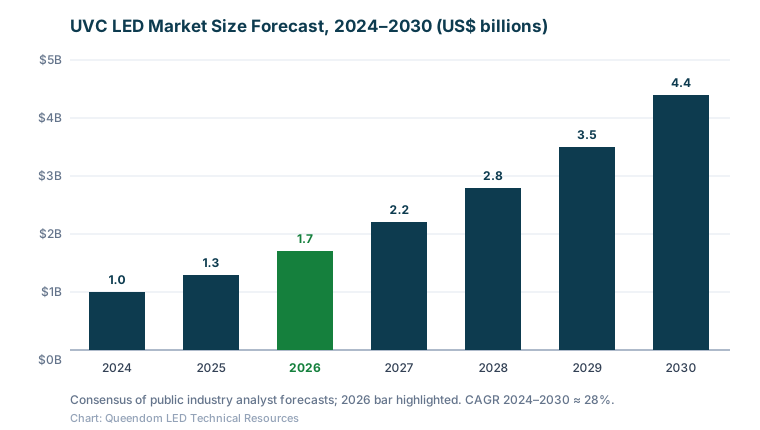
Chart: Queendom LED Technical Resources, based on consensus of public industry analyst forecasts.
Trend 1: 275nm Efficiency Keeps Climbing
The center of gravity in UVC LED wavelength selection has settled on 275nm. While 265nm remains the theoretical efficacy peak for DNA absorption, 275nm devices now deliver substantially better wall-plug efficiency — commonly cited at 5–10% in production parts, with lab results exceeding that — which means more germicidal photons per watt of system power. For battery-operated and continuously-running systems, this efficiency margin outweighs the modest per-photon efficacy difference.
For a deeper treatment of the wavelength tradeoff, see our UVC LED disinfection wavelength guide and the UVC 254nm industrial solutions article.
Trend 2: Applications Broaden Beyond Surface Disinfection
The 2020–2022 wave of surface-disinfection products has given way to applications with harder engineering requirements and stickier demand:
| Application segment | Status in 2026 | Notes |
|---|---|---|
| Drinking water purification | Volume growth leader | Point-of-use systems in appliances and fixtures |
| Municipal / commercial water treatment | Emerging | LED modules scaling into flow ranges formerly served by mercury lamps |
| HVAC in-duct air disinfection | Expanding | Commercial building retrofits and specification in new construction |
| Consumer appliances | Maturing | Refrigerator and air-purifier integration in premium lines |
| Medical / laboratory equipment | Stable | Instrument-level disinfection and PCR-adjacent uses |
| Surface disinfection robotics | Consolidating | Fewer, more specialized vendors after market rationalization |
Water treatment stands out because the duty cycle is continuous and replacement demand is recurring — the profile component suppliers prefer.
Trend 3: Supply Chain Maturation
The vendor landscape has thinned from the 2021 peak, leaving suppliers with qualified reliability data and design-in support capturing the volume programs. For buyers this changes the qualification calculus: price gaps between vendors have narrowed, while differences in L70-style lifetime data (UVC output depreciation), moisture-resistance packaging, and thermal application support now decide sourcing decisions.
What Buyers Should Watch in Q4 2026 and 2027
1. Output depreciation data — ask for normalized radiant flux vs. operating hours at the stated junction temperature; the spread between vendors is wider than in visible LEDs
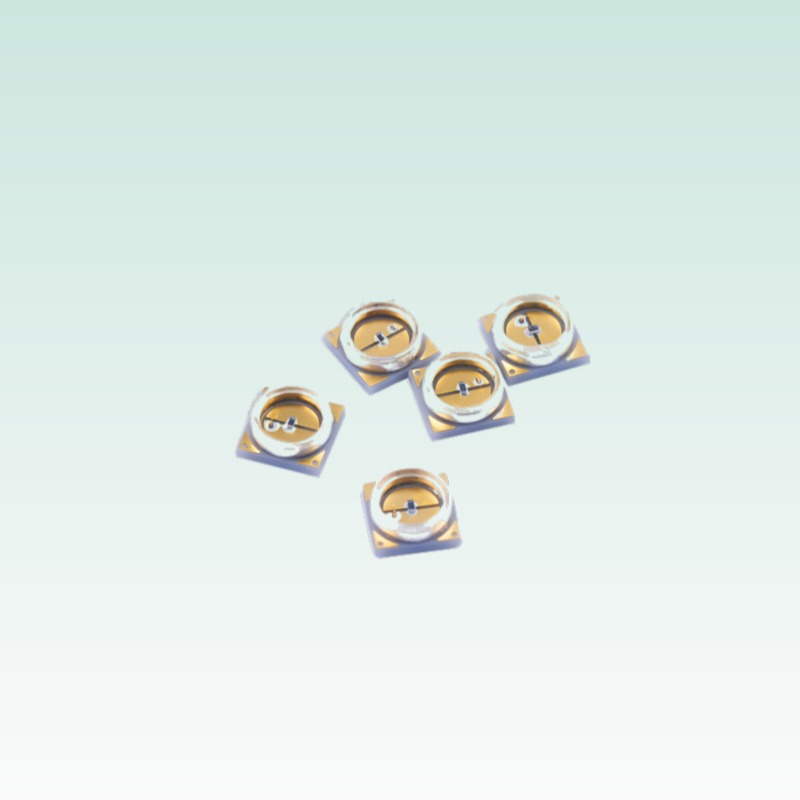
2. Package robustness under humidity — UVC LEDs in water and air systems face condensation cycles; hermetic and quartz-window packages command a premium but survive
3. Module-level vs. component-level sourcing — more vendors offer sealed UVC modules with optics and driver, simplifying integration for appliance makers
4. Regulatory environment — mercury-lamp restriction momentum (Minamata Convention timelines) continues to favor solid-state replacement in new designs
5. Lead-time normalization — capacity has caught up with demand for standard parts; custom wavelengths and high-power packages still carry longer queues
Designing with UVC in 2027 Programs
For system designers, the practical guidance is unchanged: start from the required UV dose (mJ/cm²) for the target organism, then work backward through optical path, water transmittance (for flowing water), and LED degradation margin. Overdriving for initial brightness and under-provisioning the thermal path remains the most common cause of early field failure. Our 3535 UV LED family (UVC and UVB series) and the dual-chip UVC+UVA variant serve exactly these design-in programs, with dosage margin guidance available from our engineering team.
Queendom LED monitors UVC market and technology developments continuously and publishes technical guidance for water, air, and surface disinfection system builders.
Published for educational purposes — Queendom LED Technical Resources
Further reading: UVC LED Disinfection: Wavelength, Dosage, and Safety Guide · UVC 254nm: Industrial Water and Air Sterilization LED Solutions
