
 English
 Afrikaans
 Albanian
 Amharic
 Arabic
 Armenian
 Azerbaijani
 Basque
 Belarusian
 Bengali
 Bosnian
 Bulgarian
 Catalan
 Cebuano
 Chichewa
 Corsican
 Croatian
 Czech
Czech Danish
 Dutch
Dutch Esperanto
 Estonian
 Filipino
 Finnish
 French
 Frisian
 Galician
 Georgian
 German
 Greek
Greek Gujarati
 Haitian Creole
 Hausa
Hausa Hawaiian
 Hebrew
 Hindi
Hindi Hmong
Hmong Hungarian
 Icelandic
 Igbo
Igbo Indonesian
 Irish
Irish Italian
 Japanese
 Javanese
 Kannada
 Kazakh
 Khmer
Khmer Korean
 Kurdish (Kurmanji)
 Kyrgyz
 Lao
Lao Latin
Latin Latvian
 Lithuanian
 Luxembourgish
 Macedonian
 Malagasy
 Malay
Malay Malayalam
 Maltese
 Maori
Maori Marathi
 Mongolian
 Myanmar (Burmese)
 Nepali
 Norwegian
 Pashto
 Persian
 Polish
 Portuguese
 Punjabi
 Romanian
 Russian
 Samoan
 Scottish Gaelic
 Serbian
 Sesotho
 Shona
Shona Sindhi
 Sinhala
 Slovak
 Slovenian
 Somali
 Spanish
 Sudanese
 Swahili
 Swedish
 Tajik
Tajik Tamil
Tamil Telugu
 Thai
Thai Turkish
 Ukrainian
 Urdu
Urdu Uzbek
Uzbek Vietnamese
 Welsh
Welsh Xhosa
Xhosa Yiddish
 Yoruba
 Zulu
Zulu
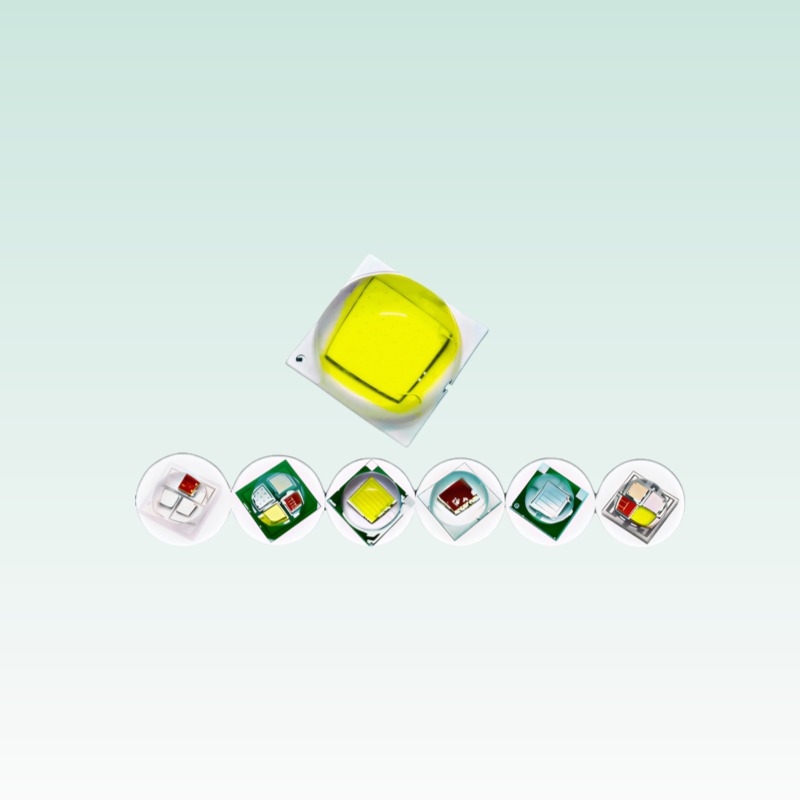

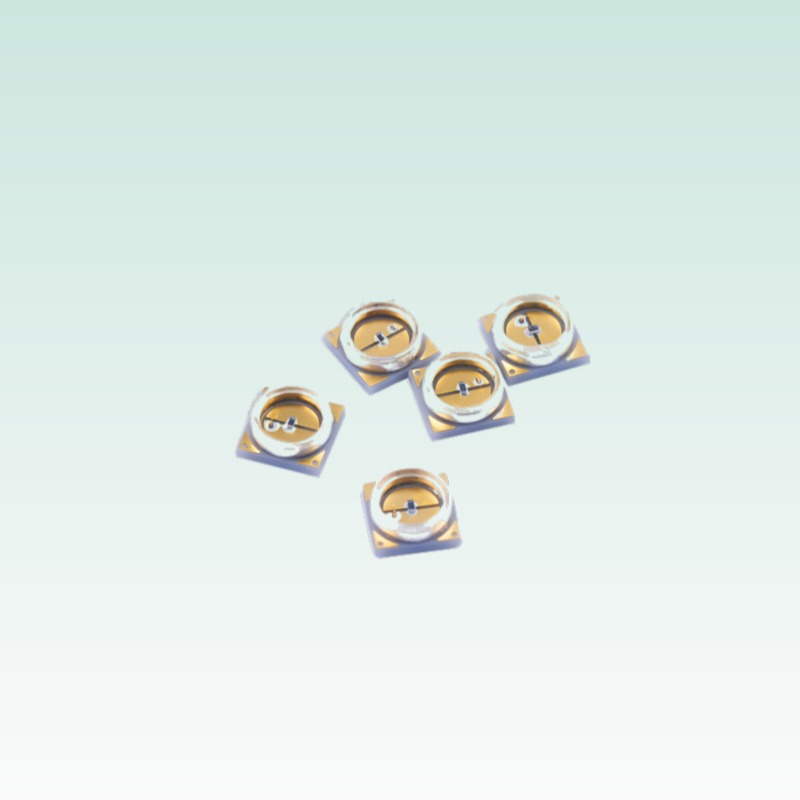





Ultraviolet C (UVC) light has been used for disinfection for over a century, but traditional mercury lamps have limitations: they contain toxic mercury, take time to warm up, are fragile, and have limited form factors. UVC LEDs are changing the game — small, instant-on, mercury-free, and highly controllable — enabling entirely new disinfection applications in industrial settings.
How UVC Light Kills Microorganisms
UVC light (wavelengths between 200–280nm) damages the DNA and RNA of microorganisms by creating thymine dimers — bonds between adjacent thymine bases in the DNA strand. This prevents the microorganism from replicating, effectively inactivating it. The target organism cannot infect or reproduce, even if it remains structurally intact.
The germicidal effectiveness of UV light varies dramatically with wavelength, following a curve that peaks around 265nm — the wavelength most strongly absorbed by DNA.
Wavelength Matters: 254nm vs 265nm vs 275nm
UVC LEDs are available at several wavelengths, each with different germicidal efficacy, efficiency, and cost.
| Wavelength | Germicidal Efficacy | Wall-Plug Efficiency | Cost | Notes |
|---|---|---|---|---|
| 254nm | Very High (~85% of peak) | Lowest | Highest | Closest to traditional mercury lamp wavelength |
| 265nm | Highest (100% peak) | Low-Medium | High | Optimal DNA absorption; the gold standard for efficacy |
| 275nm | Medium-High (~60% of peak) | Highest | Lowest | Better electrical efficiency, more photons per watt |
| 280nm | Moderate (~30% of peak) | High | Lowest | Often used for combined disinfection + curing |
Key insight: The most effective wavelength (265nm) isn’t always the best choice for every application. Because 275nm LEDs have significantly better wall-plug efficiency (often 2–3x higher), they can deliver more total disinfection power per watt of electricity, despite lower per-photon efficacy. For many industrial designs, 275nm offers the best balance of performance and energy efficiency.
Understanding UV Dosage (Fluence)
Disinfection performance depends on UV dosage (also called fluence), measured in mJ/cm² or mWs/cm². It’s the product of UV intensity and exposure time:
Dosage (mJ/cm²) = Intensity (mW/cm²) × Time (seconds)
Different microorganisms require different dosages for 99.9% inactivation (log-3 reduction):
| Microorganism | Required Dosage (mJ/cm²) |
|---|---|
| E. coli (bacteria) | 3–7 |
| Salmonella | 5–10 |
| Staphylococcus aureus | 4–10 |
| Legionella pneumophila | 5–12 |
| Influenza virus | 3–10 |
| Adenovirus | 20–40 |
| Cryptosporidium (protozoa) | 8–15 |
| Aspergillus niger (mold) | 30–50 |
These are baseline values. Actual required dosage depends on:
- Target reduction level (log-3 = 99.9%, log-4 = 99.99%, log-6 = 99.9999%)
- Water quality (turbidity, dissolved solids absorb UV)
- Flow rate and mixing
- Distance from UV source (inverse square law)
- Surface reflectivity and geometry (for surface disinfection)
- Point-of-use drinking water purification
- Industrial process water disinfection
- Cooling tower water treatment (Legionella control)
- Pharmaceutical grade water systems
- UVC LEDs enable compact, modular designs with instant on/off and precise dosing
- Conveyor belt disinfection in food processing
- Medical device and instrument sterilization
- Pharmaceutical packaging decontamination
- Cleanroom surface treatment
- Robotic UVC disinfection systems for warehouses and laboratories
- HVAC system integration (upper-room UVC)
- Cleanroom and laboratory air treatment
- Food processing facility airborne pathogen control
- Upper-air UVC fixtures for occupied spaces (indirect, ceiling-mounted)
- Package surface disinfection (bottles, caps, packaging film)
- Liquid food processing (juice, dairy alternatives)
- Food contact surface sanitization
- Cold-chain and storage disinfection
- Hospital room disinfection systems
- Medical equipment sterilization
- Water purification for dialysis and medical procedures
- Hand hygiene verification systems
- Eye damage: UVC can cause photokeratitis (corneal burn) and conjunctivitis. Acute exposure is painful but usually temporary; chronic exposure increases cataract risk.
- Skin damage: Short-term: erythema (redness) and blistering. Long-term: increased skin cancer risk.
- Rule of thumb: If you can see the UVC LED directly (even the faint blue glow from the chip), you’re exposed and it’s unsafe.
- Physical barriers and shielding — Enclose UVC sources or install guards that prevent direct exposure
- Interlock switches — Doors or access panels with safety interlocks that shut off UVC power when opened
- Motion sensors — Detect human presence and shut off UVC in accessible areas
- Warning signage and lights — Clearly mark UVC zones with warning signs and indicator lights
- Personal protective equipment (PPE) — UVC-blocking face shields, goggles, and gloves for maintenance personnel
- Regulatory compliance — Follow OSHA 29 CFR 1910.97, IEC 62471, and local UV exposure limits
- UVC LEDs at wavelengths above 240nm produce negligible ozone
- 254nm LEDs produce minimal ozone
- Wavelengths below 240nm (VUV) can generate significant ozone — ensure proper ventilation or use ozone-free designs
- Always check manufacturer ozone production specifications
- Prolonged UVC exposure can degrade plastics, rubbers, and adhesives
- Use UVC-resistant materials: stainless steel, quartz, PTFE, silicone, certain UV-stabilized plastics
- Verify material compatibility for your specific wavelength and dosage
Industrial Applications of UVC LEDs
1. Water Treatment
2. Surface Disinfection
3. Air Disinfection
4. Food and Beverage
5. Medical and Healthcare
Design Calculation Example: Surface Disinfection
Scenario: Disinfecting a 30cm × 30cm conveyor belt surface with 265nm UVC LEDs. Target: 99.9% bacterial reduction (10 mJ/cm² safety margin). Conveyor speed: 0.5 m/s.
1. Calculate exposure time:
– Illuminated length of conveyor = 10 cm (LED array coverage)
– Exposure time = 0.1m / 0.5 m/s = 0.2 seconds
2. Calculate required intensity:
– Intensity = Dosage / Time = 10 mJ/cm² / 0.2 s = 50 mW/cm²
– Add safety factor (1.5x): 75 mW/cm² target
3. Select LEDs and layout:
– Each 265nm UVC LED: ~20 mW output at 500mA
– With reflector/optics: ~5 mW/cm² at 5cm distance per LED
– LEDs needed: 75 / 5 = 15 LEDs per 30cm strip
– Add redundancy: 20 LEDs per strip for reliable coverage
4. Verify safety:
– Ensure no direct eye or skin exposure
– Add interlocks, motion sensors, or shielding
– Calculate ozone production (265nm LEDs produce negligible ozone; <240nm can produce significant amounts)
Critical Safety Considerations
UVC light is hazardous to human eyes and skin. Industrial UVC LED systems must be designed with safety as a top priority.
1. Direct Exposure Hazards
2. Safety Controls
3. Ozone Considerations
4. Material Degradation
Conclusion
UVC LED technology is rapidly transforming industrial disinfection, enabling compact, energy-efficient, mercury-free solutions that weren’t possible with traditional lamp technology. Successful implementation requires careful attention to wavelength selection, dosage calculation, system design, and safety. When implemented correctly, UVC LED systems deliver reliable, chemical-free disinfection with low operating costs and minimal maintenance.
Queendom LED offers a full range of UVC LED products (254nm, 265nm, 275nm, 280nm) in various packages and power levels, with engineering support for system design, thermal management, and dosage optimization.
Published for educational purposes — Queendom LED Technical Resources
Further reading: UVC 254nm Sterilization Solutions · UV LED Medical Sterilization
