
 English
 Afrikaans
 Albanian
 Amharic
 Arabic
 Armenian
 Azerbaijani
 Basque
 Belarusian
 Bengali
 Bosnian
 Bulgarian
 Catalan
 Cebuano
 Chichewa
 Corsican
 Croatian
 Czech
Czech Danish
 Dutch
Dutch Esperanto
 Estonian
 Filipino
 Finnish
 French
 Frisian
 Galician
 Georgian
 German
 Greek
Greek Gujarati
 Haitian Creole
 Hausa
Hausa Hawaiian
 Hebrew
 Hindi
Hindi Hmong
Hmong Hungarian
 Icelandic
 Igbo
Igbo Indonesian
 Irish
Irish Italian
 Japanese
 Javanese
 Kannada
 Kazakh
 Khmer
Khmer Korean
 Kurdish (Kurmanji)
 Kyrgyz
 Lao
Lao Latin
Latin Latvian
 Lithuanian
 Luxembourgish
 Macedonian
 Malagasy
 Malay
Malay Malayalam
 Maltese
 Maori
Maori Marathi
 Mongolian
 Myanmar (Burmese)
 Nepali
 Norwegian
 Pashto
 Persian
 Polish
 Portuguese
 Punjabi
 Romanian
 Russian
 Samoan
 Scottish Gaelic
 Serbian
 Sesotho
 Shona
Shona Sindhi
 Sinhala
 Slovak
 Slovenian
 Somali
 Spanish
 Sudanese
 Swahili
 Swedish
 Tajik
Tajik Tamil
Tamil Telugu
 Thai
Thai Turkish
 Ukrainian
 Urdu
Urdu Uzbek
Uzbek Vietnamese
 Welsh
Welsh Xhosa
Xhosa Yiddish
 Yoruba
 Zulu
Zulu


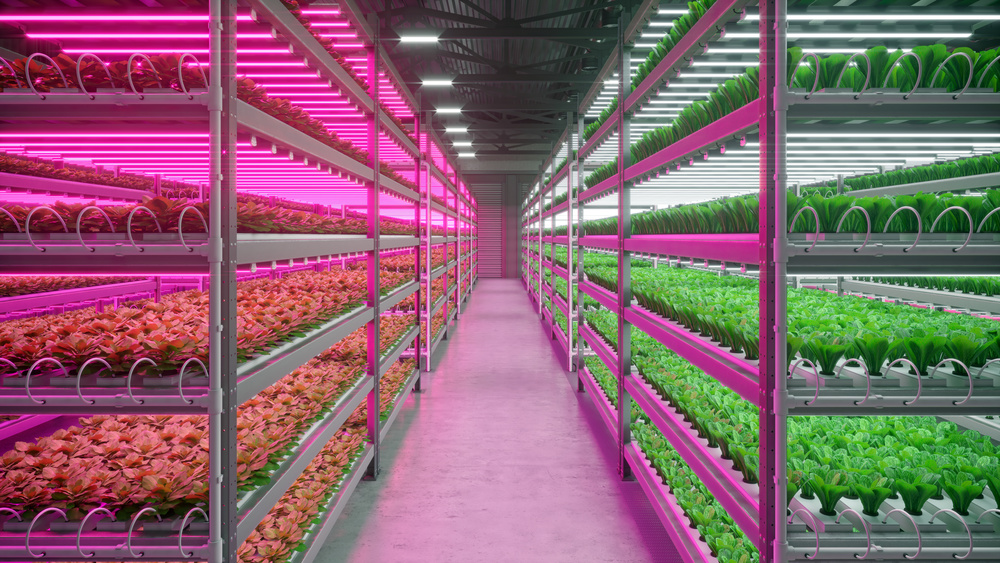



T8 and T10 LED plant grow light tubes are both linear formats for greenhouse and vertical farming racks, and the practical difference comes down to cross-section, heat management and the photon budget each body can carry. T8 means a 26 mm tube; T10 means 32 mm. For most growers the question is not which diameter is better, but which body fits the rack geometry and the light recipe on that shelf.
What the Diameter Actually Changes
The number after the T is the tube diameter in eighths of an inch, but the consequence is thermal, not optical. T8 tubes are slimmer and lighter, and their dimensions match standard 4 ft and 8 ft housings, which makes them the natural retrofit choice. Typical T8 horticultural tubes run 18-40 W and reach efficacy above 2.5 umol/J with horticultural phosphors.
A T10 body carries a larger aluminum cross-section. More surface area means better passive cooling, so the same shelf can run higher wattage or a twin-spectrum version — blue-rich vegetative light plus extra red or far-red content — without localized hot spots. The wider body also spreads the LED sources further apart, which helps optical uniformity at very short mounting distances.
| Parameter | T8 tube | T10 tube |
|---|---|---|
| Diameter | 26 mm | 32 mm |
| Cooling surface | Moderate | Larger aluminum cross-section |
| Typical power range | 18-40 W | Higher output, twin-spectrum options |
| Efficacy (horticultural phosphors) | Above 2.5 umol/J | Similar, with more thermal headroom |
| Best fit | Retrofits, propagation, low-density racks | Dense leafy greens, high photon budget |
Optics Beat Diameter at 20-30 cm
In multi-tier racks, tubes hang 20-30 cm above the tray. At that distance, optics decide PPFD uniformity, not diameter. A bare strip of LED chips produces a lambertian distribution, so the light drops sharply between tubes and the tray edges run dim. Fixtures intended for plant growth should use lenses or reflectors shaped for a batwing distribution, which pushes peak intensity toward the tray edges and keeps PPFD even across the full tray. Request the PPFD map for your planned spacing before committing to either format.
Match the Tube to the Crop Stage
For seed germination and propagation, T8 tubes mounted 20-30 cm above trays are the common configuration, and 18-40 W covers the photon needs of young plants. For dense leafy greens running a higher photon budget for 18 hours a day, T10 often wins: the extra thermal headroom keeps junction temperature and L70 lifetime within specification, cycle after cycle.
Procurement and Maintenance Checklist
Verify the photon efficacy data and request the photometric file plus a PPFD map for the planned spacing. For North American projects, check whether the model is listed on the DLC QPL, since the listing controls rebate eligibility. In humid rooms, clean the optics periodically, check connectors for corrosion, and re-measure PPFD with a quantum sensor before each crop cycle. When comparing quotes, ask for the L70 value at the rack’s operating ambient, not only at 25 C, because the two formats carry very different thermal behaviour.
FAQ
Can T10 tubes fit into an existing T8 fixture?
Tubes of the same length usually share the G13 end cap, but the wider body and driver section may not clear the housing. Check terminal spacing and housing width before retrofitting.
Is a higher-wattage T10 always the better buy?
No. If the shelf runs propagation or low-density trays, the extra output becomes wasted heat. Match the photon budget to the crop stage first.
How do I verify uniformity before purchase?
Ask the supplier for a PPFD map at your mounting height and spacing, and confirm the optics produce a batwing distribution rather than a bare lambertian beam.
