

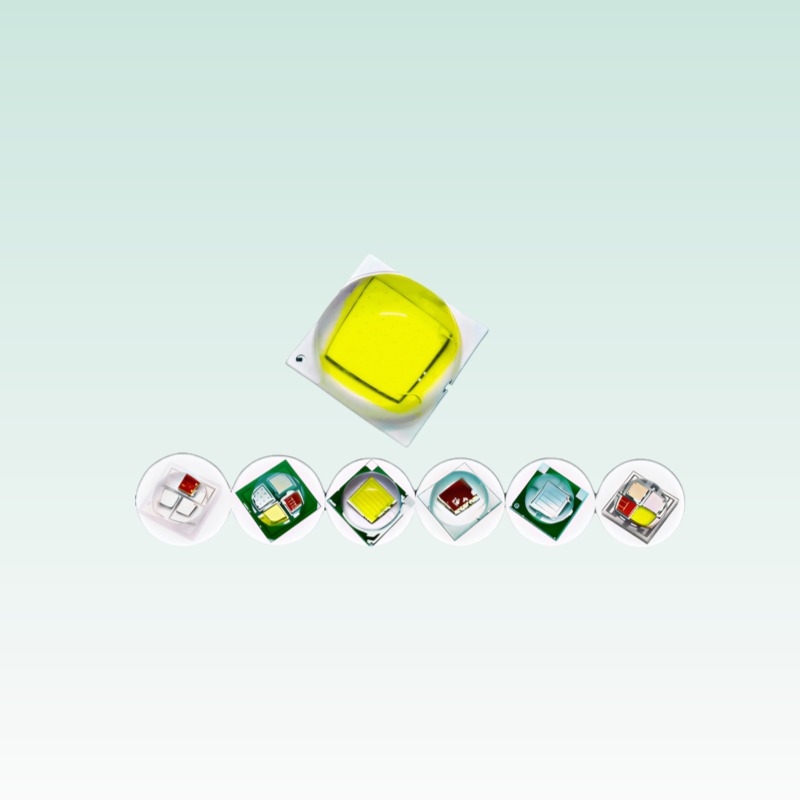

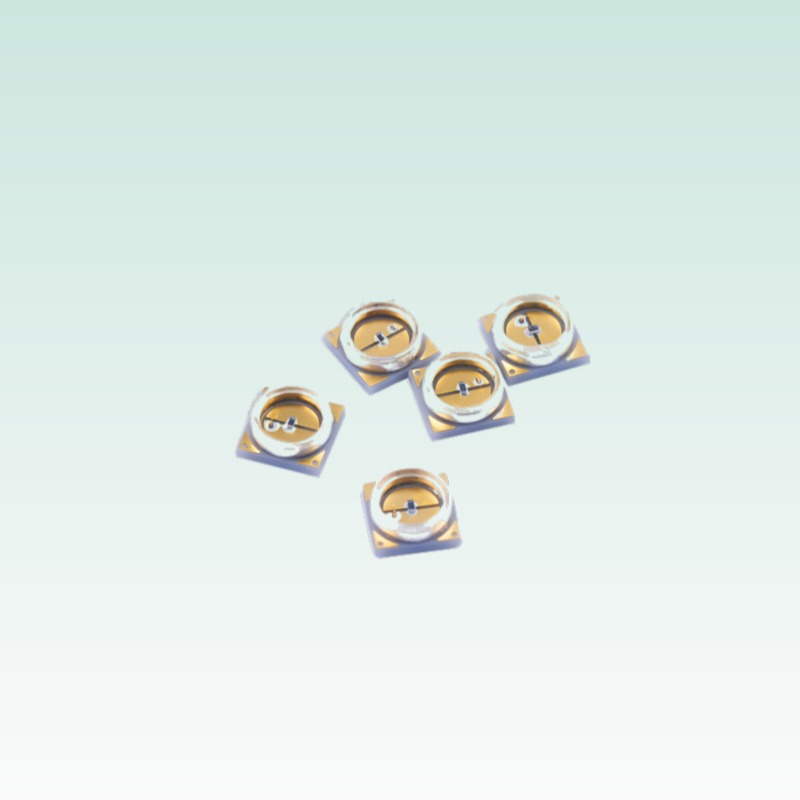








An SMD LED is a package with a silicone or epoxy lens, a die attached on a metal or ceramic pad, and two wire bonds or a flip chip joint, all rated for a soldering process it never experiences again. The reflow profile is the only chance to get the joints right, and it is also the event most likely to shift the part out of its photometric bin. Four zones have to agree at the same time.
The Four Zones
Preheat brings the board up gradually so flux activates and volatiles leave the paste. Soak holds the board in a plateau that lets large and small components reach the same temperature. Reflow crosses the liquidus and wets the pads. Cooling solidifies the joint before the board is handled. Each zone has a rate or a duration that the LED package constrains.
| Zone | Typical setting | Rate or limit | What it protects |
|---|---|---|---|
| Preheat | 150 to 200 C | 1 to 3 C per second | Dampens thermal shock to the die attach |
| Soak | 150 to 200 C | 60 to 120 seconds | Equalises board temperature across packages |
| Reflow | Above 217 C | 45 to 90 seconds above liquidus | Wetting without cooking the encapsulant |
| Peak | 235 to 250 C, 260 C ceiling | Within 10 C of target, 20 to 30 seconds | Silicone lens, wire bond, internal solder |
| Cooling | Down to 100 C | Under 6 C per second | Grain structure, no cracked joints |
The 217 C figure is the melting range of SAC305 lead-free paste. Peak temperature for LED packages is commonly specified between 235 C and 250 C measured at the package body, with an absolute ceiling near 260 C that corresponds to the J-STD-020 classification for the moisture sensitivity level the part carries.
Peak Temperature and the Real Limit
The number on the datasheet is not the whole constraint. A white LED with a silicone lens tolerates the peak better than an older epoxy lens, but the weak point moves elsewhere. Above 250 C the phosphor layer can shift and the silicone can outgas, which shows up later as flux loss and a colour shift rather than an immediate failure. Wire bonds are the second concern: the gold or copper loop softens and the bond pad interface can develop a crack that opens after thermal cycling. A part that passes continuity at end of line can still fail a temperature cycling test weeks later, so the peak is best set from the package rating rather than from the paste window alone.
Ramp Rate: The Quiet Failure Mode
Too fast a ramp is the profile error that hides best. Rising at 5 C per second instead of 2 C loads the die attach and the wire bond with differential expansion, because the ceramic or metal pad and the plastic housing expand at different rates. The joint survives the reflow and fails in the field. Cooling matters equally: a slope above 6 C per second sets up fine grain and residual stress in the solder fillet. Most process engineers watch the peak and ignore the slopes, and the slopes are where a profile drifts when a new oven load or a heavier board is introduced.
Why Package Size Changes the Profile
A 2835 and a 3535 do not share a profile even on the same board. The larger package carries more thermal mass, so it lags the small parts through soak and can still be below the liquidus when the peak passes. The thermal pad under a high power part pulls heat out of the joint and leaves it cooler than the pin. The fix is a longer soak, not a hotter peak, so the assembly reaches one temperature before reflow starts. Verify the profile with thermocouples on the LED pad itself, not on a nearby coupon.
Key Takeaways
- Four zones matter: preheat, soak, reflow and cooling, each with its own rate or duration limit.
- Peak package body temperature commonly sits between 235 C and 250 C, with 260 C as the classification ceiling for most LED packages.
- Ramp rate above about 3 C per second and cooling above 6 C per second are the two errors that pass inspection and fail later.
- Larger packages and heavy thermal pads need a longer soak rather than a higher peak.
- Measure the profile on the LED pad itself, and re-measure after any change to board loading or oven setup.
Related reading
