
 English
 Afrikaans
 Albanian
 Amharic
 Arabic
 Armenian
 Azerbaijani
 Basque
 Belarusian
 Bengali
 Bosnian
 Bulgarian
 Catalan
 Cebuano
 Chichewa
 Corsican
 Croatian
 Czech
Czech Danish
 Dutch
Dutch Esperanto
 Estonian
 Filipino
 Finnish
 French
 Frisian
 Galician
 Georgian
 German
 Greek
Greek Gujarati
 Haitian Creole
 Hausa
Hausa Hawaiian
 Hebrew
 Hindi
Hindi Hmong
Hmong Hungarian
 Icelandic
 Igbo
Igbo Indonesian
 Irish
Irish Italian
 Japanese
 Javanese
 Kannada
 Kazakh
 Khmer
Khmer Korean
 Kurdish (Kurmanji)
 Kyrgyz
 Lao
Lao Latin
Latin Latvian
 Lithuanian
 Luxembourgish
 Macedonian
 Malagasy
 Malay
Malay Malayalam
 Maltese
 Maori
Maori Marathi
 Mongolian
 Myanmar (Burmese)
 Nepali
 Norwegian
 Pashto
 Persian
 Polish
 Portuguese
 Punjabi
 Romanian
 Russian
 Samoan
 Scottish Gaelic
 Serbian
 Sesotho
 Shona
Shona Sindhi
 Sinhala
 Slovak
 Slovenian
 Somali
 Spanish
 Sudanese
 Swahili
 Swedish
 Tajik
Tajik Tamil
Tamil Telugu
 Thai
Thai Turkish
 Ukrainian
 Urdu
Urdu Uzbek
Uzbek Vietnamese
 Welsh
Welsh Xhosa
Xhosa Yiddish
 Yoruba
 Zulu
Zulu
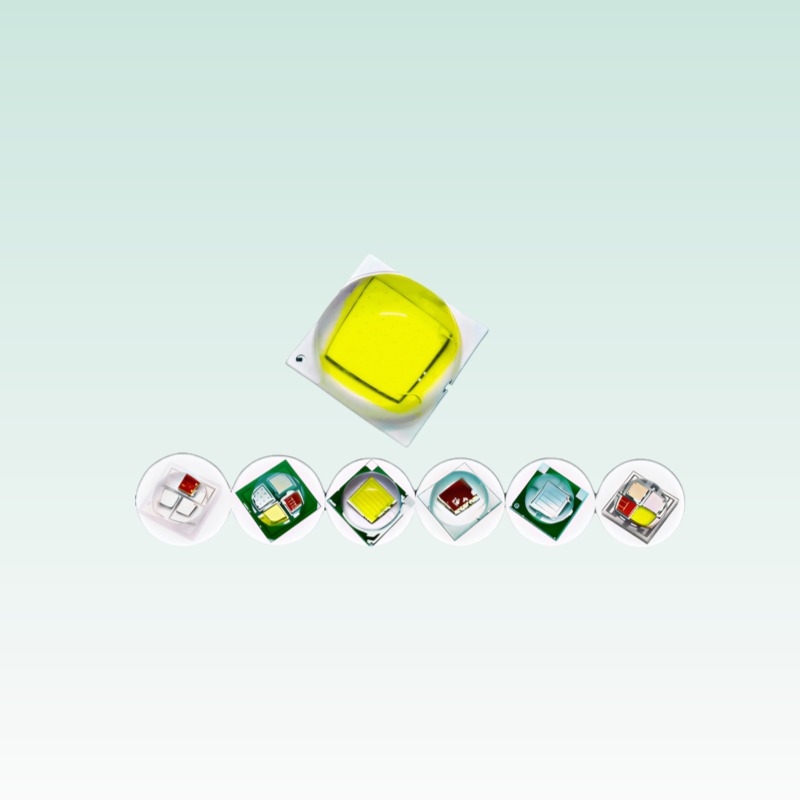

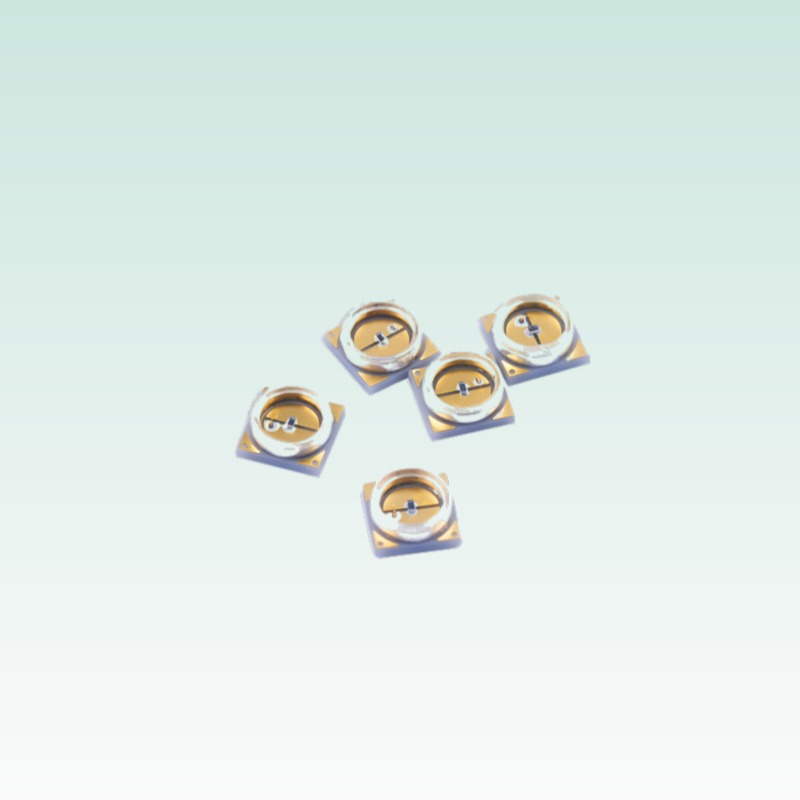
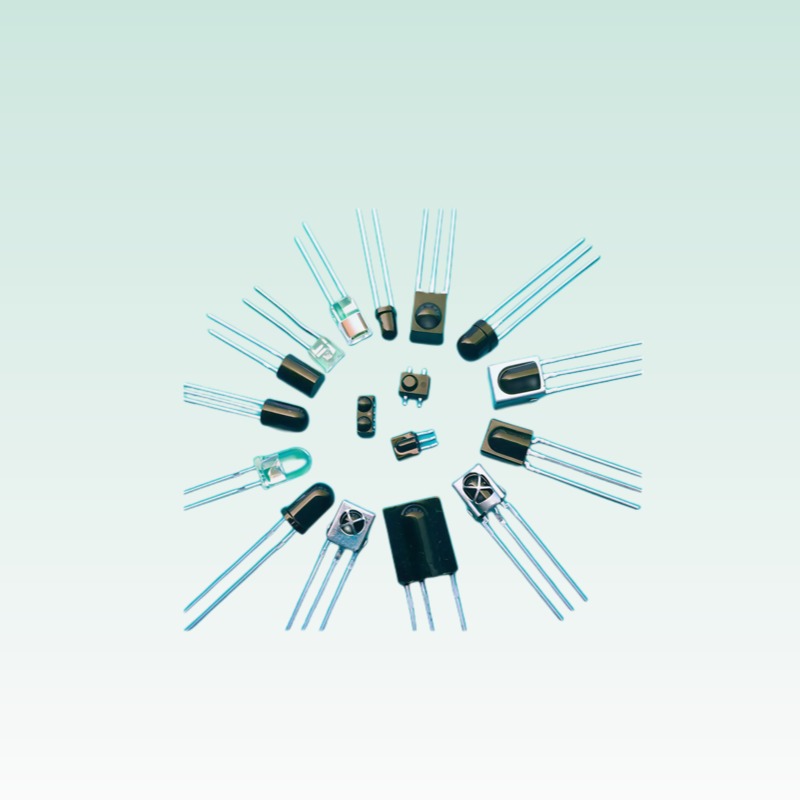









Radiant flux measures the total optical power an LED emits, in watts, with no weighting for human eye sensitivity. It is the correct metric for ultraviolet and infrared products, where lux and lumens are nearly meaningless because the emission is largely invisible. A UV source can radiate hundreds of milliwatts of optical power while producing a lumen reading close to zero — which is exactly why comparing special-purpose LEDs by lumens or by input wattage leads to specification errors.
Two Unit Systems, One Rule
Radiometric units describe physical energy; photometric units describe eye-perceived brightness. UV and SWIR LEDs live almost entirely in the radiometric world, so their datasheets should be read against the left column of this table:
| Quantity | Radiometric (physical) | Photometric (eye-weighted) |
|---|---|---|
| Total output | Radiant flux (W) | Luminous flux (lm) |
| Power arriving at a surface | Irradiance (mW/cm²) | Illuminance (lux) |
| Energy accumulated over time | Dose (mJ/cm²) | No common equivalent |
The split follows a simple rule: photometric units vanish where the eye has no sensitivity. Below roughly 380 nm and above roughly 780 nm, the eye’s response is effectively zero, so a 275 nm UVC LED or a 1550 nm SWIR emitter produces zero lumens no matter how many watts it radiates. Every milliwatt of that power is invisible to a lumen meter, yet fully real to a photoinitiator or to a microorganism’s DNA.
Irradiance and Dose Do the Work
Irradiance, in mW/cm², is the optical power arriving at a work surface. Dose, in mJ/cm², is irradiance multiplied by exposure time. In UV curing, the photoinitiator in an adhesive, ink or coating must absorb a sufficient dose at its activation wavelength to complete polymerization: too little dose leaves the material tacky, and uneven dose produces patchy cure across the bond line. In disinfection, the delivered dose determines the log reduction of microorganisms, which is why germicidal systems move to the UVC band near 254–280 nm, where nucleic acids absorb most strongly. Irradiance also falls with distance — in the far field it follows the inverse-square law, so doubling the working distance cuts it to a quarter. A curing process therefore fixes the working distance, not just the exposure time. Both fields demand calibrated radiometric measurement — the electrical wattage on a datasheet says nothing about what actually reaches the target surface.
Choosing the Wavelength
Radiometric work starts from wavelength. UVA LEDs near 365 nm dominate adhesive and coating curing because common photoinitiators absorb strongly in that band. In the short-wave infrared, materials respond to specific bands: water absorbs strongly around 1450 nm and again near 1900 nm, which is why SWIR sources across roughly 970–1700 nm are used for moisture detection in food sorting, polymer identification in plastic recycling and defect inspection in semiconductor processing. The source wavelength must match the property the inspection system needs to detect, and the specification should state peak wavelength and spectral half width (FWHM), not just a band name.
Specifying Without Ambiguity
A defensible radiometric specification states the unit system, the measurement standard and the operating conditions: peak wavelength, spectral half width, radiant power at a stated drive current, and lifetime data under that same current. Confirm that the values were measured with a calibrated instrument — an integrating sphere or a calibrated radiometer — rather than derived from electrical calculations. Component makers, system integrators and acceptance testers can then all measure the same quantity.
Mixing radiometric and photometric units remains one of the most expensive specification errors in special-purpose lighting. Writing the unit system, the standard and the operating current into the specification is the simplest guard against it.
Key Takeaways
- Radiant flux is total optical power in watts — the metric that replaces lumens for UV and infrared LEDs.
- Irradiance (mW/cm²) and dose (mJ/cm²) govern UV curing and disinfection outcomes.
- Specify peak wavelength, spectral half width and radiant power at real operating current, measured with calibrated instruments.
