
 English
 Afrikaans
 Albanian
 Amharic
 Arabic
 Armenian
 Azerbaijani
 Basque
 Belarusian
 Bengali
 Bosnian
 Bulgarian
 Catalan
 Cebuano
 Chichewa
 Corsican
 Croatian
 Czech
Czech Danish
 Dutch
Dutch Esperanto
 Estonian
 Filipino
 Finnish
 French
 Frisian
 Galician
 Georgian
 German
 Greek
Greek Gujarati
 Haitian Creole
 Hausa
Hausa Hawaiian
 Hebrew
 Hindi
Hindi Hmong
Hmong Hungarian
 Icelandic
 Igbo
Igbo Indonesian
 Irish
Irish Italian
 Japanese
 Javanese
 Kannada
 Kazakh
 Khmer
Khmer Korean
 Kurdish (Kurmanji)
 Kyrgyz
 Lao
Lao Latin
Latin Latvian
 Lithuanian
 Luxembourgish
 Macedonian
 Malagasy
 Malay
Malay Malayalam
 Maltese
 Maori
Maori Marathi
 Mongolian
 Myanmar (Burmese)
 Nepali
 Norwegian
 Pashto
 Persian
 Polish
 Portuguese
 Punjabi
 Romanian
 Russian
 Samoan
 Scottish Gaelic
 Serbian
 Sesotho
 Shona
Shona Sindhi
 Sinhala
 Slovak
 Slovenian
 Somali
 Spanish
 Sudanese
 Swahili
 Swedish
 Tajik
Tajik Tamil
Tamil Telugu
 Thai
Thai Turkish
 Ukrainian
 Urdu
Urdu Uzbek
Uzbek Vietnamese
 Welsh
Welsh Xhosa
Xhosa Yiddish
 Yoruba
 Zulu
Zulu
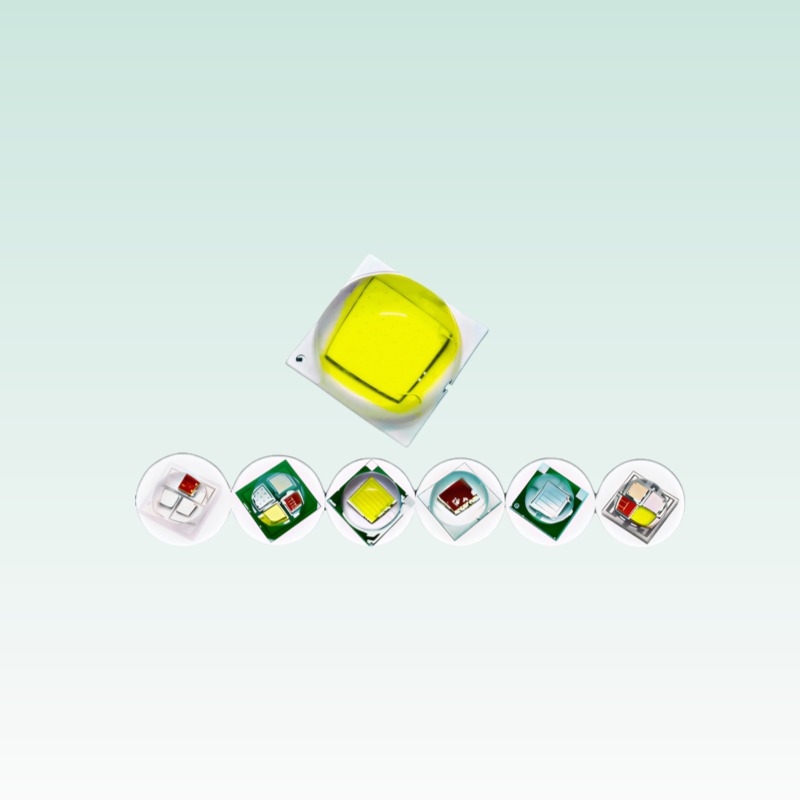
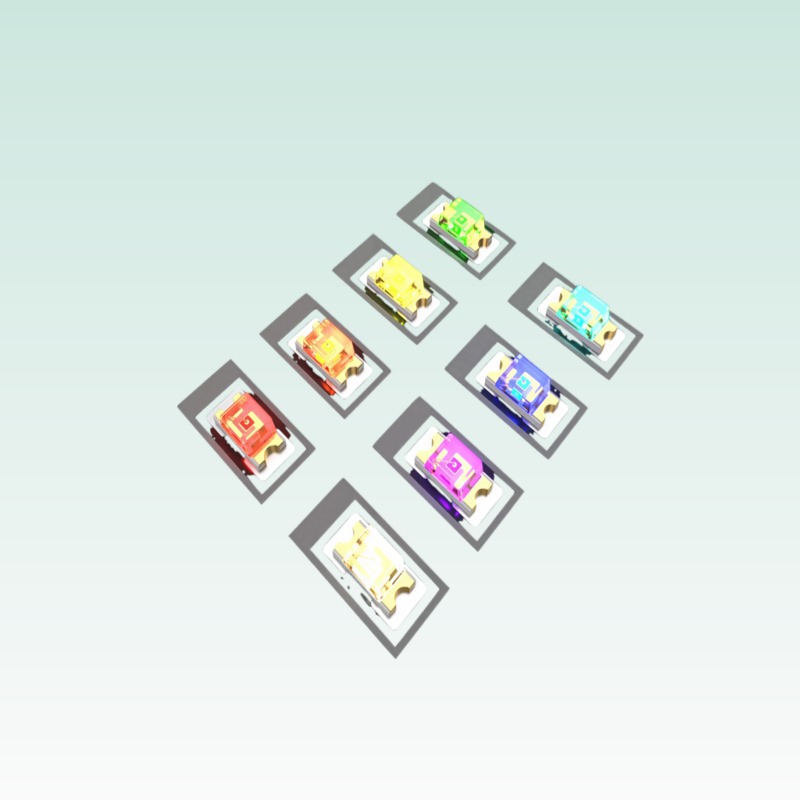




Modern controlled-environment agriculture (CEA) requires precision spectral engineering to maximize photosynthetic photon flux density (PPFD) while minimizing energy input. Our horticultural LED systems are engineered for greenhouse retrofits, vertical farms, and research institutions seeking DLC QPL-qualified solutions. Global agriculture faces mounting pressure to increase yield per hectare while reducing water, energy, and land inputs. Controlled-environment agriculture—encompassing greenhouse supplemental lighting, vertical farming, and plant-factory systems—represents the most promising pathway, yet its success hinges on spectral engineering that conventional HPS and fluorescent technologies cannot deliver. Our horticultural LED systems are built around three core competencies: semiconductor spectral tunability, DLC Horticultural V2.0 qualification for North American utility rebates, and integration-ready control architectures that synchronize light with HVAC, irrigation, and CO₂ dosing. Whether you operate a 50-hectare tomato greenhouse in the Netherlands or a 200 m² vertical farm in Singapore, our lighting designs are validated against crop-specific action spectra and photobiological safety limits (IEC 62471).
Greenhouse Top Lighting
High-efficiency top-lighting modules delivering >2.7 µmol/J with full-spectrum or tailored red/blue/white recipes.
Passive cooling architecture eliminates fan noise and reduces maintenance; aluminum extrusion heat sinks rated for 40,000-hour L90.
Dimmable 0–100% via DALI-2 or wireless control, enabling sunrise/sunset simulation and dynamic DLI (Daily Light Integral) management.
UL8800 horticultural safety certification and IP65 wet-location rating for humid greenhouse environments.
Spectral tunability extends beyond simple red/blue ratios: far-red (730 nm) enrichment triggers shade-avoidance responses that accelerate stem elongation in lettuce and tomato crops, while UV-A (380–400 nm) at low doses enhances secondary metabolite accumulation (anthocyanins, phenolics) in leafy greens without photoinhibition risk.
Driver platforms support 0.1% minimum dimming resolution, enabling sunrise/sunset ramps that reduce photoperiod shock during abrupt ON/OFF transitions.
Custom spectral recipes are developed in collaboration with university agronomy departments and validated through replicated growth-chamber trials before commercial release.
All greenhouse luminaires carry IP66 wet-location ratings with silicone-potting of driver PCBs to prevent corrosion in 90%+ RH environments common in tropical greenhouses.
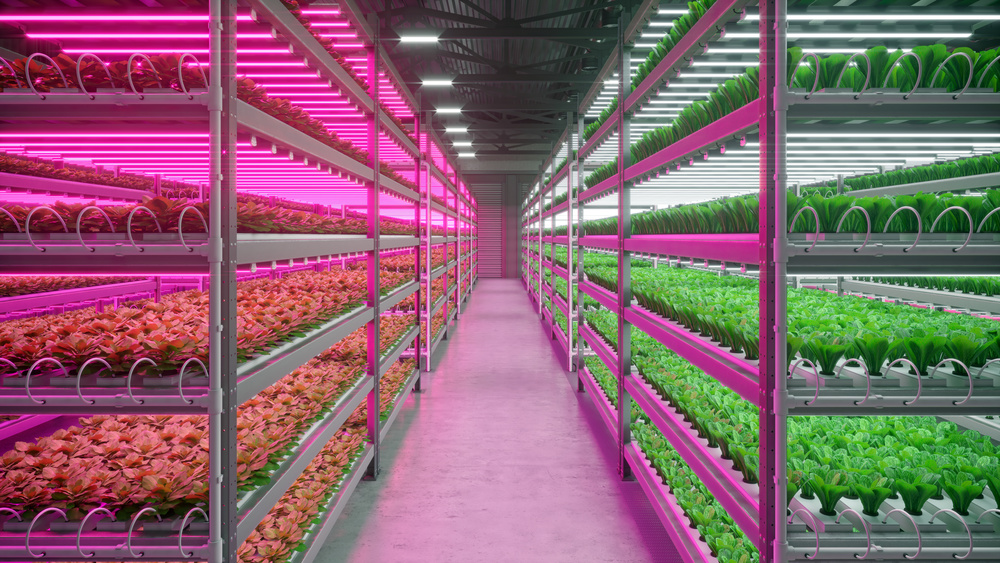
Vertical Farm & Intercanopy Lighting
Linear interlighting bars with 120° batwing distribution penetrate dense crop canopies, increasing lower-leaf photosynthesis.
Low-profile design (<40 mm depth) fits between shelving tiers in multi-layer vertical farms without shadow interference. Spectral tunable options allow researchers to test far-red (730 nm) enrichment, UV-B stress, and blue-light morphogenic effects. Integrated power supply with daisy-chain wiring reduces cable clutter and simplifies installation in confined grow rooms. Interlighting bar spacing and elevation are optimized via ray-tracing simulation (TracePro / LightTools) to achieve target PPFD at the lower canopy with <15% coefficient of variation, eliminating dark zones that reduce overall biomass. Fixtures are daisy-chainable up to 20 units per electrical circuit (230V / 277V / 347V options), minimizing panel-board breaker count and installation labor in multi-tier racking systems. Spectral flexibility is delivered via plug-in LED module cartridges, allowing growers to switch from vegetative (higher blue) to generative (higher red) spectra without replacing entire luminaires. Safety compliance includes UL 8800 horticultural lighting evaluation, covering electrical insulation, moisture ingress, and plant-contact biocompatibility. Research & Spectral Flexibility Multi-channel LED arrays (ROYGBIV + UV + IR) enable programmable spectral recipes for photobiology and phenomics research. Quantum sensor calibration protocols ensure ±5% PPFD accuracy across 400–700 nm PAR range. Data-logging integration with environmental sensors (temperature, humidity, CO₂) for closed-loop climate optimization. Each multi-channel fixture is factory-calibrated for spectral power distribution (SPD) using an integrating sphere spectroradiometer (Labsphere, 350–1100 nm range, 1 nm resolution). Calibration certificates include photon flux per nanometer, peak wavelength, and FWHM for every channel, ensuring reproducibility across experimental replicates. Control software supports time-sequence programming with 1-minute resolution, enabling complex photoperiodic treatments (e.g., 16h light / 8h dark with 2-hour midday far-red pulse). Data export in CSV format integrates with R and Python statistical pipelines for peer-review publication workflows. DLC QPL & Utility Rebates DLC Horticultural V2.0 listed products qualify for U.S. and Canadian utility rebate programs, reducing CapEx by 30–60%. Spectral Q reports document PPE, PPF, and photon distribution for rebate documentation and grant applications. DLC Horticultural V2.0 Technical Requirements specify minimum Photosynthetic Photon Efficacy (PPE) of 1.9 µmol/J for standard listing and 2.3 µmol/J for Premium. Our top-lighting modules exceed Premium thresholds, unlocking the highest rebate tiers from utilities such as BC Hydro, PG&E, and ConEd. Spectral Q reports document PPF (µmol/s), PPE (µmol/J), and photon distribution per band (UV, blue, green, red, far-red), satisfying both rebate auditors and grant-funding bodies (USDA NRCS EQIP). Pre-submission support includes DLC application review, test-lab coordination, and rebate-form completion assistance. — QUEENDOM LED Lighting Solutions | B2B Industrial & Commercial Lighting —
Related Products
Further reading: Horticulture LEDs Solutions · Greenhouse Tomato Grow Light Case
