
 English
 Afrikaans
 Albanian
 Amharic
 Arabic
 Armenian
 Azerbaijani
 Basque
 Belarusian
 Bengali
 Bosnian
 Bulgarian
 Catalan
 Cebuano
 Chichewa
 Corsican
 Croatian
 Czech
Czech Danish
 Dutch
Dutch Esperanto
 Estonian
 Filipino
 Finnish
 French
 Frisian
 Galician
 Georgian
 German
 Greek
Greek Gujarati
 Haitian Creole
 Hausa
Hausa Hawaiian
 Hebrew
 Hindi
Hindi Hmong
Hmong Hungarian
 Icelandic
 Igbo
Igbo Indonesian
 Irish
Irish Italian
 Japanese
 Javanese
 Kannada
 Kazakh
 Khmer
Khmer Korean
 Kurdish (Kurmanji)
 Kyrgyz
 Lao
Lao Latin
Latin Latvian
 Lithuanian
 Luxembourgish
 Macedonian
 Malagasy
 Malay
Malay Malayalam
 Maltese
 Maori
Maori Marathi
 Mongolian
 Myanmar (Burmese)
 Nepali
 Norwegian
 Pashto
 Persian
 Polish
 Portuguese
 Punjabi
 Romanian
 Russian
 Samoan
 Scottish Gaelic
 Serbian
 Sesotho
 Shona
Shona Sindhi
 Sinhala
 Slovak
 Slovenian
 Somali
 Spanish
 Sudanese
 Swahili
 Swedish
 Tajik
Tajik Tamil
Tamil Telugu
 Thai
Thai Turkish
 Ukrainian
 Urdu
Urdu Uzbek
Uzbek Vietnamese
 Welsh
Welsh Xhosa
Xhosa Yiddish
 Yoruba
 Zulu
Zulu




UV LED curing has largely replaced mercury arc lamps in industrial printing, coating, and assembly — but designers still face a basic question: 395nm vs 405nm UV LED curing, which wavelength should the system use? The two wavelengths are only 10nm apart, yet they interact differently with photoinitiators, substrates, and human operators. This guide explains the differences and when each one wins.
What Actually Changes Between 395nm and 405nm
- Photoinitiator absorption — most common photoinitiators for radical curing (such as TPO and BAPO types) absorb strongly in the 360–400nm range; absorption tails off quickly above 400nm
- Visible emission — 395nm sits at the invisible edge of UVA; 405nm is technically violet visible light, emitting a noticeable purple glow
- Depth of cure — longer wavelengths penetrate deeper into thick or pigmented layers, which is why 405nm is popular in 3D printing resins
- LED efficiency and cost — both wavelengths use mature GaN-based emitters with comparable output per dollar; 395nm arrays are the de facto industry standard for wide-web curing
- Broad photoinitiator compatibility — nearly every UV ink, coating, and adhesive formulated for LED cure lists 395nm as a qualifying wavelength
- Highest irradiance per dollar — mass adoption has driven both LED cost and system integration cost down
- Familiar chemistry — formulators have spent a decade optimizing around 385–395nm sources
- SLA/DLP 3D printing — many photopolymer resins are formulated around 405nm emitters for better depth penetration and lower cost optics
- Thick-section adhesive bonding — deeper penetration supports through-cure where 395nm would cure only the surface layer
- Fluorescence excitation — 405nm efficiently excites many fluorophores used in inspection and bio-detection
- Cost-sensitive visible-violet applications — when slight visibility is acceptable, 405nm sources are inexpensive and efficient
- Curing standard UV ink or coating? 395nm
- Deep-section or pigmented adhesive? 405nm (or dual-wavelength)
- SLA/DLP printer build? Match the resin datasheet — most specify 405nm
- Operators working near exposed optics? Either is safe with proper shielding, but 395nm avoids the distracting purple glow
- High-speed wide-web printing? 395nm arrays with matched reflector optics
395nm UVA LEDs: The Industry Standard for Curing
395nm has become the default wavelength for high-speed industrial curing lines.
Why 395nm dominates:
Typical applications: flexographic and inkjet printing, wood and plastic coating lines, optical bonding, fiber coating, and medical device adhesive assembly.
405nm Violet LEDs: Where Longer Wavelength Wins
405nm is visible violet light, not true UVA — but that is not a drawback for several important applications.
Where 405nm is the better choice:
The limitation: fewer photoinitiators absorb well above 400nm, so standard UV inks and coatings may cure slowly or incompletely under 405nm. Always verify the chemistry datasheet specifies the wavelength.
Side-by-Side Comparison
| Parameter | 395nm UVA LED | 405nm Violet LED |
|---|---|---|
| Spectrum position | Invisible UVA edge | Visible violet |
| Photoinitiator coverage | Broadest (TPO, BAPO and blends) | Narrower — resin-specific |
| Surface cure speed | Fast | Moderate |
| Depth penetration | Lower | Higher |
| Typical irradiance available | Very high (modular arrays) | High |
| Cost per watt | Low | Low |
| Best for | Inks, coatings, high-speed lines | 3D printing, thick bonding, fluorescence |
Selection Checklist
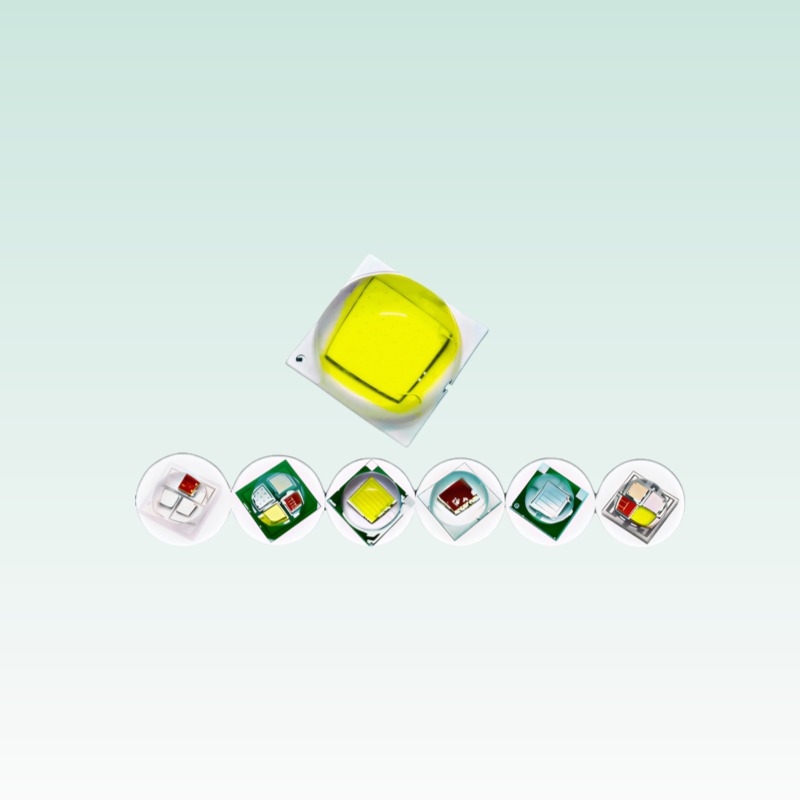
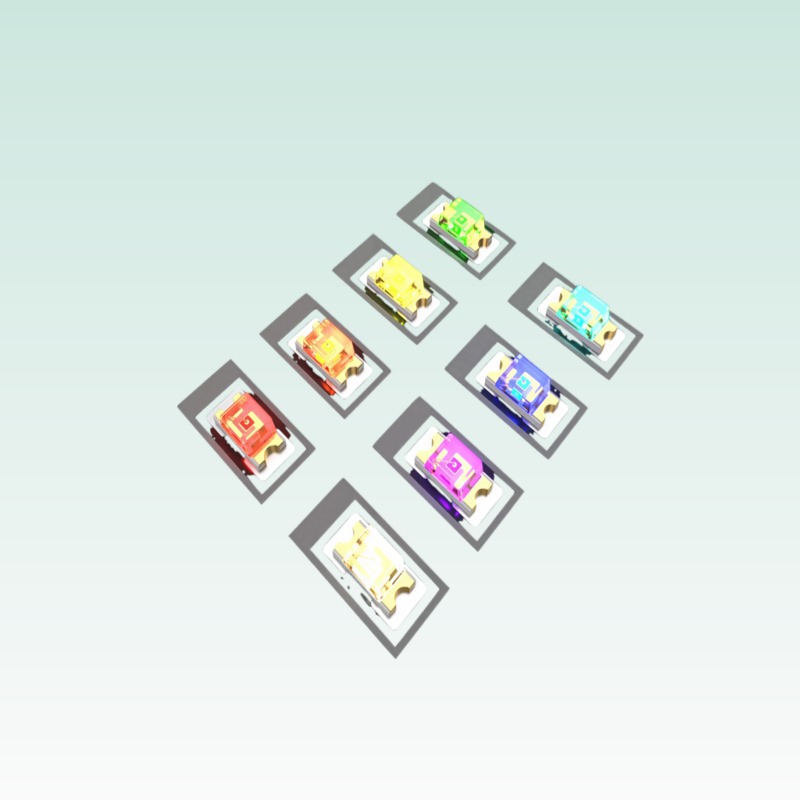
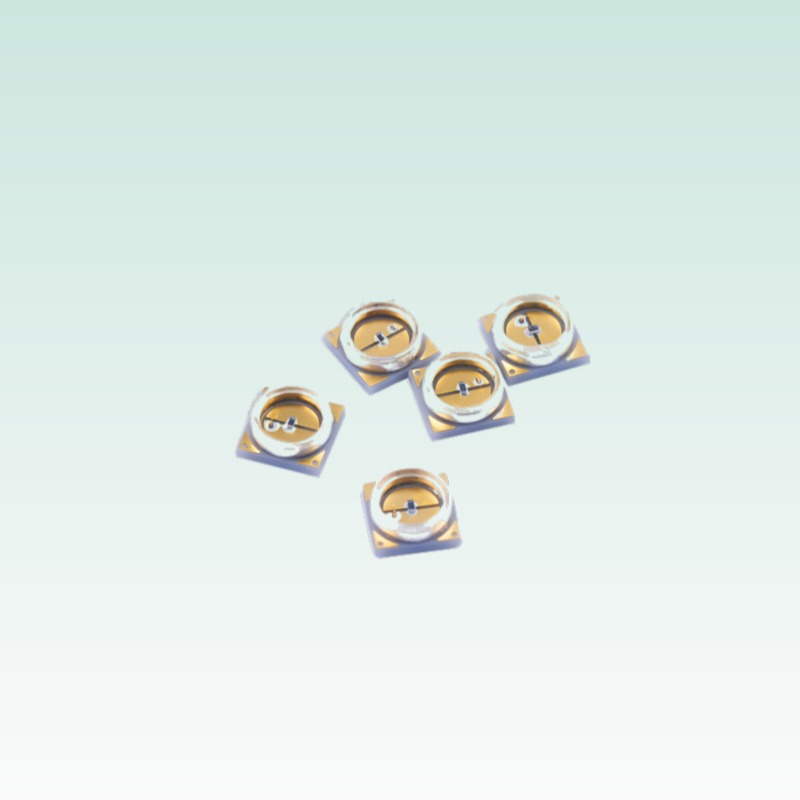
For systems that need both surface and depth cure, dual-wavelength heads combining 365nm/395nm or 395nm/405nm sources are increasingly common — pairing our 2835 UVA LEDs and 3535 UVA LEDs gives integrators flexibility across the 365–405nm range in surface-mount formats suited to dense curing arrays.
Practical Notes for System Integrators
Irradiance (W/cm²) at the cure surface matters more than raw LED power. Factor in working distance, optic losses, and line speed when sizing an array, and confirm the required dose (mJ/cm²) from your chemistry supplier. Thermal design is the second critical factor — sustained junction temperature directly degrades UV output over time, so a well-heatsinked 395nm array outperforms an overheated higher-spec array.
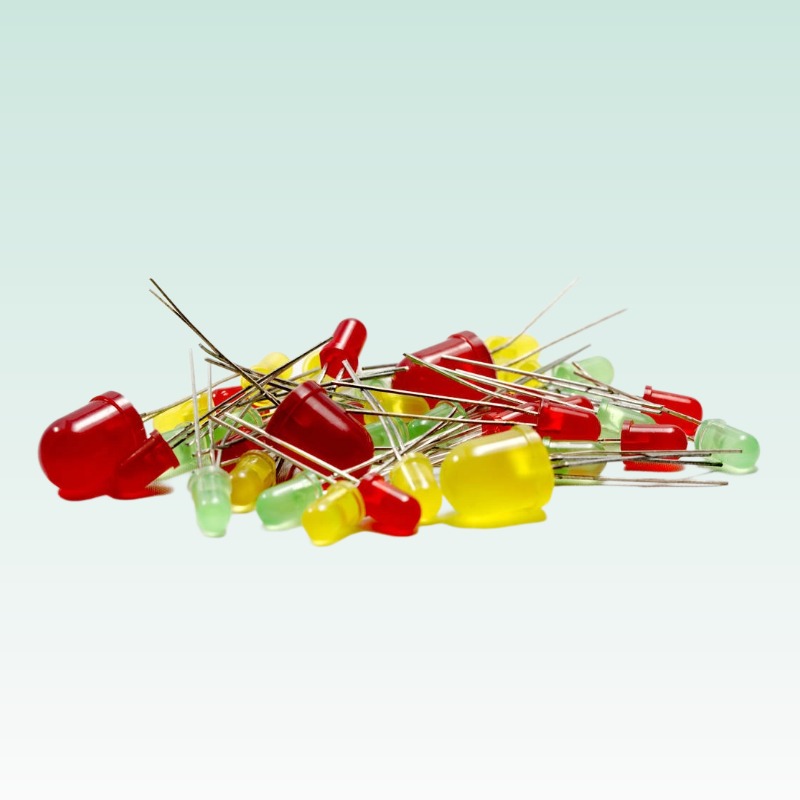
Queendom LED manufactures UVA LEDs from 365nm through 405nm in 2835, 3528, 3535, 5050, 7070, and through-hole packages, supporting curing, printing, and inspection system builders with consistent binned output.
Published for educational purposes — Queendom LED Technical Resources
Further reading: UVA 365nm vs 395nm: Choosing the Right Wavelength for UV Curing · AOI Machine Vision Inspection Case
