
 English
 Afrikaans
 Albanian
 Amharic
 Arabic
 Armenian
 Azerbaijani
 Basque
 Belarusian
 Bengali
 Bosnian
 Bulgarian
 Catalan
 Cebuano
 Chichewa
 Corsican
 Croatian
 Czech
Czech Danish
 Dutch
Dutch Esperanto
 Estonian
 Filipino
 Finnish
 French
 Frisian
 Galician
 Georgian
 German
 Greek
Greek Gujarati
 Haitian Creole
 Hausa
Hausa Hawaiian
 Hebrew
 Hindi
Hindi Hmong
Hmong Hungarian
 Icelandic
 Igbo
Igbo Indonesian
 Irish
Irish Italian
 Japanese
 Javanese
 Kannada
 Kazakh
 Khmer
Khmer Korean
 Kurdish (Kurmanji)
 Kyrgyz
 Lao
Lao Latin
Latin Latvian
 Lithuanian
 Luxembourgish
 Macedonian
 Malagasy
 Malay
Malay Malayalam
 Maltese
 Maori
Maori Marathi
 Mongolian
 Myanmar (Burmese)
 Nepali
 Norwegian
 Pashto
 Persian
 Polish
 Portuguese
 Punjabi
 Romanian
 Russian
 Samoan
 Scottish Gaelic
 Serbian
 Sesotho
 Shona
Shona Sindhi
 Sinhala
 Slovak
 Slovenian
 Somali
 Spanish
 Sudanese
 Swahili
 Swedish
 Tajik
Tajik Tamil
Tamil Telugu
 Thai
Thai Turkish
 Ukrainian
 Urdu
Urdu Uzbek
Uzbek Vietnamese
 Welsh
Welsh Xhosa
Xhosa Yiddish
 Yoruba
 Zulu
Zulu
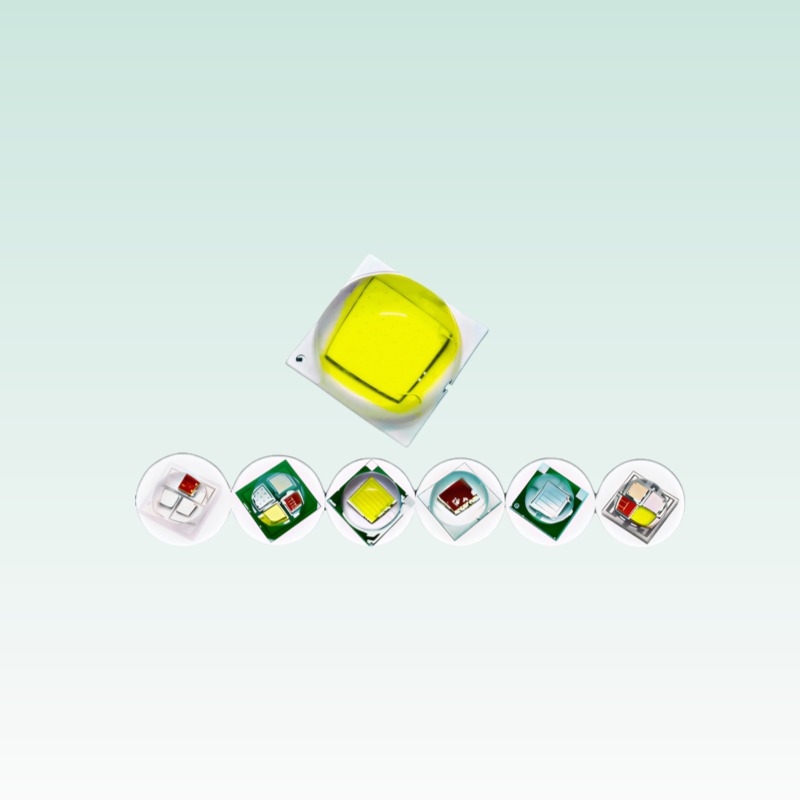
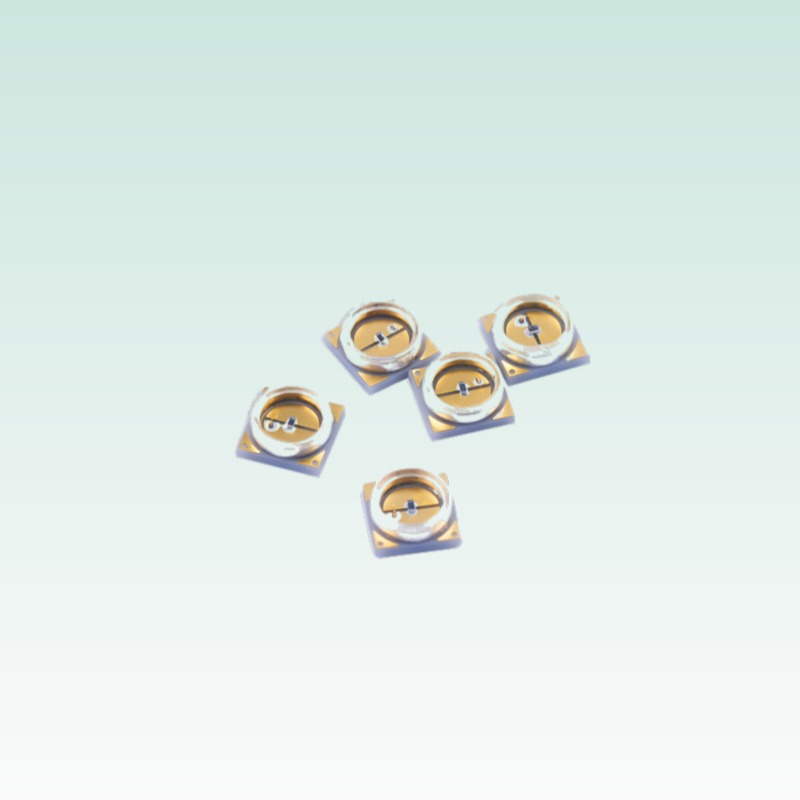







Short-wave infrared (SWIR) LED chips are one of the fastest-growing niche segments in solid-state lighting. They power machine-vision sorters, plastic-recycling lines, semiconductor wafer inspection, medical diagnostics, and defence-adjacent imaging systems. But unlike mainstream visible LEDs, SWIR components carry tight tolerances, demanding thermal behaviour, and a supplier landscape that is far smaller and more specialised.
For procurement engineers and purchasing managers who buy SWIR LED chips or modules in volume, the difference between a reliable supplier and a poor one shows up not in the quotation but in delivered wavelength accuracy, binning consistency, thermal derating, and long-term flux maintenance. This guide lays out the criteria that matter most when qualifying a SWIR LED light source supplier.
Step 1 – Define your wavelength, power, and optical requirements before talking to suppliers
The SWIR band is usually defined as 970–1700 nm. Within that range, no single chip serves every application:
- 970–1100 nm: NIR-SWIR boundary, alignment, LiDAR adjunct, moisture sensing in thin films.
- 1150–1350 nm: silicon wafer inspection, glass defect detection, agricultural sorting.
- 1450 nm: strong water-absorption band – moisture content measurement in food, grain, and paper.
- 1550 nm: fibre-optic test equipment, free-space communications, distance sensing, some medical diagnostics.
- 1650–1700 nm: plastic identification (PET vs PVC), food and waste sorting, spectroscopy.
Define three numbers before you compare suppliers: the peak emission wavelength and acceptable drift, the optical output power (mW or W) your system requires at the detector, and the operating temperature range your application imposes. A supplier cannot help you choose correctly if you only ask for “an SWIR LED”.
Step 2 – Verify the chip technology, not just the datasheet
SWIR LED chips are typically grown on indium gallium arsenide (InGaAs) or gallium arsenide (GaAs) epitaxial structures. The emission wavelength is fixed by the epitaxial design, not tuned after packaging. When you are qualifying a supplier, ask the following technical questions:
- What is the epitaxial material system? InGaAs-based emitters dominate 1150–1700 nm; GaAs-based structures cover the shorter edge of the band.
- What is the die size and emitting area? Larger die allow higher drive current but change thermal behaviour and optics coupling.
- What is the wall-plug efficiency at your drive condition? SWIR devices are far less efficient than visible LEDs – a good 1550 nm emitter may be below 10% WPE. Low efficiency means more heat, which your system must manage.
- What is the maximum junction temperature rating? SWIR output power drops sharply with junction temperature. Ask for derating curves, not just a rated maximum current.
- Is wavelength stability documented across the full operating range? In spectroscopy and sorting, a 20 nm drift can ruin calibration. Demand data, not promises.
Request the actual binning report – the distribution of peak wavelength and optical power shipped across your order lot, not a single representative sample. Reputable suppliers provide lot-level data or at least binning statistics.
Step 3 – Evaluate the package and thermal design
Heat is the dominant failure driver in SWIR LED systems. Evaluate the package options the supplier offers:
- Ceramic packages (alumina or AlN) – lower thermal resistance, better for high drive current and harsh environments; the standard choice for automotive-grade and industrial-grade components.
- Reflector or lens-integrated packages – reduced optical coupling losses, but validate the beam pattern against your optics.
- Flip-chip configurations – better thermal path and lower inductance; check availability for your wavelength.
- Substrate architecture – ask about the thermal resistance (Rth) junction-to-solder point, usually expressed in K/W; lower is better.
Also ask how the supplier handles die attach and whether they publish solder-reflow profiles. If your assembly line runs standard SMT reflow, a supplier whose recommended profile conflicts with your process will cost you yield.
Step 4 – Test the data you actually rely on
Datasheets are marketing documents with engineering numbers layered on top. Ask for, and independently verify, the following:
- Wall-plug efficiency and optical power at your drive current – not at the supplier’s best-case condition.
- Wavelength vs temperature curve – the shift in peak wavelength between 25 °C and your maximum operating temperature.
- Colour/wavelength binning tolerance – the ± nm range guaranteed within a shipment lot.
- Lifetime and L70/L50 figures – how many hours until output drops to 70% or 50% of initial, measured under your thermal conditions.
- ESD classification – SWIR devices are sensitive; the HBM/MM ratings tell you how much protection your assembly line needs.
If a supplier cannot produce these data points within two business days, that itself is a signal. It is not unreasonable to ask for a small qualification sample before committing to a production order – reputable SWIR manufacturers routinely supply engineering samples for evaluation.
Step 5 – Assess traceability, quality systems, and certifications
For industrial and medical SWIR applications, quality systems matter as much as optical specs. Verify:
- ISO 9001 certification – baseline expectation for any component supplier.
- IATF 16949 – required if your SWIR LED feeds automotive products, such as LiDAR or ADB lighting systems.
- AEC-Q102 qualification – the automotive LED-specific stress qualification; if your application is automotive or harsh-environment industrial, demand AEC-Q102 evidence rather than generic “automotive grade” claims.
- Lot traceability – the supplier should be able to trace a shipped lot back to epitaxial wafer, die batch, and assembly record for recall management.
- Halogen-free / RoHS / REACH compliance – often a contractual requirement for EU-bound products.
Step 6 – Check supply chain and business resilience
SWIR LED chips are a low-volume, high-value niche. A supplier who is healthy today may be a bottleneck tomorrow. Ask about:
- Production capacity and lead time – 1550 nm InGaAs wafers have long cycle times; a supplier without wafer-level inventory will quote lead times that slip.
- Minimum order quantity (MOQ) and flexibility – some SWIR providers offer die-level supply with MOQs in hundreds, others only in thousands.
- Second-source strategy – can the supplier qualify a backup wafer foundry or alternate package line for your critical SKU?
- Change notification policy – a PCN (product change notification) process with a defined lead time is the professional standard.
- Financial and operational stability – sensible to check for a strategic component you cannot easily swap.
Comparison criteria summary
When you shortlist SWIR LED light source suppliers, score them against a weighted matrix. Suggested criteria and typical weights for an industrial machine-vision buyer:
- Wavelength accuracy and binning consistency – 25%
- Thermal performance and derating data quality – 20%
- Qualification evidence (AEC-Q102 / ISO 9001) – 15%
- Engineering support and sample turnaround – 15%
- Price and MOQ flexibility – 10%
- Lead time and supply-chain resilience – 10%
- Documentation and traceability – 5%
Do not select on price alone. The cost of a failed SWIR light source is not the component price – it is the reworked optics, the recalibrated detector, the field service visit, and the lost production window. A supplier who costs 20% more per chip but ships consistent wavelength and derating data is typically the cheaper choice across the product lifetime.
Red flags to watch for
- A datasheet that specifies only a wavelength “range” instead of a nominal peak with tolerance.
- Efficiency and power figures quoted at 25 °C board temperature without thermal data.
- No published derating curves, no reflow profile, no ESD ratings.
- Refusal to provide engineering samples or lot-level binning data.
- “Automotive grade” claims without AEC-Q102 documentation.
- Lead times that change after order placement without a written PCN process.
How QUEENDOM approaches SWIR supply
As a manufacturer of SWIR LED chips and modules across the 970–1700 nm band, QUEENDOM builds components on ceramic substrates with documented thermal resistance, ships with lot-level wavelength and power binning, and provides derating curves on request. For automotive, medical, and machine-vision customers, we can support AEC-Q102 documentation and engineering samples before volume commitment. Tell us your target wavelength, your required optical power, and your operating temperature range – we will send you the data you need to make the comparison yourself.
Getting SWIR procurement right is about asking the right questions before you buy. Wavelength accuracy, thermal management, qualification evidence, and supply-chain resilience will protect your project far better than a few cents per chip – and those are exactly the questions a serious supplier should be happy to answer.
Building your RFQ around the right fields
A structured request-for-quotation (RFQ) is the fastest way to separate capable SWIR suppliers from general LED vendors who are “willing to try”. Include the following fields and insist they are answered in the supplier’s own format, with references to their test data:
- Nominal peak wavelength and acceptable binning tolerance (±nm) at a stated junction temperature.
- Radiant flux or optical power (mW or W) at your drive current, measured by a calibrated integrating sphere, with test conditions stated.
- Forward voltage range at nominal current, and the temperature coefficient of forward voltage.
- Wall-plug efficiency at nominal current, plus a derating curve from 25 °C to the maximum rated case temperature.
- Thermal resistance junction-to-case (Rth(j-c)) and the recommended thermal interface materials.
- Wavelength shift with temperature (nm/°C) and with drive current (nm/A) across the operating window.
- ESD classification (HBM and CDM), moisture sensitivity level, and solder reflow profile.
- Lifetime projection (L70/L50) under your thermal conditions, and the basis of the model.
- Lot-level binning report format: how wavelength and power distributions are documented per shipment.
- Certifications: ISO 9001, IATF 16949 (if automotive), AEC-Q102 evidence (if required), RoHS/REACH declarations.
Ask every candidate to answer the same RFQ. Score the answers against your weighted matrix rather than negotiating each point individually – this keeps the comparison objective and gives you an auditable trail when engineering asks why a supplier was selected.
Total cost of ownership in SWIR supply
The purchase price of a SWIR LED chip is a small fraction of its cost in your product. Consider the full lifetime picture:
- Engineering cost: qualification samples, optical design iterations, and thermal simulations are multiplied with every supplier change.
- Yield impact: wavelength or flux outliers outside your spec rework optics calibration and reduce assembly yield – a ±5% binning difference can cost more than a 20% price difference.
- Field failures: a failed SWIR source in a sorting machine triggers service visits, spare parts, and downtime – the dominant cost element for OEMs serving industrial customers.
- Obsolescence: SWIR die are low-volume; a supplier discontinuing a wavelength forces redesign. Suppliers with documented PCN processes and long-term product commitments protect your roadmap.
Run the comparison on a five-year TCO basis for your projected volumes. The supplier that offers the best data, the tightest bins, and the clearest lifecycle policy usually wins the TCO calculation even at a higher unit price – and that is the supplier you want for a strategic component like SWIR.
Matching the matrix: how to phrase your SWIR requirement
When you write the technical requirement, use the market-standard terminology that qualified suppliers recognise. The full-spectrum specialty source range is consistently described with the terms SWIR LED Chips (970 nm and 1550 nm drivers, the two busiest wavelength bins), high-reliability Ceramic LED Chips for thermal and moisture-sensitive designs, and AEC-Q102 compliance where automotive-grade qualification is part of the bill of materials. Readers who search for these exact phrases (and engineers who audit your specification) will immediately understand the boundary you have drawn around your project, and suppliers will respond with the right product families instead of generic offerings.
Related Products
Further reading: SWIR LED Chips (970-1700nm) · What Are SWIR LEDs?
