
 English
 Afrikaans
 Albanian
 Amharic
 Arabic
 Armenian
 Azerbaijani
 Basque
 Belarusian
 Bengali
 Bosnian
 Bulgarian
 Catalan
 Cebuano
 Chichewa
 Corsican
 Croatian
 Czech
Czech Danish
 Dutch
Dutch Esperanto
 Estonian
 Filipino
 Finnish
 French
 Frisian
 Galician
 Georgian
 German
 Greek
Greek Gujarati
 Haitian Creole
 Hausa
Hausa Hawaiian
 Hebrew
 Hindi
Hindi Hmong
Hmong Hungarian
 Icelandic
 Igbo
Igbo Indonesian
 Irish
Irish Italian
 Japanese
 Javanese
 Kannada
 Kazakh
 Khmer
Khmer Korean
 Kurdish (Kurmanji)
 Kyrgyz
 Lao
Lao Latin
Latin Latvian
 Lithuanian
 Luxembourgish
 Macedonian
 Malagasy
 Malay
Malay Malayalam
 Maltese
 Maori
Maori Marathi
 Mongolian
 Myanmar (Burmese)
 Nepali
 Norwegian
 Pashto
 Persian
 Polish
 Portuguese
 Punjabi
 Romanian
 Russian
 Samoan
 Scottish Gaelic
 Serbian
 Sesotho
 Shona
Shona Sindhi
 Sinhala
 Slovak
 Slovenian
 Somali
 Spanish
 Sudanese
 Swahili
 Swedish
 Tajik
Tajik Tamil
Tamil Telugu
 Thai
Thai Turkish
 Ukrainian
 Urdu
Urdu Uzbek
Uzbek Vietnamese
 Welsh
Welsh Xhosa
Xhosa Yiddish
 Yoruba
 Zulu
Zulu
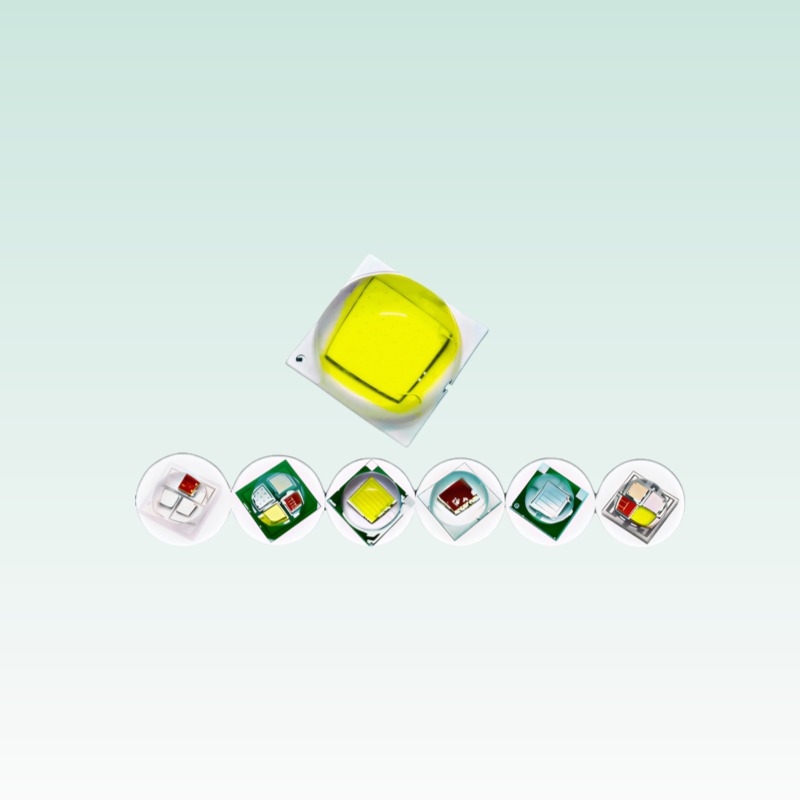
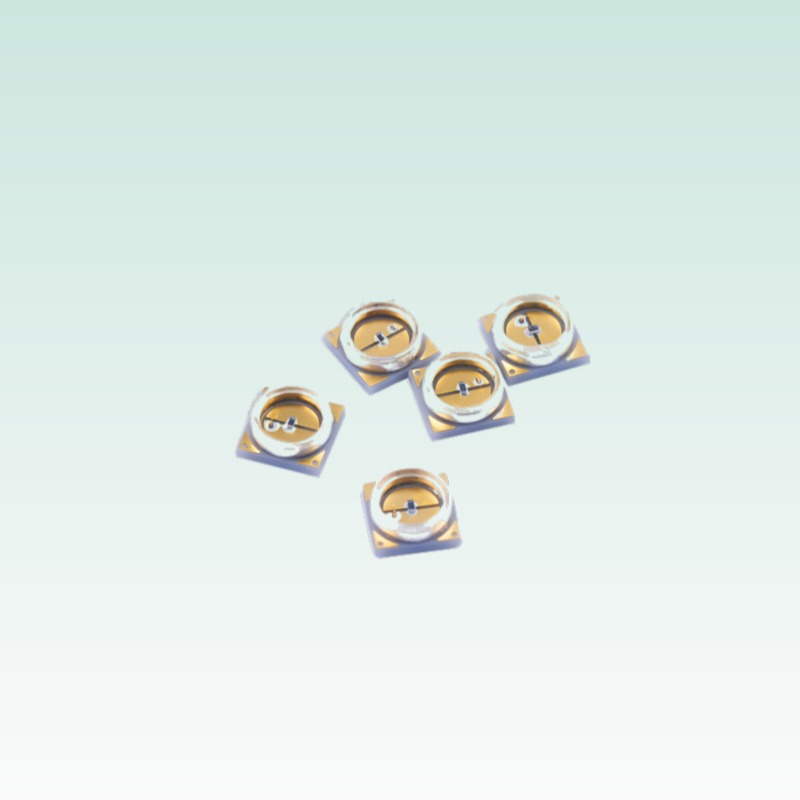




UVA 365nm LEDs now match medium-pressure mercury lamps for most adhesive, coating and screen-printing ink curing, with instant switching, no warm-up and roughly 50-70% lower energy consumption. The comparison is system-level: spectrum, dose delivery, thermal load and lifecycle cost. The numbers below are what matter on a production line.
Spectral Match to Photoinitiators
A mercury lamp emits a line spectrum with strong peaks at 254, 313, 365, 405 and 436 nm plus a broad continuum that mostly becomes heat. A 365nm LED concentrates its output into one band with FWHM of 10-15 nm, aligned to the absorption peaks of the photoinitiators used in free-radical and cationic systems. Cure is defined by dose in J/cm² at the substrate, and a matched spectrum delivers that dose without UVB or UVC side reactions, which reduces yellowing, surface tack and substrate heating.
One discipline transfers from lamp lines. A recipe qualified under mercury was really qualified against a mix of 313, 365 and 405 nm lines, so verify photoinitiator absorption against the LED band before switching sources.
Irradiance, Power and Heat
Commercial 365nm chips run wall plug efficiency of roughly 15-30%, below the 50%+ typical at 395-405 nm, so head design carries the load. Focused COB heads deliver 8-20 W/cm² at the window and dense arrays exceed 20 W/cm², at or above a lamp-reflector system at working distance. LEDs emit almost no IR, so substrate temperature rise comes from absorbed UV and head radiation, not from a radiant IR load. At equal optical dose, the lamp dumps most of its input power as heat that the HVAC system then removes; this is the core of the 50-70% energy saving reported in retrofit audits.
Mercury systems need several minutes to stabilize, and output drifts as electrodes age. LED heads switch in microseconds, strobe with conveyor speed and log dose per part, which enables closed-loop cure control instead of fixed line speed.
| Parameter | Mercury medium-pressure lamp | UVA 365nm LED head |
|---|---|---|
| Spectrum | lines 254-436 nm + IR | 365 ± 5 nm, FWHM 10-15 nm |
| Warm-up | several minutes | none; instant on/off |
| Working irradiance | lamp and reflector dependent | 8-20 W/cm²; >20 W/cm² focused |
| Wall plug efficiency (UVA) | ~10-20% | ~15-30% |
| Source lifetime | 1,000-3,000 h | 20,000-25,000 h to L70 |
| Cooling | high exhaust air flow | compact water or forced air |
| Compliance | mercury handling and disposal | no mercury, no ozone |
Limits and Where Lamps Persist
Penetration depth at 365 nm is shallower than at 395-405 nm because shorter wavelengths are absorbed nearer the surface. Thick, heavily pigmented or highly filled layers may need higher irradiance, longer exposure or a dual-wavelength head. Kilowatt-class web lines at extreme speeds still sometimes justify lamp systems, although LED efficiency gains keep narrowing that gap.
Irradiance also falls with distance, so plan the optics so the working gap is fixed by the fixture rather than adjusted by operators. Selection sequence: match wavelength to the photoinitiator, set the dose window from the formulation datasheet, verify irradiance at working distance with a radiometer calibrated in the 365 nm band, and budget cooling so Tj stays at or below the level behind the manufacturer’s lifetime data.
FAQ
Q: What dose do typical adhesives need?
Formulation dependent, commonly 0.5-3 J/cm² for structural and laminating adhesives. Take the value from the supplier datasheet and confirm it with a dose meter at the fixture.
Q: How do 365nm LEDs fail compared with lamps?
Lamps wear through electrode erosion and arc drift. LEDs depreciate instead: watch silicone encapsulant yellowing under high UV dose, solder fatigue from thermal cycling, and irradiance loss tracked against the L70 curve.
Q: Is 365nm always the right choice?
No. Deep-section cure or low photoinitiator loading often favors 385-405 nm for penetration and efficiency, while 365 nm suits thin coatings and fast surface-cure lines.
