










Between the LED die and the outside world sits a layer most users never think about: the encapsulant. It holds the phosphor, shapes the light, and protects the bond wires. Two chemistries dominate this layer, silicone and epoxy resin, and the choice between them shapes how a package behaves at temperature, over time and under soldering stress.
What the Encapsulant Does
The encapsulant has four jobs at once. It couples light out of the die with minimal total internal reflection loss. It carries or mixes the phosphor that converts blue pump light. It mechanically protects the die and bond wires during handling. And it seals the cavity against dust and moisture. A material that wins at one job can lose at another, which is why no single chemistry has replaced the other.
Epoxy: Hard, Cheap, Heat-Sensitive
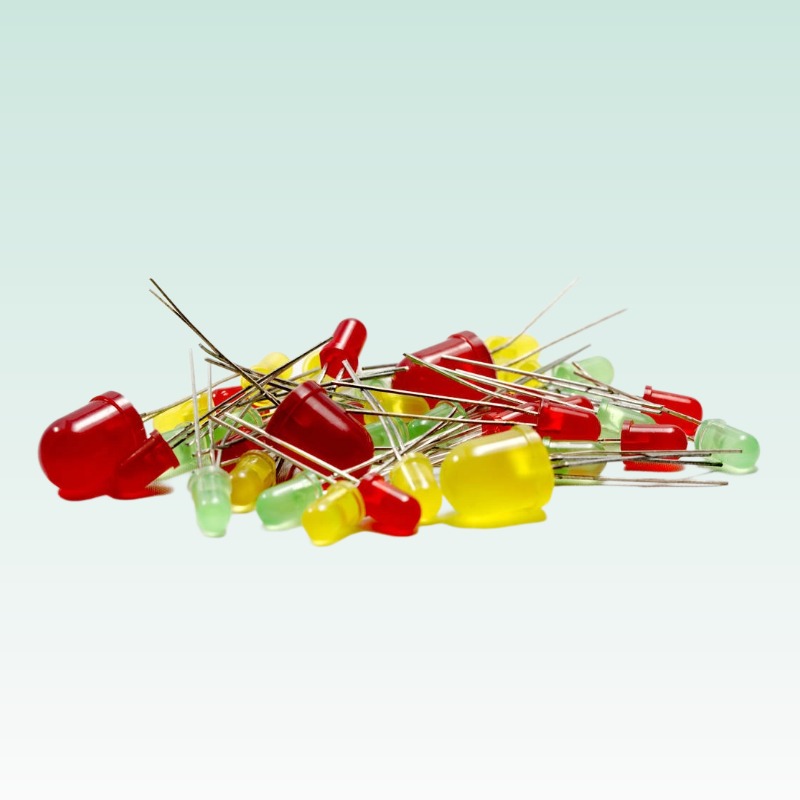
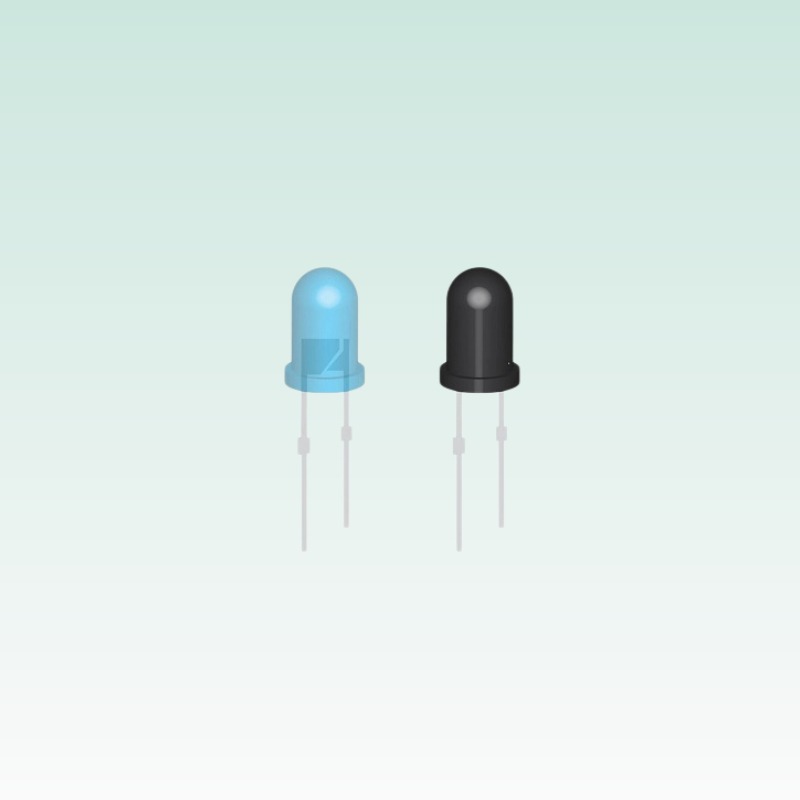
Epoxy resin was the original LED encapsulant and remains common in indicator lamps and low-power parts. It cures hard, holds a molded lens shape well, and costs little. Its weakness is thermal: at sustained junction temperatures above roughly 120 to 150 degrees Celsius, epoxy yellows and clouds. The mechanism is oxidation of the resin network, and the optical loss grows with time at temperature. High-power parts running hot therefore age visibly in epoxy. Moisture uptake is a second epoxy concern: the resin absorbs water over long storage, and rapid heating during reflow can make absorbed moisture flash to steam, stressing the package from the inside. Baking before soldering removes that risk, but adds handling steps that soft silicone packages rarely need.
Silicone: Stable but Soft and Permeable
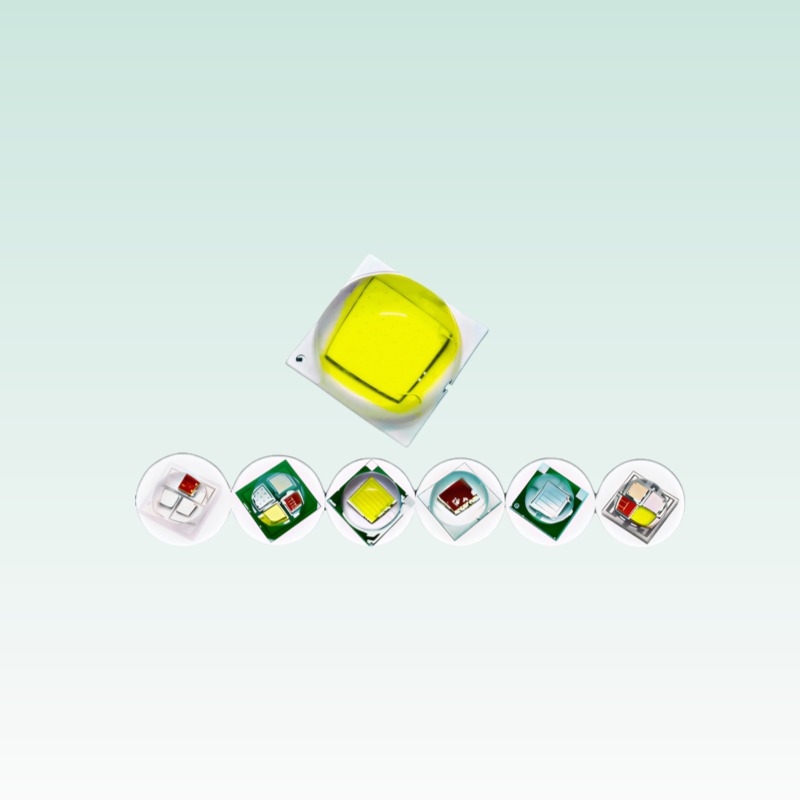
Silicone stays optically clear at temperatures where epoxy degrades, which made it the standard for phosphor-converted white LEDs and high-power packages. Its refractive index variants also couple light out of the die more efficiently than older epoxies. The price is mechanical: silicone is soft, so the lens shape needs support from the package body, and it is gas-permeable, so volatile contaminants such as sulfur compounds can reach the die and silver plating through it.
The Trade-offs at a Glance
| Property | Epoxy | Silicone |
|---|---|---|
| Optical clarity at 120 C+ sustained | Degrades, yellows | Stable |
| Hardness and lens shape | Rigid, self-supporting | Soft, needs package structure |
| Gas permeability | Low | High |
| Phosphor compatibility for white LEDs | Limited by heat | Standard choice |
| Cost | Low | Higher |
Selection Guidance
The decision follows the heat load and the environment. Low-power indicator parts at modest junction temperatures still use epoxy without issue, and its rigidity suits stand-alone bullet lenses. High-power, phosphor-converted and automotive-grade packages use silicone for its thermal and optical stability, then lean on the package and customer process to manage the softness and permeability. Downstream, silicone parts need cleaner flux residues and better-controlled sealing materials, because what diffuses through the silicone ends up on the reflector and plating. When in doubt, the package temperature class in the datasheet is the honest signal: parts rated for sustained high junction temperature were almost certainly built on silicone, whatever the marketing sheet says.
Key Takeaways
Epoxy is rigid and cheap but yellows under sustained heat. Silicone stays clear at high temperature and pairs better with phosphors, but is soft and lets gases through. Neither replaced the other because the packages, the heat loads and the price points differ. Reading which encapsulant a package uses tells you a lot about the junction temperatures it was designed to survive.
Related reading
Failure modes connected to encapsulant chemistry: Current Derating Curves: Reading the Safe Operating Area.
More device-level Q&A in the LED Diode QA archive.
