

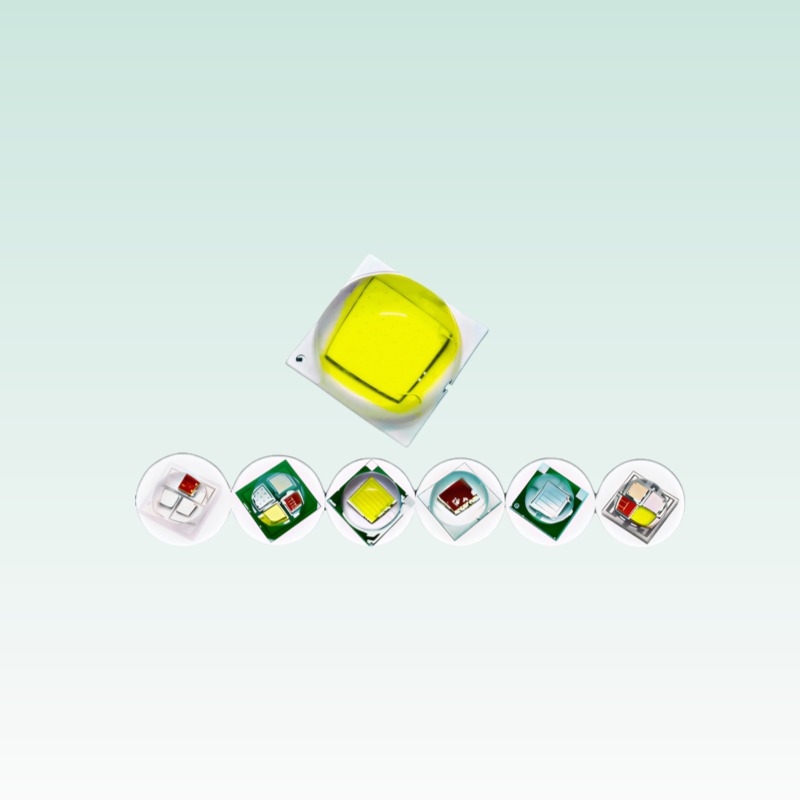

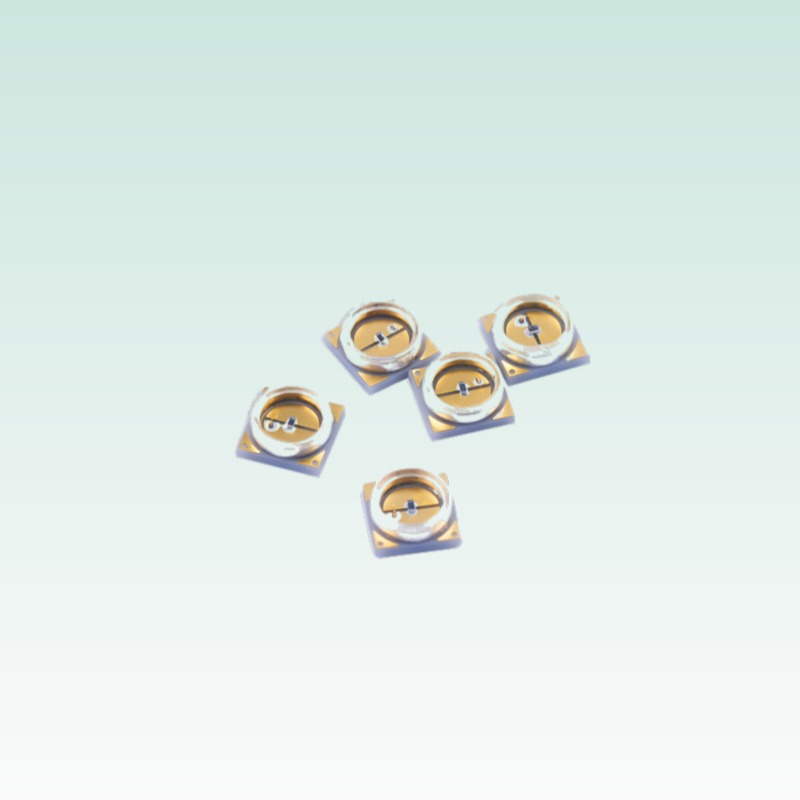
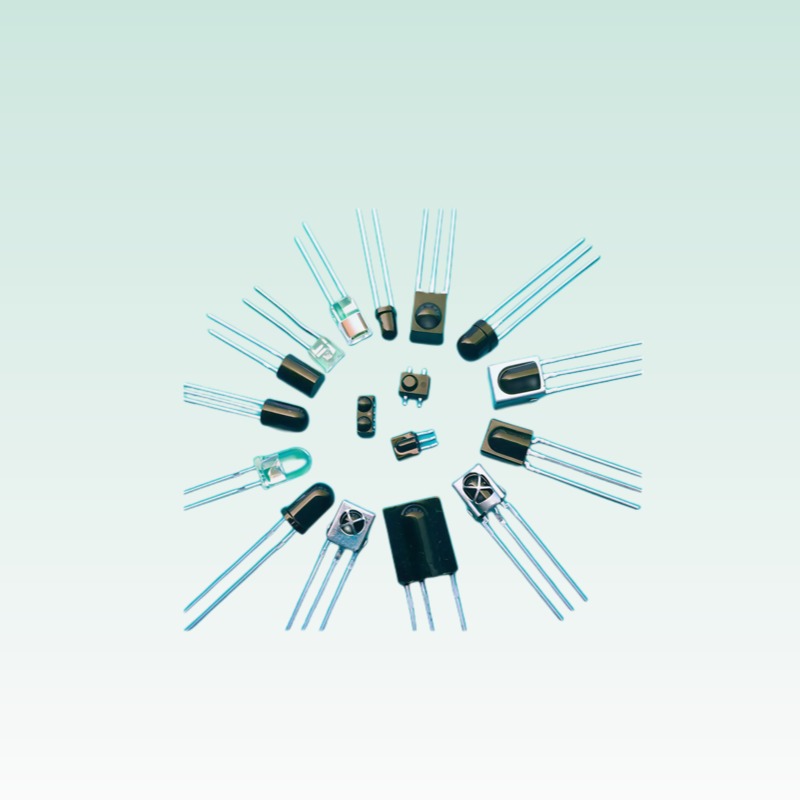
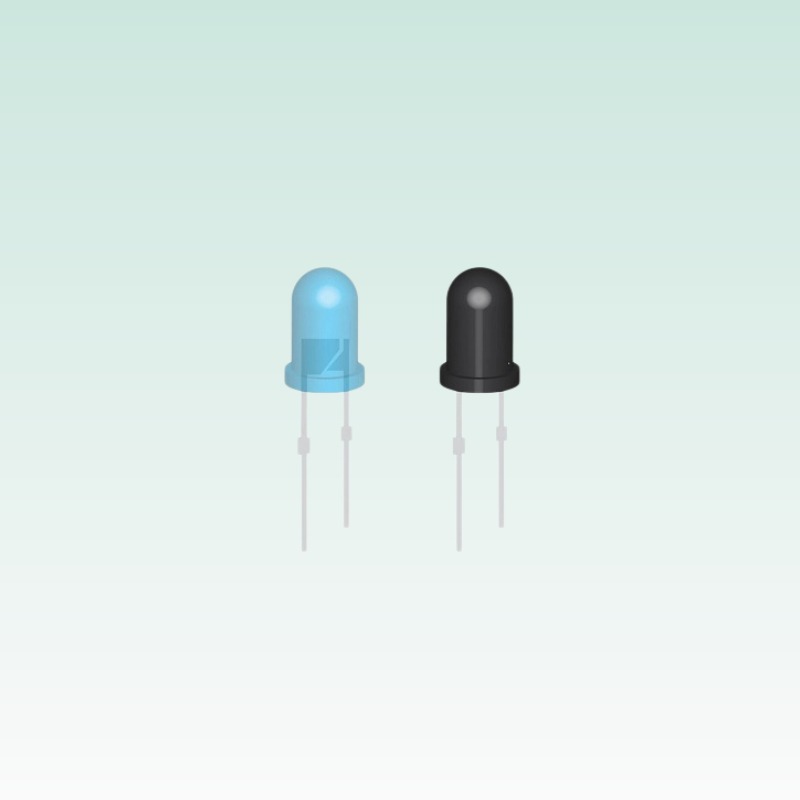

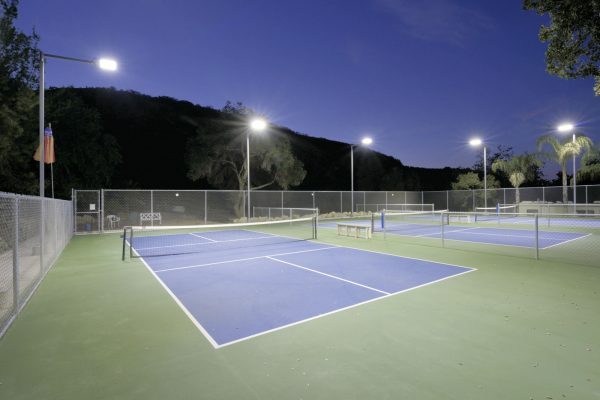


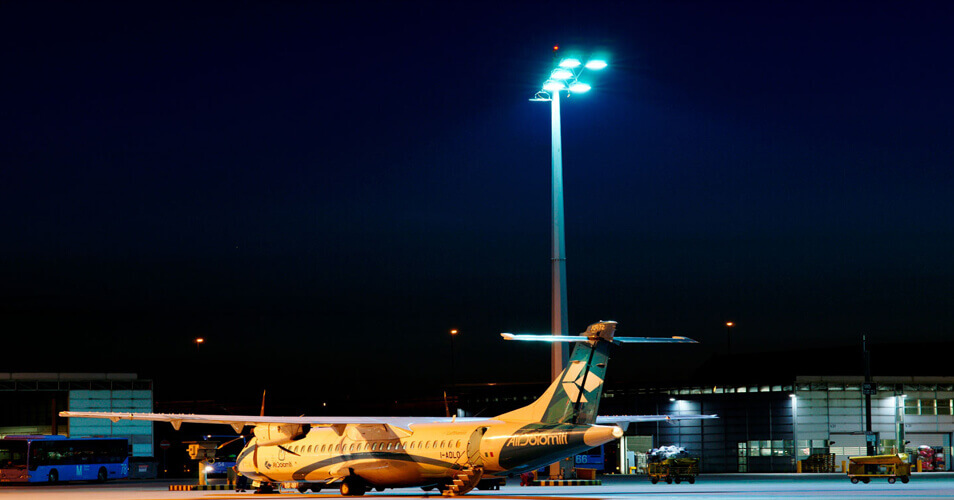


An IR illuminator for long-range surveillance is a matched system: emitter wavelength, radiant intensity, beam angle, camera sensitivity and thermal design all have to line up. Selection starts with one question — 850nm or 940nm — because it sets the balance between night range and covertness before any optical design begins. The same emitters serve perimeter surveillance, license-plate capture and covert monitoring, so the trade-offs repeat across projects.
850nm vs 940nm: Sensitivity Against Covertness
Silicon-based CMOS and CCD sensors show higher quantum efficiency at 850nm than at 940nm. At equal radiant power, an 850nm emitter delivers roughly 1.5-2 times the imaging signal, which converts directly into longer range or a smaller lens aperture. The penalty is human vision: 850nm parts emit a faint deep-red glow at night, which defeats covert deployment and can disturb some PIR intrusion detectors.
940nm emitters are essentially invisible to the eye. That makes them the default for residential monitoring, border watch and any site where visible light is restricted. The cost is sensor sensitivity and slightly lower efficiency, so a 940nm illuminator needs more radiant flux for the same image quality. Many integrators split the site: 850nm on long perimeter axes, 940nm in close-range covert zones.
Radiant Intensity and Beam Angle Set the Range
Usable range scales with axial radiant intensity in mW/sr, not with raw flux. A tight beam concentrates the same optical watts into a smaller solid angle: a 5-15° half-angle multiplies on-axis intensity several times over a 30-60° flood, trading scene width for throw. Since intensity falls with the square of distance, illuminators rated for 50-150m coverage commonly need 500-2,000 mW/sr on-axis, depending on lens aperture, sensor sensitivity and ambient light.
| Parameter | 850nm | 940nm |
|---|---|---|
| Camera signal at equal radiant power | about 1.5-2× | baseline |
| Glow visible to humans | faint red | none |
| Typical role | perimeter, plate capture | covert zones, residential |
| Common beam format | narrow to flood | narrow for range |
Pulse Duty and Junction Temperature
Night illuminators often pulse the LEDs in sync with the camera frame at peak currents far above the DC rating — a datasheet may allow 1 A at 1% duty. Pulsing raises peak intensity and range, but the pulse-width and duty-cycle derating lines are hard limits, not suggestions.
Thermal design decides whether those ratings survive in the field. Junction temperature above roughly 85-100°C degrades IR output and shifts the peak wavelength, softening night-vision clarity and drifting away from the camera’s IR-cut filter window. Continuous 24/7 duty shortens lifetime and accelerates spectral drift, so outdoor housings need aluminum or copper heat sinks, thermal interface material and, in hot climates, active cooling. IP-rated optics are mandatory outdoors.
Specification Checklist
Before committing a design, confirm: peak wavelength tolerance (850±5nm or 940±5nm), radiant intensity at the real test current in mW/sr, measured with a calibrated radiometer; half-power beam angle; pulse capability with pulse width and maximum duty; junction-to-case thermal resistance; and lifetime data at operating current, ideally LM-80 style. Verify wavelength tolerance across production lots so the IR-cut filter and lens coatings stay matched.
The decision point is range versus covertness: choose 850nm when maximum night range matters, 940nm when concealment or site rules matter, and validate the complete illuminator-camera-lens chain in the field before scaling a deployment.
FAQ
Q: Why do my 850nm cameras show a faint red dot at night?
That glow is the long-wavelength tail of the 850nm die, visible to dark-adapted eyes. It is normal. If it matters, move those zones to 940nm and budget roughly 1.5-2× more radiant power.
Q: Does a wider beam angle reduce detection range?
Yes. Range follows axial intensity in mW/sr; spreading the same power over a wider solid angle cuts on-axis intensity in proportion to that increase.
Q: Can one illuminator cover both covert and range duty?
Mixed-wavelength fixtures exist, but zoning is simpler: 850nm on perimeter axes, 940nm near entrances and occupied areas.
