
 English
 Afrikaans
 Albanian
 Amharic
 Arabic
 Armenian
 Azerbaijani
 Basque
 Belarusian
 Bengali
 Bosnian
 Bulgarian
 Catalan
 Cebuano
 Chichewa
 Corsican
 Croatian
 Czech
Czech Danish
 Dutch
Dutch Esperanto
 Estonian
 Filipino
 Finnish
 French
 Frisian
 Galician
 Georgian
 German
 Greek
Greek Gujarati
 Haitian Creole
 Hausa
Hausa Hawaiian
 Hebrew
 Hindi
Hindi Hmong
Hmong Hungarian
 Icelandic
 Igbo
Igbo Indonesian
 Irish
Irish Italian
 Japanese
 Javanese
 Kannada
 Kazakh
 Khmer
Khmer Korean
 Kurdish (Kurmanji)
 Kyrgyz
 Lao
Lao Latin
Latin Latvian
 Lithuanian
 Luxembourgish
 Macedonian
 Malagasy
 Malay
Malay Malayalam
 Maltese
 Maori
Maori Marathi
 Mongolian
 Myanmar (Burmese)
 Nepali
 Norwegian
 Pashto
 Persian
 Polish
 Portuguese
 Punjabi
 Romanian
 Russian
 Samoan
 Scottish Gaelic
 Serbian
 Sesotho
 Shona
Shona Sindhi
 Sinhala
 Slovak
 Slovenian
 Somali
 Spanish
 Sudanese
 Swahili
 Swedish
 Tajik
Tajik Tamil
Tamil Telugu
 Thai
Thai Turkish
 Ukrainian
 Urdu
Urdu Uzbek
Uzbek Vietnamese
 Welsh
Welsh Xhosa
Xhosa Yiddish
 Yoruba
 Zulu
Zulu

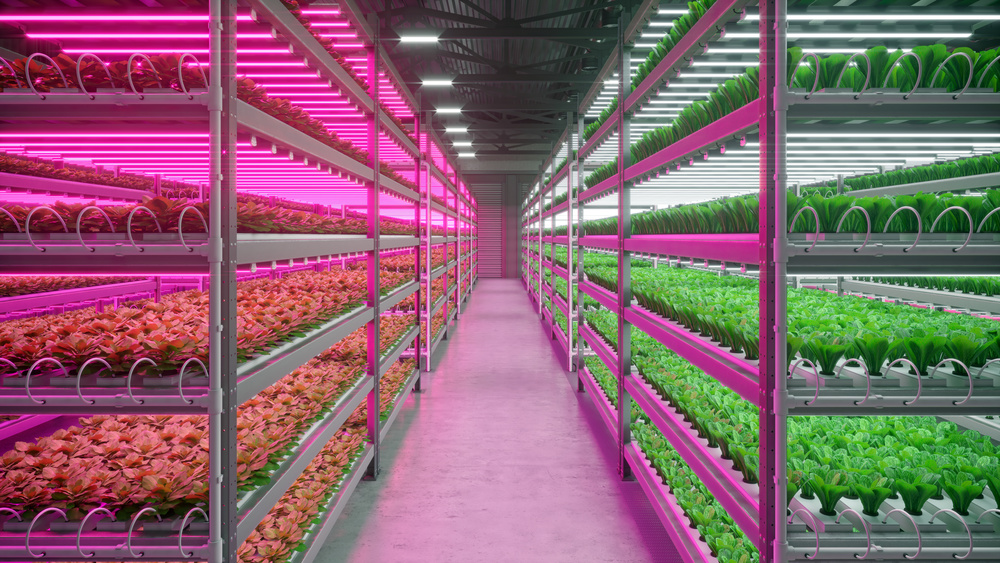




Growing plants indoors requires the right light. Natural sunlight contains the full spectrum of wavelengths, but indoor growers using LED grow lights must understand which wavelengths drive photosynthesis, vegetative growth, flowering, and fruit production.
This guide breaks down the science of plant light response and how to design or select LED grow lights with the correct spectrum for your crop.
1. How Plants Use Light: Photosynthetically Active Radiation (PAR)
Plants do not use all light equally. They primarily absorb wavelengths in the Photosynthetically Active Radiation (PAR) range: 400–700 nanometers (nm).
Within PAR, two peaks dominate photosynthetic efficiency:
| Wavelength | Color | Role in Photosynthesis | Peak Efficiency |
|---|
| **430–450 nm** | Blue | Chlorophyll A absorption, vegetative growth | High |
|---|---|---|---|
| **640–680 nm** | Red | Chlorophyll B absorption, flowering, fruiting | High |
| **500–600 nm** | Green | Less absorbed (reflected), penetrates canopy | Moderate |
| **700–750 nm** | Far-Red | Phytochrome signaling, stem elongation, flowering trigger | Regulatory |
Key insight: Blue light promotes compact, bushy growth. Red light drives flowering and fruit set. Far-red regulates photoperiod and plant architecture.
2. The Action Spectrum vs. Absorption Spectrum
Two concepts often confuse growers:
The action spectrum is broader than the absorption spectrum. Green light (500–600 nm), while reflected by leaves, penetrates deeper into the canopy and drives photosynthesis in lower leaves that receive little direct blue or red light.
Practical implication: Full-spectrum white LEDs (4000K–6500K) combined with supplemental deep red (660 nm) and blue (450 nm) often outperform narrow-band red/blue-only fixtures.
3. Critical Wavelengths for Different Growth Stages
3.1 Vegetative Stage (Seedling to Pre-Flowering)
Dominant wavelengths: 400–500 nm (blue), 500–600 nm (green)
Recommended spectrum ratio:
3.2 Flowering and Fruiting Stage
Dominant wavelengths: 600–700 nm (red), 700–750 nm (far-red)
Recommended spectrum ratio:
3.3 Full-Cycle “One Spectrum” Fixtures
Many commercial growers prefer a single fixture for both stages. The optimal compromise:
4. PPFD: The Real Metric for Grow Light Intensity
Wavelengths tell you *what* light plants need. Photosynthetic Photon Flux Density (PPFD) tells you *how much* light they need.
PPFD measures micromoles of photons per square meter per second (μmol/m²/s) within the PAR range.
| Crop Type | Vegetative PPFD | Flowering PPFD | Daily Light Integral (DLI) |
|---|
| Leafy greens (lettuce, spinach) | 150–250 | N/A | 12–17 mol/m²/day |
|---|---|---|---|
| Herbs (basil, mint) | 200–350 | N/A | 15–20 mol/m²/day |
| Tomatoes, peppers | 250–400 | 400–600 | 20–30 mol/m²/day |
| Cannabis (medical) | 400–600 | 600–900 | 30–40 mol/m²/day |
| Strawberries | 200–350 | 350–500 | 15–25 mol/m²/day |
Important: PPFD decreases with distance from the light source following the inverse square law. A fixture producing 1000 μmol/m²/s at 30 cm may deliver only 250 μmol/m²/s at 60 cm.
5. LED Chip Selection for Grow Lights
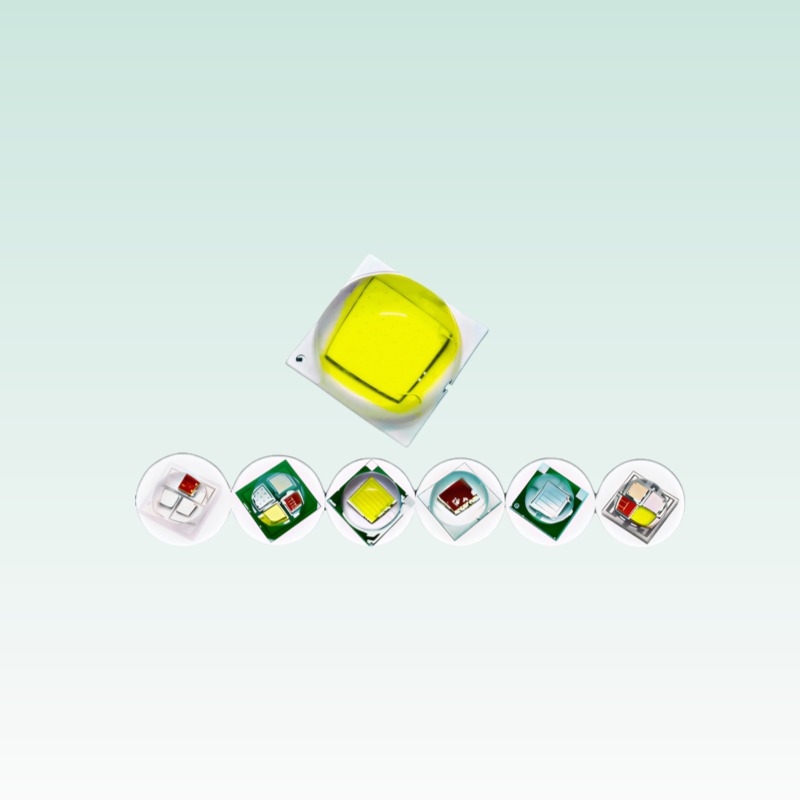
At Queendom LED, we supply LED chips specifically engineered for horticultural applications. The key specifications:
5.1 Recommended LED Chip Types
| Application | Recommended Chip | Wavelength | Power | Why |
|---|
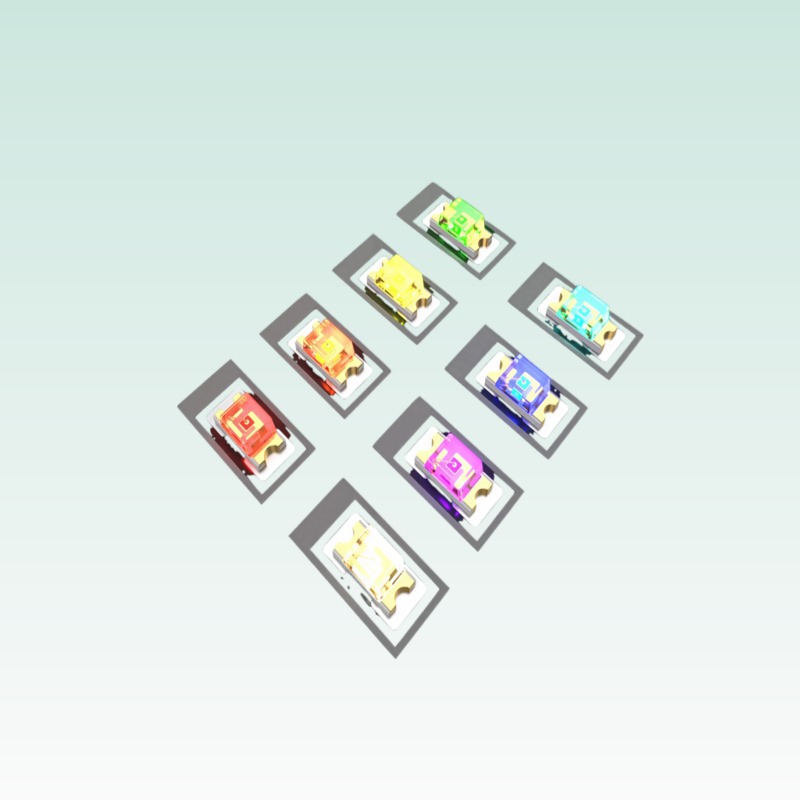
| Full-spectrum base | White SMD 2835/3030 | 3000K–5000K | 0.5W–1W | Broad coverage, high efficacy |
|---|---|---|---|---|
| Deep red supplement | Red SMD 2835/3535 | 660 nm | 1W–3W | Peak photosynthetic action |
| Blue supplement | Royal Blue SMD | 450 nm | 1W–3W | Vegetative growth regulation |
| Far-red trigger | Far-red LED | 730 nm | 1W–3W | Phytochrome manipulation |
| UV enhancement | UV-A LED | 385–395 nm | 1W–3W | Secondary metabolite boost |
5.2 Thermal Management for Grow LEDs
Grow lights run 12–18 hours daily. Junction temperature must stay below 85°C for horticultural LEDs. Without adequate heat sinking:
Thermal design requirements:
6. Common Grow Light Design Mistakes
Mistake 1: Red/Blue-Only Spectrum
Early LED grow lights used only red and blue LEDs, creating the “purple” or “blurple” look. While these wavelengths drive photosynthesis, they miss:
Result: Lower yields, leggy plants, poor color development in fruits.
Mistake 2: Insufficient PPFD
Many budget grow lights claim “full spectrum” but deliver <100 μmol/m²/s at plant canopy. This is insufficient for anything beyond seedlings.
Minimum PPFD targets:
Mistake 3: Poor Thermal Design
LED efficiency drops 0.3–0.5% per °C above 25°C junction temperature. A fixture running at 100°C junction loses 20–30% of its output compared to datasheet ratings.
Always derate LED output by 20–30% for real-world thermal conditions.
Mistake 4: Incorrect Spectrum for Crop Type
Using a single spectrum for all crops reduces efficiency and yield.
7. Spectrum Measurement Tools
Professional growers use these tools to validate LED grow light spectrum:
| Tool | Measures | Cost Range | Use Case |
|---|
| **PAR meter (quantum sensor)** | PPFD, PPF | $200–$1,500 | Light intensity validation |
|---|---|---|---|
| **Spectroradiometer** | Full spectrum output | $2,000–$15,000 | Spectrum accuracy verification |
| **Chlorophyll fluorometer** | Photosynthetic efficiency | $500–$5,000 | Plant stress detection |
| **Spectral power distribution (SPD) report** | Wavelength distribution | Included with quality fixtures | Pre-purchase validation |
8. FAQ: LED Grow Light Spectrum
Q1: Can I use regular white LED bulbs for growing plants?
Standard household LEDs (2700K–6500K) provide some PAR but typically lack sufficient intensity (PPFD) and optimal red/blue ratios for productive growth. They work for seedlings and low-light herbs but not for fruiting crops.
Q2: How far should LED grow lights be from plants?
Distance depends on PPFD output and crop type. General guidelines:
Measure PPFD at canopy level and adjust height accordingly.
Q3: Do plants need UV light?
Plants do not require UV for photosynthesis, but UV-A (380–400 nm) can stimulate secondary metabolite production, increase leaf thickness, and improve pest resistance. UV-B and UV-C are generally harmful.
Q4: What is the difference between 3000K and 5000K for growing?
3000K (warm white) has more red wavelengths, favoring flowering. 5000K (cool white) has more blue, favoring vegetative growth. Many growers use 3500K–4000K as a compromise for full-cycle growing.
Conclusion
Optimal LED grow light spectrum depends on your crop, growth stage, and cultivation goals. The most productive fixtures combine:
1. Broad-spectrum white LEDs (3000K–5000K) as the foundation
2. 660 nm deep red for photosynthetic peak efficiency
3. 450 nm royal blue for vegetative morphology control
4. 730 nm far-red for photoperiod-sensitive flowering crops
5. 385–395 nm UV-A (optional) for secondary metabolite enhancement
At Queendom LED, we manufacture horticultural-grade LED chips with precise wavelength control (±3 nm binning), high thermal stability, and customizable spectrum ratios. We supply chips and modules for grow light manufacturers worldwide.
Request a custom spectrum quote or explore our LED grow light chips.
