
 English
 Afrikaans
 Albanian
 Amharic
 Arabic
 Armenian
 Azerbaijani
 Basque
 Belarusian
 Bengali
 Bosnian
 Bulgarian
 Catalan
 Cebuano
 Chichewa
 Corsican
 Croatian
 Czech
Czech Danish
 Dutch
Dutch Esperanto
 Estonian
 Filipino
 Finnish
 French
 Frisian
 Galician
 Georgian
 German
 Greek
Greek Gujarati
 Haitian Creole
 Hausa
Hausa Hawaiian
 Hebrew
 Hindi
Hindi Hmong
Hmong Hungarian
 Icelandic
 Igbo
Igbo Indonesian
 Irish
Irish Italian
 Japanese
 Javanese
 Kannada
 Kazakh
 Khmer
Khmer Korean
 Kurdish (Kurmanji)
 Kyrgyz
 Lao
Lao Latin
Latin Latvian
 Lithuanian
 Luxembourgish
 Macedonian
 Malagasy
 Malay
Malay Malayalam
 Maltese
 Maori
Maori Marathi
 Mongolian
 Myanmar (Burmese)
 Nepali
 Norwegian
 Pashto
 Persian
 Polish
 Portuguese
 Punjabi
 Romanian
 Russian
 Samoan
 Scottish Gaelic
 Serbian
 Sesotho
 Shona
Shona Sindhi
 Sinhala
 Slovak
 Slovenian
 Somali
 Spanish
 Sudanese
 Swahili
 Swedish
 Tajik
Tajik Tamil
Tamil Telugu
 Thai
Thai Turkish
 Ukrainian
 Urdu
Urdu Uzbek
Uzbek Vietnamese
 Welsh
Welsh Xhosa
Xhosa Yiddish
 Yoruba
 Zulu
Zulu




Color quality is a critical specification for retail, healthcare, museum, and broadcast lighting where faithful color rendering directly impacts operational outcomes. This FAQ explains the technical foundations of CCT, CRI, R9, TM-30, and emerging metrics for evaluating LED spectral performance beyond simple efficacy figures.
Q1. What is the difference between CCT, CRI, and R9, and why do they matter?
CCT (Correlated Color Temperature) describes the warmth/coolness of white light on the Kelvin scale: 2700K (warm incandescent), 4000K (neutral office), 6500K (cool daylight). CRI (Color Rendering Index, Ra) measures fidelity across 8 pastel samples (R1–R8), with Ra > 80 considered acceptable for general lighting and Ra > 90 required for color-critical applications. R9 (saturated red) is not included in Ra calculation but is critical for skin-tone rendering in retail, medical, and broadcast applications—specify R9 > 60 separately even if Ra > 90. A LED with Ra=95 but R9=40 will render Caucasian skin as grayish-pink, failing makeup-counter and surgical-lighting requirements. For museum lighting, additionally specify R12 (blue) > 80 to prevent washed-out sky tones in landscape paintings.
Q2. What is TM-30-18 and when should I use it instead of CRI?
TM-30-18 (IES Method for Evaluating Light Source Color Rendition) replaces CRI’s limited 8-sample evaluation with 99 color samples across hue, chroma, and skin-tone categories. It provides two metrics: Rf (fidelity, 0–100, analogous to Ra) and Rg (gamut, 60–140, measuring color saturation vs. reference). For general office lighting, Rf > 80 is acceptable. For retail and gallery applications, specify Rf > 92 and Rg 98–102 (slight gamut expansion enhances vibrancy without distortion). TM-30 also generates a color-vector graphic showing hue-shift and chroma-shift directions, helping designers identify whether a source makes reds appear more orange (typical of high-CRI LEDs with narrow red phosphor emission) or greens appear desaturated (common in low-CRI budget LEDs). The IES recommends TM-30 for all new specifications, though CRI remains prevalent in legacy procurement documents.
Q3. How does phosphor-converted white LED spectral quality vary by CCT?
Warm-white LEDs (2700K–3000K) use broad-band red phosphors (Sr[LiAl₃N₄]:Eu²⁺, CASN) with high R9 and R12 but lower efficacy (120–150 lm/W) due to large Stokes-shift losses. Cool-white LEDs (5000K–6500K) rely primarily on YAG:Ce yellow phosphor with minimal red content, achieving 160–200 lm/W but R9 < 20 and poor skin-tone rendering. Neutral-white (3500K–4000K) balances efficacy and color quality with dual-phosphor systems (YAG:Ce + red nitride) achieving 140–170 lm/W with R9 > 50. For tunable-white systems, verify that both warm and cool endpoints maintain R9 > 50 across the CCT range—some designs sacrifice red content at intermediate CCTs to simplify driver topology, creating unacceptable color quality in the 4000K–4500K region.
Q4. What is melanopic content and why does it matter for HCL (Human-Centric Lighting)?
Melanopic content quantifies a light source’s ability to stimulate intrinsically photosensitive retinal ganglion cells (ipRGCs) that regulate circadian rhythms via melanopsin photopigment (peak sensitivity 490nm). The metric m-EDI (melanopic equivalent daylight illuminance, per CIE S 026/E:2018) measures this stimulation in lux-equivalent units. WELL Building Standard v2 requires m-EDI > 200 lux at eye level during daytime hours (06:00–18:00) for circadian entrainment. Cool-white sources (6500K) provide 0.8–1.0 m-EDI per photopic lux, while warm-white (2700K) provides 0.3–0.4. HCL systems must deliver dynamic CCT shifts: 6000K during morning focus periods (high melanopic content suppresses melatonin) transitioning to 2700K evening (low melanopic content permits natural melatonin onset). Specify luminaires with verified m-EDI calculations per CIE S 026, not just CCT claims, as spectral power distribution shape significantly affects melanopic efficacy independent of CCT.
Q5. How do I avoid color inconsistency in multi-fixture installations?
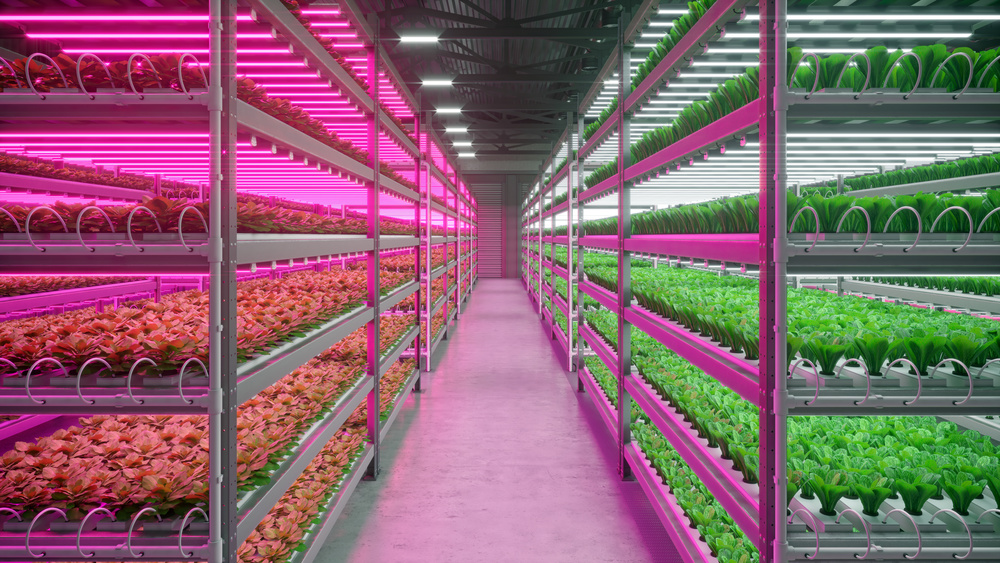
Color consistency requires control at three levels: (1) LED binning: Specify 3-step MacAdam ellipse (SDCM < 3) for all LEDs in a single installation; 2-step for color-critical applications (retail flagship, museum galleries). Request binning data from suppliers showing x,y chromaticity coordinates for each production lot. (2) Temperature stability: CCT shifts -0.5 to -2.0 mV/°C for InGaN; at Tj=85°C vs. 25°C, a 4000K LED shifts to 3850K. Specify closed-loop CCT feedback or thermal compensation in driver firmware. (3) Aging: Phosphor degradation causes CCT warm-shift (200–400K over 50,000 hours) and R9 reduction. For installations requiring color stability over time (broadcast studios, art conservation), specify initial CCT 200K cooler than target to accommodate aging drift, and plan 5-year color-recalibration intervals. Q6. What spectral metrics are important for horticultural LED systems? Horticultural lighting evaluates spectra differently than human-centric lighting: (1) PPE (Photosynthetic Photon Efficacy, µmol/J): Measures photon output per electrical watt in the 400–700nm PAR range; DLC Horticultural V2.0 requires >1.9 µmol/J for standard, >2.3 for Premium. (2) PPF (Photosynthetic Photon Flux, µmol/s): Total photon output per fixture, analogous to luminous flux. (3) Spectral Quality: Reporting in six bands (UV, blue, green, red, far-red, IR) per DLC requirements. Red:far-red ratio (R:FR) > 2.0 promotes compact growth; FR enrichment (730nm) triggers shade-avoidance responses. Blue:green ratio affects stomatal opening and phototropism. For research applications, specify multi-channel systems with independent 0.1% dimming resolution per channel to program complex spectral recipes validated against crop-specific action spectra.
Q7. How does color temperature affect perceived brightness and energy consumption?
At equal photopic lux, cool-white (6500K) appears 5–10% brighter than warm-white (2700K) due to the photopic luminous efficiency function V(λ) peaking at 555nm (green-yellow). However, this is a perceptual effect—the actual photon flux is identical. For energy compliance (LEED, BREEAM), specify illuminance in photopic lux (as measured by standard photometers) rather than perceived brightness. In practice, designers may specify 10% lower illuminance targets for cool-white installations (e.g., 450 lux at 6500K vs. 500 lux at 3000K) to achieve equivalent perceived brightness, reducing energy consumption by 10%. For HCL applications, the melanopic content trade-off must be considered: 6500K provides better daytime alertness but higher energy consumption per melanopic lux than 5000K with enhanced 490nm content through targeted LED selection.
— QUEENDOM LED FAQ | Technical Answers for B2B Professionals —
Related Products
Further reading: Smart Tunable White LED Panels
