 English
 Afrikaans
 Albanian
 Amharic
 Arabic
 Armenian
 Azerbaijani
 Basque
 Belarusian
 Bengali
 Bosnian
 Bulgarian
 Catalan
 Cebuano
 Chichewa
 Corsican
 Croatian
 Czech
Czech Danish
 Dutch
Dutch Esperanto
 Estonian
 Filipino
 Finnish
 French
 Frisian
 Galician
 Georgian
 German
 Greek
Greek Gujarati
 Haitian Creole
 Hausa
Hausa Hawaiian
 Hebrew
 Hindi
Hindi Hmong
Hmong Hungarian
 Icelandic
 Igbo
Igbo Indonesian
 Irish
Irish Italian
 Japanese
 Javanese
 Kannada
 Kazakh
 Khmer
Khmer Korean
 Kurdish (Kurmanji)
 Kyrgyz
 Lao
Lao Latin
Latin Latvian
 Lithuanian
 Luxembourgish
 Macedonian
 Malagasy
 Malay
Malay Malayalam
 Maltese
 Maori
Maori Marathi
 Mongolian
 Myanmar (Burmese)
 Nepali
 Norwegian
 Pashto
 Persian
 Polish
 Portuguese
 Punjabi
 Romanian
 Russian
 Samoan
 Scottish Gaelic
 Serbian
 Sesotho
 Shona
Shona Sindhi
 Sinhala
 Slovak
 Slovenian
 Somali
 Spanish
 Sudanese
 Swahili
 Swedish
 Tajik
Tajik Tamil
Tamil Telugu
 Thai
Thai Turkish
 Ukrainian
 Urdu
Urdu Uzbek
Uzbek Vietnamese
 Welsh
Welsh Xhosa
Xhosa Yiddish
 Yoruba
 Zulu
Zulu



Singapore’s Building and Construction Authority has released the Green Mark 2026 evaluation criteria, and lighting now sits inside the certification core rather than beside it. The updated standard awards additional points for DALI-2 and Matter-compatible tunable white LED systems that implement human-centric lighting protocols (to be verified), and requires commercial buildings to demonstrate functional circadian lighting profiles and occupancy-based dimming. Fixed-output luminaires, whatever their efficacy, can no longer carry a project to full marks. The timing is deliberate: in a city of dense high-rise stock, lighting is simultaneously a major energy load and a primary occupant experience factor, so the authority treats control architecture as certification substance rather than a bonus.
What changed in the 2026 criteria
Green Mark has scored lighting energy for years. The 2026 edition adds two structural tests: addressable, protocol-certified control and documented human-centric behavior. In practice this pushes project teams toward networked LED panel platforms with building management integration in healthcare, education, and corporate wellness applications, specified from the design stage rather than added late.
| Requirement | What assessors look for | Typical compliant setup |
|---|---|---|
| Tunable white control | Native DALI-2 or Matter support | Addressable LED panels plus protocol gateway |
| Circadian profile | CCT schedule filed at design submission | 2700K-5000K programmed shifts across the day |
| Occupancy dimming | Verified dimming response at handover | Presence sensing tied to the BMS |
The documentation burden moves upstream
Designers must document correlated color temperature schedules, illuminance levels, and control logic at design submission, then verify performance through commissioning. This favors product platforms with native DALI-2 or Matter support, standardized control libraries, and proven human-centric programming capability. It penalizes projects that improvise control integration during construction, which has been a common cause of failed lighting commissioning in earlier Green Mark cycles (to be verified). A CCT schedule that cannot be reproduced on site during commissioning is treated as design intent, not a delivered feature.
Which sectors feel it first
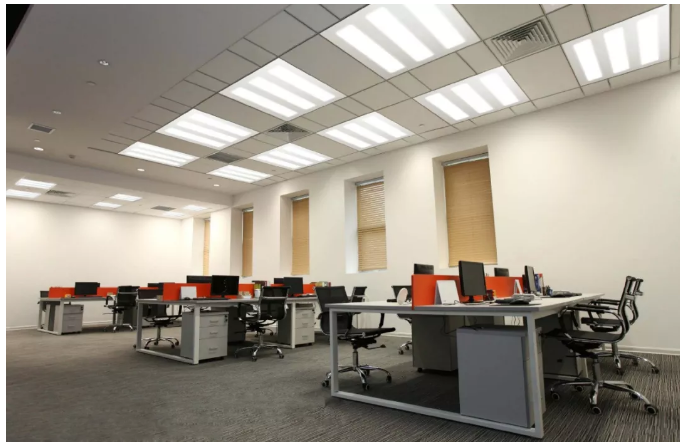
Healthcare facilities gain documented evidence for patient and staff wellbeing objectives, because circadian lighting profiles become auditable deliverables instead of marketing claims. Education projects run the same logic in classrooms: documented CCT schedules back attention and alertness targets that operators already track. Corporate offices, where Green Mark uptake in Singapore is deepest, will see single-mode lighting disappear from new developments, replaced by tunable white panels with occupancy-based dimming as the default specification. For office landlords, the criteria also reach leasing conversations: tenants running corporate wellness programs increasingly ask for documented lighting behavior, and a Green Mark 2026 file now supplies part of that answer (to be verified).
What building teams should do now
1. Specify luminaires with native DALI-2 or Matter support at tender stage, not after contract award.
2. Ask suppliers for control libraries and sample CCT schedules that can be attached to the design submission.
3. Budget commissioning time, since verification of dimming response and circadian programming now sits on the certification path.
4. Re-check retrofit paths for existing towers: swapping fixed-output panels for DALI-2 tunable white units touches both ceiling infrastructure and the BMS, so plan a pilot floor before a portfolio-wide rollout.
FAQ
Does Green Mark 2026 ban fixed-output LED panels?
No. But without dimming and tunable white control, a project cannot collect the human-centric lighting points (to be verified), which lowers the achievable rating tier.
Is Matter support mandatory?
The criteria award points for DALI-2 or Matter-compatible systems (to be verified); either protocol can satisfy the addressable-control test.
Do residential projects fall under these rules?
The 2026 lighting requirements target commercial developments; residential criteria follow a separate assessment track.
What happens to projects already registered under the previous Green Mark version?
Transitional rules are published by BCA (to be verified); teams should confirm which criteria set their submission is assessed against before locking the design.
Fact-check status: source list pending
