
 English
 Afrikaans
 Albanian
 Amharic
 Arabic
 Armenian
 Azerbaijani
 Basque
 Belarusian
 Bengali
 Bosnian
 Bulgarian
 Catalan
 Cebuano
 Chichewa
 Corsican
 Croatian
 Czech
Czech Danish
 Dutch
Dutch Esperanto
 Estonian
 Filipino
 Finnish
 French
 Frisian
 Galician
 Georgian
 German
 Greek
Greek Gujarati
 Haitian Creole
 Hausa
Hausa Hawaiian
 Hebrew
 Hindi
Hindi Hmong
Hmong Hungarian
 Icelandic
 Igbo
Igbo Indonesian
 Irish
Irish Italian
 Japanese
 Javanese
 Kannada
 Kazakh
 Khmer
Khmer Korean
 Kurdish (Kurmanji)
 Kyrgyz
 Lao
Lao Latin
Latin Latvian
 Lithuanian
 Luxembourgish
 Macedonian
 Malagasy
 Malay
Malay Malayalam
 Maltese
 Maori
Maori Marathi
 Mongolian
 Myanmar (Burmese)
 Nepali
 Norwegian
 Pashto
 Persian
 Polish
 Portuguese
 Punjabi
 Romanian
 Russian
 Samoan
 Scottish Gaelic
 Serbian
 Sesotho
 Shona
Shona Sindhi
 Sinhala
 Slovak
 Slovenian
 Somali
 Spanish
 Sudanese
 Swahili
 Swedish
 Tajik
Tajik Tamil
Tamil Telugu
 Thai
Thai Turkish
 Ukrainian
 Urdu
Urdu Uzbek
Uzbek Vietnamese
 Welsh
Welsh Xhosa
Xhosa Yiddish
 Yoruba
 Zulu
Zulu
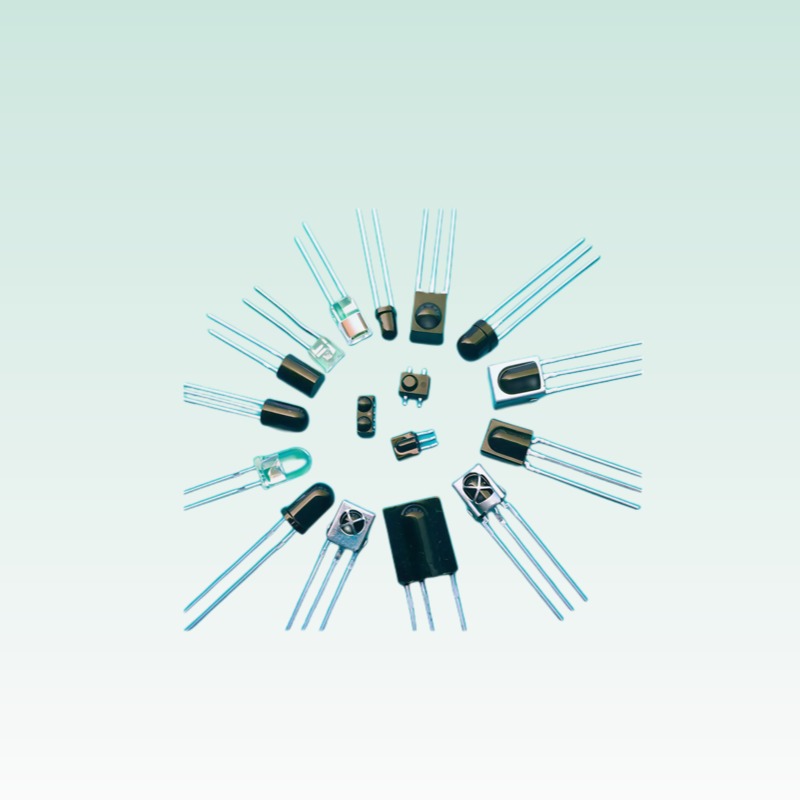
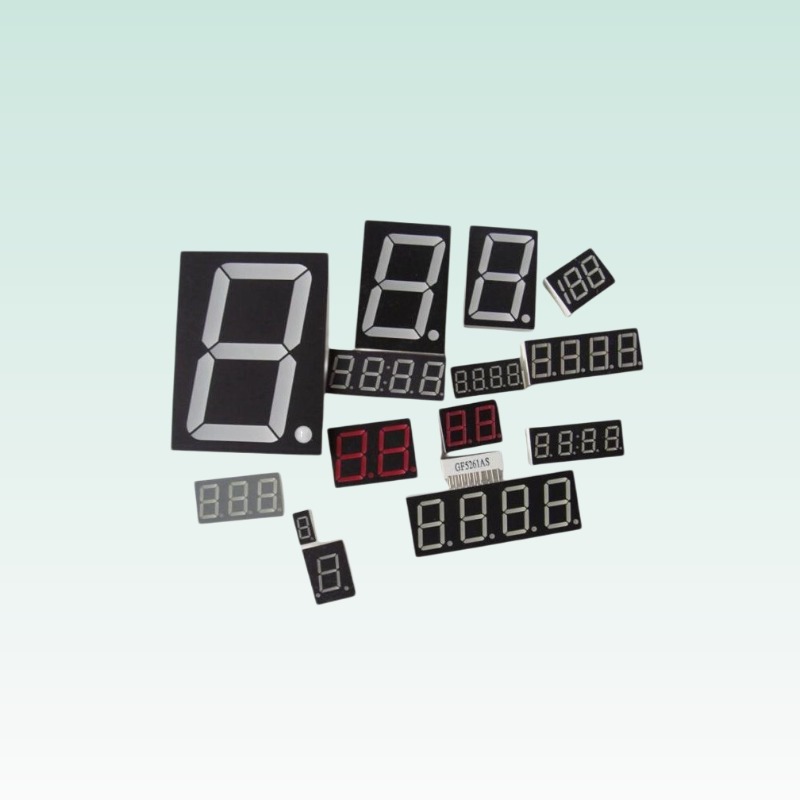



Learning environments demand lighting that supports visual acuity, cognitive performance, and circadian health. Our educational LED systems comply with EN 12464-1 for indoor workplaces and are designed to minimize screen glare, provide uniform illuminance, and support HCL programs for student well-being. Educational institutions—from K-12 classrooms to university research laboratories—are increasingly recognized as environments where lighting quality directly impacts cognitive performance, visual comfort, and long-term ocular health. Poor lighting contributes to myopia progression in children, reduces reading speed, and exacerbates screen-related visual fatigue among students and faculty who spend 6–10 hours daily under artificial illumination. Our educational LED systems address these challenges through three design pillars: photometric compliance with EN 12464-1 and CIBSE LG7, flicker-free operation validated per IEEE 1789-2015, and Human-Centric Lighting (HCL) programs that align classroom spectra with circadian biology. Whether retrofitting a 1950s school building or equipping a new STEM laboratory, we provide lighting-design calculations, mock-up evaluations, and post-occupancy glare assessments to ensure every learning space supports—not hinders—academic achievement.
Classroom & Lecture Hall Panels
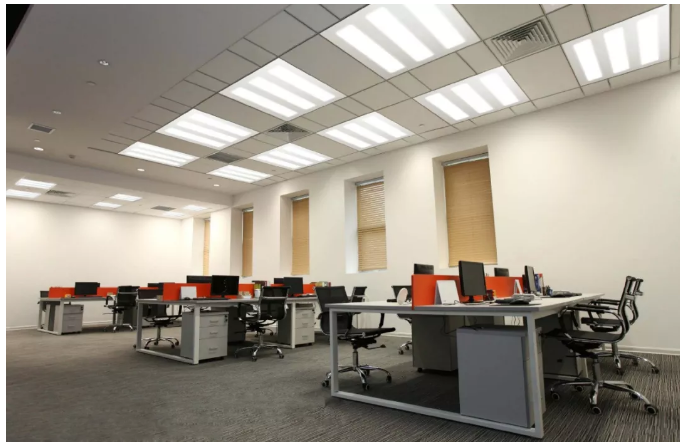
Anti-glare micro-prismatic diffusers (UGR < 16) with indirect-direct lighting ratios optimized for front-projection and interactive whiteboard visibility. CRI > 90 for accurate color rendering in art and science classrooms; flicker-free operation (<1% at 100 Hz) per IEEE 1789. DALI-2 dimming with preset scenes: lecture (100%), presentation (60% front), exam (maximum uniform), and break (30% ambient). Micro-prismatic diffusers with laser-etched randomized structures achieve UGR < 16 at standard viewing angles (85° from nadir), eliminating disability glare on interactive whiteboards and student tablet screens. Indirect-direct ratios are tuned to 60:40 for front-projection classrooms, ensuring that projector contrast is not washed out by ceiling brightness while maintaining 500 lux on desks per EN 12464-1. Flicker metrics are independently verified: Percent Flicker < 1% and Flicker Index < 0.002 at all dimming levels, satisfying the most stringent European school procurement specifications (e.g., Baden-Württemberg Schulbaurichtlinie). Scene presets are activated via wall-mounted DALI-2 panel or wireless app: lecture (100%), presentation (60% front / 40% rear), exam (maximum uniform 600 lux), and break (30% ambient). Laboratory & Technical Workshop Lighting High-CRI task luminaires (CRI > 95) with articulated arms for precision work in chemistry, electronics, and biology labs.
Chemical-resistant powder coatings and sealed housings (IP54) resist solvent vapors and accidental liquid splashes.
Emergency battery backup (3-hour duration) compliant with EN 1838 for safe evacuation during power failures.
High-CRI task luminaires (CRI > 95, R9 > 90) reveal subtle color differences in chemical reagents, biological stains, and electronic solder-joint quality.
Articulated-arm configurations with 3D swivel joints position light precisely over fume-hood work surfaces and microscope stages without casting shadows from the user’s hands or instruments.
Chemical-resistant finishes include epoxy-polyester powder coats rated for 500-hour immersion in 10% HCl, 10% NaOH, and common organic solvents (acetone, ethanol, toluene).
Emergency battery backup modules provide 3-hour duration at 50% output, compliant with EN 1838 escape-route illumination requirements for laboratories handling hazardous chemicals.
Circadian & Student Wellness
Tunable-white classroom systems programmed to deliver cool white (6000K) during morning focus periods and warm white (3000K) post-lunch.
Melanopic lux calculations per WELL v2 Light Concept to support circadian entrainment and reduce student fatigue.
Morning alertness is supported by cool-white (6000K) spectra with melanopic equivalent daylight illuminance (m-EDI) > 250 lux at eye level from 08:00 to 12:00, per WELL v2 Light Concept Feature L03.
Post-lunch circadian dip is countered by a 30-minute 10,000-lux-equivalent light pulse (via high-intensity ceiling arrays) between 13:00 and 14:00, improving sustained attention in afternoon classes validated by psychomotor vigilance task (PVT) trials.
Sleep-quality metrics (actigraphy-derived sleep efficiency, PSQI scores) are tracked in dormitory retrofit projects with tunable-white bedside reading lights that transition to 2200K amber 2 hours before scheduled sleep.
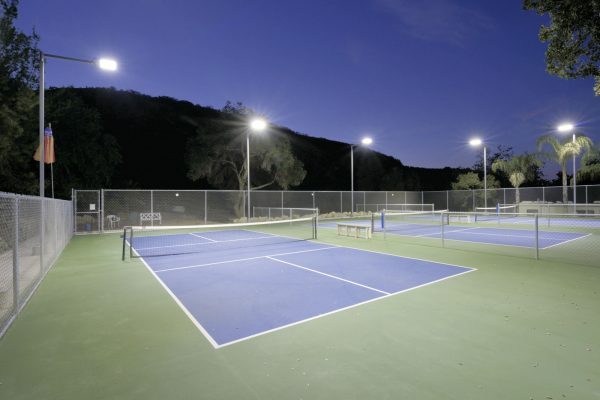
Campus Outdoor & Sports
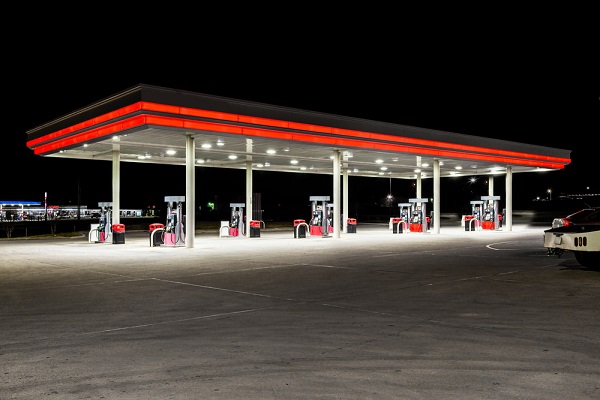
LED area lights for parking lots and walkways with motion-activated dimming for security and energy savings.
Sports hall high-bay luminaires (200 lux, uniformity 0.7) for multi-use gymnasiums with badminton and basketball markings.
Parking-lot area lights with motion-activated dimming reduce output to 30% after 23:00 when campus footfall drops, cutting nocturnal energy consumption by 55% while maintaining safety thresholds per EN 13201-2 ME5.
Walkway bollards incorporate warm-white (3000K) sources with UGR < 19 and full-cutoff optics (ULR < 0%) to preserve campus dark-sky quality for astronomy programs. Sports hall high-bay luminaires deliver 200 lux horizontal illuminance with uniformity U0 > 0.7 for multi-use gymnasiums accommodating badminton (per BWF), basketball (FIBA), and volleyball (FIVB) court markings with a single pole layout.
Pole heights (8–12 m) and optic distributions (Type III / V) are optimized via DIALux simulations to eliminate spill onto adjacent dormitory windows.
— QUEENDOM LED Lighting Solutions | B2B Industrial & Commercial Lighting —
Related Products
Further reading: Educational Lighting Solutions · Classroom Lighting Renovation Case
