
 English
 Afrikaans
 Albanian
 Amharic
 Arabic
 Armenian
 Azerbaijani
 Basque
 Belarusian
 Bengali
 Bosnian
 Bulgarian
 Catalan
 Cebuano
 Chichewa
 Corsican
 Croatian
 Czech
Czech Danish
 Dutch
Dutch Esperanto
 Estonian
 Filipino
 Finnish
 French
 Frisian
 Galician
 Georgian
 German
 Greek
Greek Gujarati
 Haitian Creole
 Hausa
Hausa Hawaiian
 Hebrew
 Hindi
Hindi Hmong
Hmong Hungarian
 Icelandic
 Igbo
Igbo Indonesian
 Irish
Irish Italian
 Japanese
 Javanese
 Kannada
 Kazakh
 Khmer
Khmer Korean
 Kurdish (Kurmanji)
 Kyrgyz
 Lao
Lao Latin
Latin Latvian
 Lithuanian
 Luxembourgish
 Macedonian
 Malagasy
 Malay
Malay Malayalam
 Maltese
 Maori
Maori Marathi
 Mongolian
 Myanmar (Burmese)
 Nepali
 Norwegian
 Pashto
 Persian
 Polish
 Portuguese
 Punjabi
 Romanian
 Russian
 Samoan
 Scottish Gaelic
 Serbian
 Sesotho
 Shona
Shona Sindhi
 Sinhala
 Slovak
 Slovenian
 Somali
 Spanish
 Sudanese
 Swahili
 Swedish
 Tajik
Tajik Tamil
Tamil Telugu
 Thai
Thai Turkish
 Ukrainian
 Urdu
Urdu Uzbek
Uzbek Vietnamese
 Welsh
Welsh Xhosa
Xhosa Yiddish
 Yoruba
 Zulu
Zulu

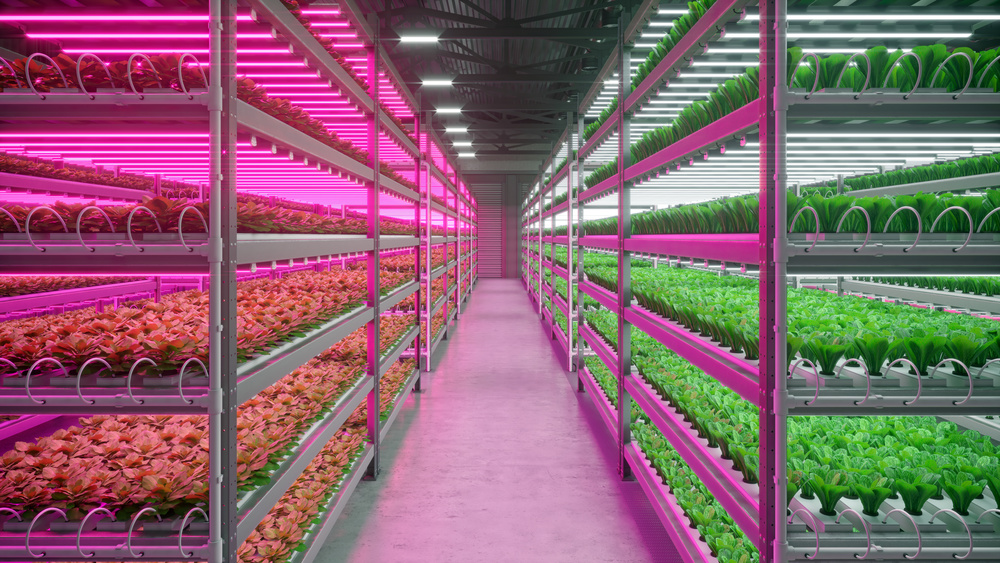



The DesignLights Consortium has published QPL version 5.1, and the update reaches further than a routine efficacy bump. For full-spectrum grow light qualification, v5.1 requires mandatory measurement and documentation of far-red wavelengths from 700 to 750 nm and SWIR contributions from 970 to 1700 nm (to be verified), alongside stricter photosynthetic photon efficacy thresholds. North American greenhouse operators chasing utility rebates will feel the change first, because most rebate programs treat a current QPL listing as the entry ticket.
What v5.1 actually changes
Historically, horticultural qualification focused on radiation between 400 and 700 nm — the photosynthetically active radiation band. That window ignored two effects growers now manage deliberately: far-red’s influence on shade avoidance, stem extension, and flowering timing, and near-infrared’s role in canopy temperature regulation. Under v5.1, manufacturers must demonstrate reproducible spectral measurement capability, typically verified through the IES TM-66 spectral accuracy requirements (to be verified). Spectral data that was optional context in earlier versions becomes a documented qualification input in v5.1.
| Parameter | Prior QPL practice | QPL v5.1 requirement |
|---|---|---|
| Reported spectrum | 400-700 nm PAR band | PAR plus far-red 700-750 nm |
| SWIR data | Not required | 970-1700 nm documented for full-spectrum fixtures |
| Spectral accuracy | Datasheet values | TM-66 verification (to be verified) |
| Photon efficacy | Earlier thresholds | Raised thresholds (to be verified) |
Why far-red and SWIR made the cut
Far-red supplementation is now an established tool in greenhouse yield programs: growers use energy near 730 nm to control elongation and flowering windows. SWIR data supports canopy moisture and biomass assessment that grower analytics platforms are beginning to adopt, since water absorbs strongly near 970 nm, 1200 nm, and 1450 nm. Listing documents that ignore these bands would describe a fixture that no longer matches how the crop is actually managed — which is why DLC moved the reporting line instead of leaving it to datasheets. The change also mirrors how fixture spectra have evolved: full-spectrum horticultural products now ship with deliberate energy beyond 700 nm, and an efficacy figure computed on the PAR band alone would reward a spectrum shape that the crop does not experience as uniform.
What it means for rebates and retrofit projects
Fixtures qualified under earlier QPL versions may need re-verification or hardware adjustments if their spectral data does not meet the new reporting standard (to be verified). For growers, the practical effect is cleaner comparison: rebate-approved products will carry documented far-red and SWIR performance, so side-by-side fixture quotes describe the same quantities. Projects planning 2026 retrofits should check listing version dates before locking fixture models into incentive paperwork. Growers financing through state and utility programs should also note that incentive tables lag listing updates; expect a transition window during which both earlier and v5.1 listings are accepted (to be verified).
What manufacturers must show
Qualification now demands spectral measurement capability that reproduces 400-1700 nm data with documented uncertainty. That is a capital investment for smaller horticultural brands, and it favors suppliers who already run in-house spectroradiometry for TM-66 compliance. Expect the QPL to consolidate around manufacturers with laboratory capability (to be verified). Datasheets alone will not close the gap: the requirement covers measurement reproducibility and documentation quality, not just a reported curve.
FAQ
Does QPL v5.1 apply to fixtures I already bought?
No. Existing installations stay qualified under their listing version, but new rebate submissions may require products on the v5.1 list (to be verified). Check the listing date on the DLC QPL before signing an incentive agreement.
Are far-red and SWIR mandatory for every grow light?
The reporting requirement targets full-spectrum grow light qualification (to be verified); single-band fixtures follow a narrower test path.
Where does TM-66 fit in?
IES TM-66 defines the measurement and documentation framework for horticultural lighting; v5.1 references it for spectral accuracy verification (to be verified).
Fact-check status: source list pending
