
 English
 Afrikaans
 Albanian
 Amharic
 Arabic
 Armenian
 Azerbaijani
 Basque
 Belarusian
 Bengali
 Bosnian
 Bulgarian
 Catalan
 Cebuano
 Chichewa
 Corsican
 Croatian
 Czech
Czech Danish
 Dutch
Dutch Esperanto
 Estonian
 Filipino
 Finnish
 French
 Frisian
 Galician
 Georgian
 German
 Greek
Greek Gujarati
 Haitian Creole
 Hausa
Hausa Hawaiian
 Hebrew
 Hindi
Hindi Hmong
Hmong Hungarian
 Icelandic
 Igbo
Igbo Indonesian
 Irish
Irish Italian
 Japanese
 Javanese
 Kannada
 Kazakh
 Khmer
Khmer Korean
 Kurdish (Kurmanji)
 Kyrgyz
 Lao
Lao Latin
Latin Latvian
 Lithuanian
 Luxembourgish
 Macedonian
 Malagasy
 Malay
Malay Malayalam
 Maltese
 Maori
Maori Marathi
 Mongolian
 Myanmar (Burmese)
 Nepali
 Norwegian
 Pashto
 Persian
 Polish
 Portuguese
 Punjabi
 Romanian
 Russian
 Samoan
 Scottish Gaelic
 Serbian
 Sesotho
 Shona
Shona Sindhi
 Sinhala
 Slovak
 Slovenian
 Somali
 Spanish
 Sudanese
 Swahili
 Swedish
 Tajik
Tajik Tamil
Tamil Telugu
 Thai
Thai Turkish
 Ukrainian
 Urdu
Urdu Uzbek
Uzbek Vietnamese
 Welsh
Welsh Xhosa
Xhosa Yiddish
 Yoruba
 Zulu
Zulu
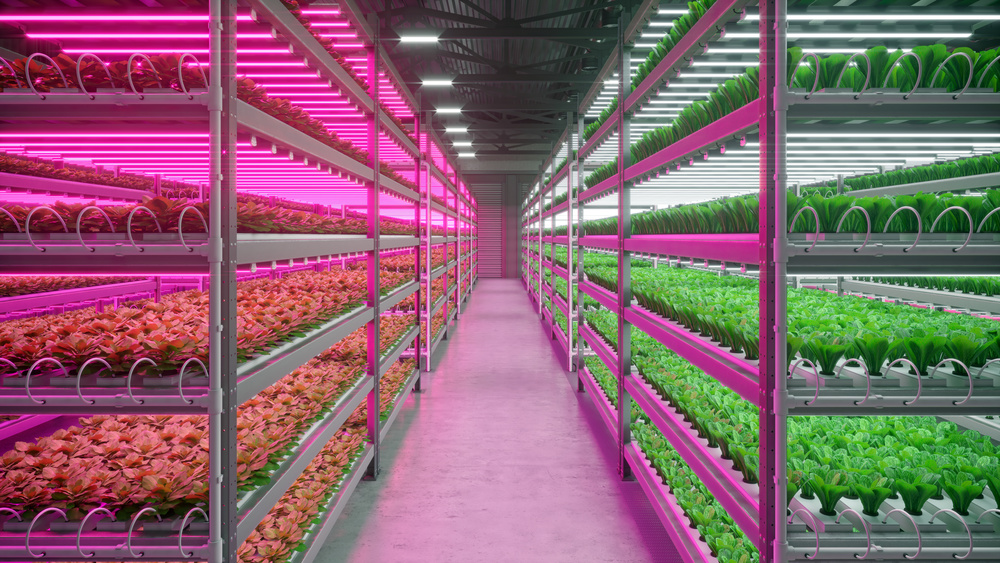



LED grow lights are a crowded market, and for professional buyers — greenhouse operators, vertical farm developers, and horticultural lighting distributors — separating serious products from marketing claims is getting harder. One of the most practical filters is the DLC QPL: the DesignLights Consortium (DLC) Qualified Products List for horticultural lighting. A DLC horticultural QPL listing is not a decoration on a datasheet; it affects utility rebate eligibility, project financing, and long-term reliability expectations.
In this Q&A, we explain what DLC QPL actually means for grow light buyers, what it does and does not certify, and how to use it in procurement decisions.
Q1: What is the DLC QPL?
The DesignLights Consortium is a nonprofit organization that sets performance standards for commercial lighting in North America. Its Qualified Products List (QPL) is a database of lighting products that have been independently tested and verified to meet those standards. DLC launched a specific horticultural lighting category, allowing grow light manufacturers to list fixtures that meet its technical requirements for horticultural applications.
In practical terms, a “DLC QPL listed” grow light has submitted to third-party testing — photometric and electrical data verified by an accredited laboratory — and has passed DLC’s published performance thresholds for efficacy, light output, warranty, and other criteria.
Q2: Why does DLC QPL matter to buyers?
There are three concrete business reasons:
- Utility rebates. Many North American electric utilities offer incentive programs that are conditioned on the product being listed on the DLC QPL. If your fixture is not listed, your project may be ineligible for rebates worth 20–50% of fixture cost in some programs.
- Project qualification. Public and institutional projects — schools, municipalities, energy-efficiency programs — frequently specify DLC QPL listed products as a mandatory requirement.
- Independent verification. The QPL listing means the claimed performance numbers were actually tested by a third-party lab under a defined protocol, rather than being self-reported marketing figures. This is a meaningful quality signal in a market full of inflated PPF claims.
Q3: What does DLC QPL test for in grow lights?
DLC’s horticultural lighting requirements focus on parameters that matter to real growing operations, including:
- Photosynthetic Photon Flux (PPF) — total photons emitted in the photosynthetically active radiation (PAR) range, measured in µmol/s;
- Photosynthetic Photon Efficacy (PPE) — PPF per watt of input power (µmol/J), the grow-light equivalent of luminous efficacy;
- Spectral requirements — the fixture must provide light across the PAR wavebands with a defined minimum broadband or specific spectral content, ensuring that listings cannot be gamed with a narrow, unusable spectrum;
- Electrical performance and safety — power factor, input power accuracy, and safety standards compliance;
- Warranty — a minimum manufacturer warranty requirement protects the buyer’s long-term investment.
It is important to note that DLC QPL is not “certified efficacy for your crop.” It does not measure yield response, spectrum-to-crop matching, or photobiology. It is a performance and eligibility standard, not an agronomic guarantee.
Q4: How do I check whether a grow light is on the DLC QPL?
The DLC publishes the current QPL at https://qpl.designlights.org. You can search by manufacturer, model number, or product category (Horticultural Lighting). Buyers should:
- Search the exact model number your supplier quotes — not “the series,” but the precise SKU;
- Check the listing status (Active vs. Delisted) — a delisted product may have failed a re-test or been withdrawn;
- Verify the test report date, and request the manufacturer’s DLC test report number and lab accreditation to confirm the listing has not been copied from a similar model;
- Confirm that the listed model matches the configuration you are buying (wattage, spectrum option, dimming driver).
Q5: Does DLC QPL guarantee rebate eligibility for my project?
No. QPL listing is usually a necessary condition, but the rebate amount, eligibility rules, and application process are set by each individual utility or program administrator. Before committing to a purchase on rebate assumptions, confirm the specific program requirements — some programs require additional on-site verification, specific control systems, or project-level documentation beyond the product being QPL listed.
Q6: How does DLC QPL relate to other certifications (UL, DLC for general lighting, MCA)?
They are complementary, not interchangeable:
- UL / ETL listing is a safety certification (fire, shock, electrical hazard) — DLC QPL does not replace it;
- DLC QPL for general lighting covers indoor/outdoor general illumination products — a separate list from the horticultural list;
- MCA (Market Transformation Program) is a newer, higher-performance tier from DLC with stricter efficacy and controls requirements — a premium tier beyond standard QPL.
For a professional greenhouse upgrade, you typically want all of: recognized safety certification, DLC horticultural QPL listing, and where the program exists, MCA qualifying models for maximum rebate.
Q7: What should I ask the supplier about their DLC listing?
A straightforward supplier will answer these directly:
- “What is the exact model number on the DLC QPL, and is the listing active?”
- “Can you share the DLC test report and the accredited lab that performed the photometric testing?”
- “Does the QPL-listed configuration match the spectrum/driver options you are quoting me?”
- “Which utility programs in my region currently accept this listing for horticultural rebates?”
- “What is the warranty on the listed model, and how is it documented?”
If the supplier hesitates on the first two questions, treat the QPL claim as unverified and search the QPL database yourself.
Q8: Is a non-DLC grow light necessarily bad?
No. DLC QPL is a North American voluntary program. A grow light built for the EU, Middle East, or Asian greenhouse markets may be excellent quality without being DLC listed — its target market simply does not use DLC rebate systems. The correct question is not “is it DLC listed?” but “is it DLC listed for the market where my project is located and where rebates are available?” If you are buying for a North American greenhouse retrofit, DLC QPL is a near-mandatory shortlist filter. If you are buying for an EU or Asian installation, check CE, ENEC, or local market certification instead, and use DLC-type third-party photometric evidence as a quality reference.
Q9: What is the difference between DLC QPL and DLC MCA for horticultural lighting?
The DesignLights Consortium has been evolving its horticultural lighting program. Beyond the standard QPL listing, DLC introduced the Market Transformation (MCA) tier for general lighting, and for horticultural lighting it has published separate technical requirements documents and maintained a consolidated list. The practical distinction buyers need to understand:
- QPL (standard tier) — the baseline qualified product list; passing performance and documentation thresholds; the most widely referenced tier in utility rebate programs today.
- MCA (higher-performance tier, where applicable) — stricter efficacy and reporting requirements marketed as a path to deeper incentives in select programs.
Because DLC program structures are updated periodically and differ between general lighting and horticultural lighting, treat “DLC” as a family of programs rather than a single static certification. When a supplier says “DLC listed,” ask exactly which list, which tier, and which revision of the technical requirements the product was qualified under. A listing under an older revision may not be accepted by a utility program that has moved to the latest revision.
Also note that DLC may update horticultural requirements over time — for example, raising minimum PPE thresholds or adding spectral documentation rules. An Active QPL listing today will be re-verified periodically; buyers should re-check the listing at the time of purchase, not rely on a listing status from last year.
Q10: How should I incorporate DLC QPL into a multi-site procurement strategy?
For growers operating across states or provinces, lighting standardization around DLC QPL listed models simplifies procurement and audit documentation:
- Maintain a small “approved fixture list” of DLC QPL listed models per application (bar lights for layers, high-bay for fruiting greenhouses, etc.);
- Record, for each site, the utility program, its rebate rate, and the documentation each program requires;
- Capture, at purchase time, the DLC QPL PDF for each model (downloadable from the QPL database) and file it with equipment records — this becomes your audit and rebate evidence base;
- Review the list quarterly against DLC database status (Active/Delisted) and against new program requirements.
This turns DLC QPL from a one-time checkbox into a repeatable system that protects rebate revenue and shortens future plant-startup qualification.
Conclusion
For professional greenhouse and vertical farm buyers, DLC QPL is one of the most useful third-party filters in the grow light market: it verifies photometric performance, gives utility rebate access, and screens out the worst of the self-reported-PPF noise. Use it as an entry ticket to your shortlist — then verify the exact model, spectral configuration, warranty, and regional rebate program before you sign.
Queendom LED supplies DLC QPL-listed horticultural lighting systems — including T-series grow light tubes, L-series bar lights, and high-bay grow fixtures — built for European and North American greenhouse projects. Contact our team for current QPL model numbers, test reports, and project-specific documentation.
Related Products
Further reading: Horticultural Lighting FAQ
