

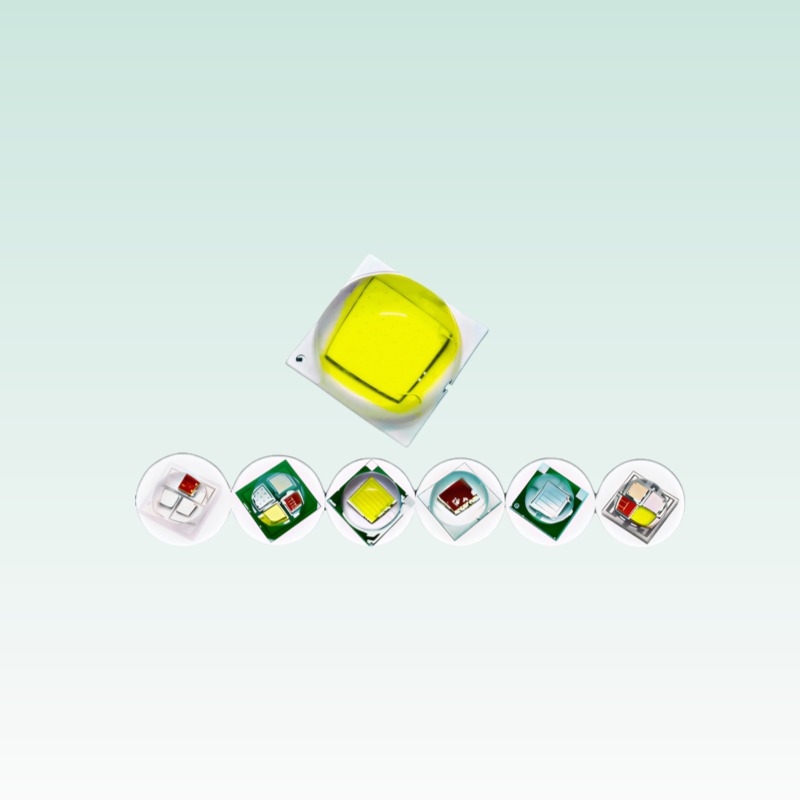
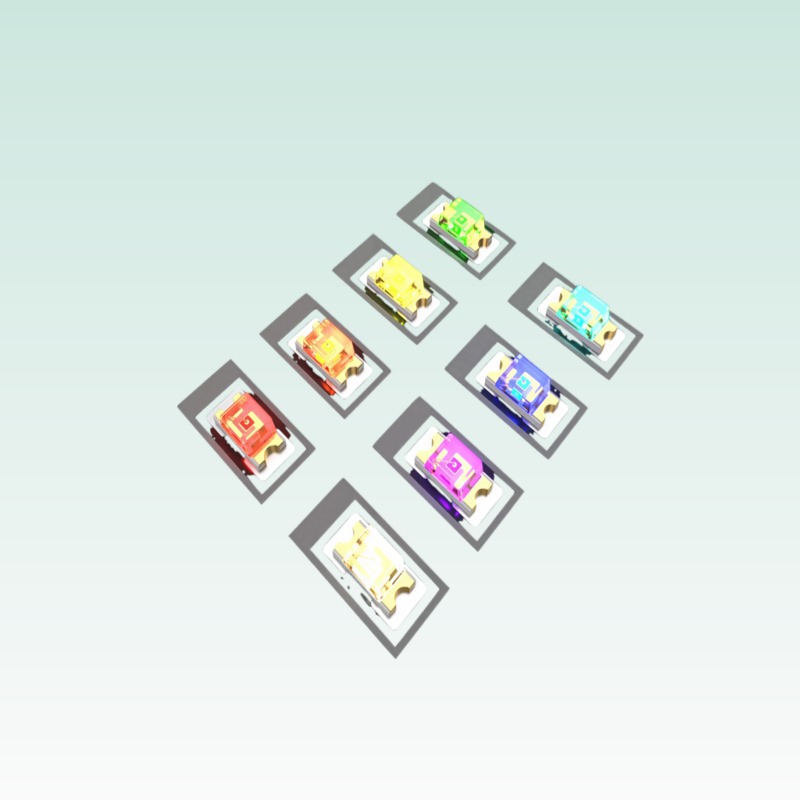
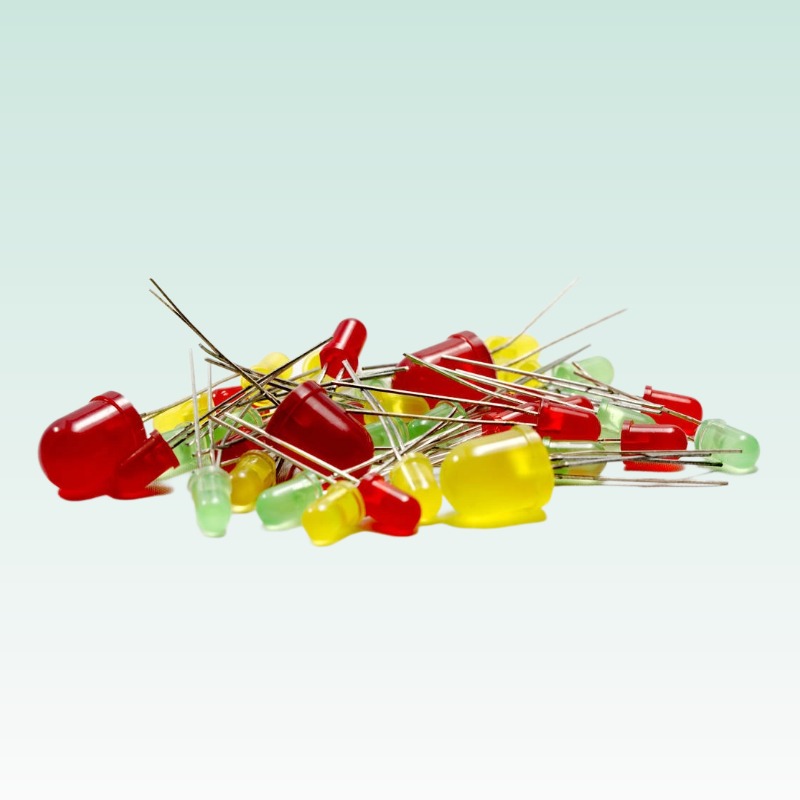



Every visible LED color traces back to one of two epitaxial material systems, and knowing which one a part uses predicts most of its behavior. Red, orange and amber come from aluminium indium gallium phosphide grown on gallium arsenide. Green, cyan, blue and violet come from indium gallium nitride grown on sapphire or silicon carbide. White light sits on the InGaN side: a blue die under a phosphor coat.
Two Systems, Two Behavior Profiles
| Property | AlInGaP | InGaN |
|---|---|---|
| Colors served | Red 620-660nm, orange, amber, yellow | Green to violet, 440-570nm class |
| Substrate | GaAs (absorbing) | Sapphire or SiC (transparent) |
| Internal efficiency in color | High in red-amber | High in blue, lower toward green |
| Wavelength drift with heat | Strong red shift, roughly 0.1nm per C | Mild, typically a fraction of that |
| Forward voltage band | Lower, about 1.9-2.4V | Higher, about 2.9-3.5V |
The aluminium gallium indium phosphide system has a direct band gap tuned across the red-amber-yellow range, and in that window its internal quantum efficiency is high. Below about 590nm its efficiency collapses as the alloy is pushed toward yellow-green, a physics limit rather than a production issue.
The Green Gap
Between roughly 530nm and 570nm, both systems underperform. AlInGaP weakens as it approaches green, and InGaN needs a high indium fraction to reach true green, which strains the crystal and lowers internal efficiency. Display makers route around the gap with green InGaN driven harder, and human vision does the rest, because the eye peaks near 555nm where the materials are weakest. Traffic signals solved the red end decades ago when AlInGaP replaced filtered incandescent lamps, and the red units still run at far higher wall-plug efficiency than any green unit in the same housing.
Heat Moves Color Differently
The two systems respond to junction temperature in opposite measure. AlInGaP shifts wavelength noticeably with heat, and an amber sign that reads 603nm cold can drift toward red through a hot afternoon, which is why outdoor signage derates current rather than letting the junction climb. AlInGaP also suffers more permanent lumen loss at high junction temperatures, so its fixtures argue for generous thermal paths. InGaN drifts less and tolerates heat better; a blue die under phosphor still needs cooling, but the color the eye reads moves a fraction of what an amber AlInGaP part does over the same temperature span.
Design Consequences
- RGB mixing inherits the gap: the green channel needs more drive current for the same photometric output, and the driver budget should reflect that imbalance.
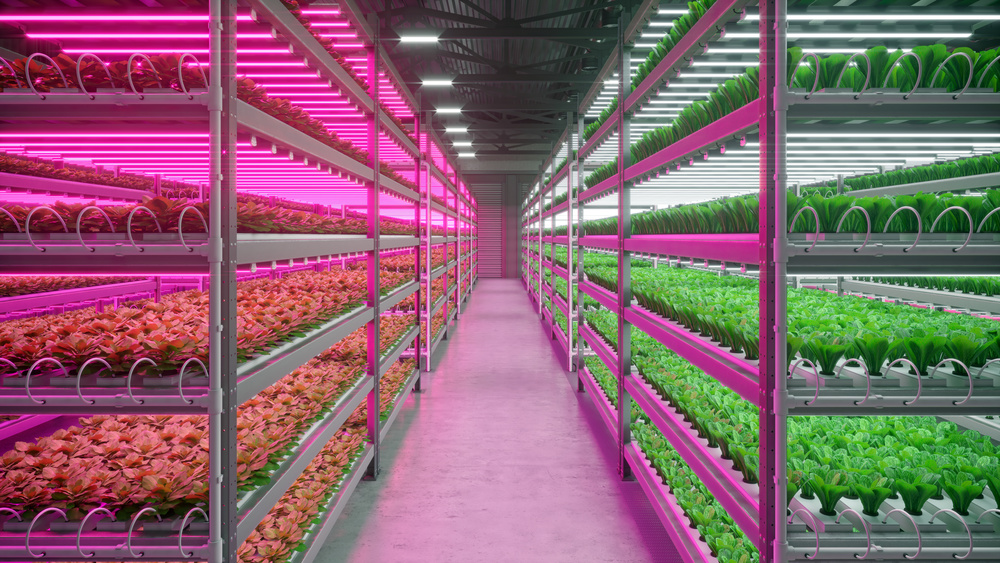
- Plant lighting picks the efficient ends: deep red AlInGaP and royal blue InGaN, with white added for work light, rather than paying the green gap premium.
- Amber and red signage needs temperature control for color stability, not just for lifetime.
- Forward voltage differs between the systems, so a series string that mixes red and blue parts needs a headroom check at both the driver minimum and maximum.
FAQ
Why is my red LED dimming faster than the blue one in the same fixture? AlInGaP ages faster at high junction temperature; the blue InGaN part holds output longer under the same thermal conditions.
Can one material system make all colors? Not in practice. Band structure sets the window, so red lives in AlInGaP, blue and below in InGaN, and the green gap is the overlap neither system covers well.
