
 English
 Afrikaans
 Albanian
 Amharic
 Arabic
 Armenian
 Azerbaijani
 Basque
 Belarusian
 Bengali
 Bosnian
 Bulgarian
 Catalan
 Cebuano
 Chichewa
 Corsican
 Croatian
 Czech
Czech Danish
 Dutch
Dutch Esperanto
 Estonian
 Filipino
 Finnish
 French
 Frisian
 Galician
 Georgian
 German
 Greek
Greek Gujarati
 Haitian Creole
 Hausa
Hausa Hawaiian
 Hebrew
 Hindi
Hindi Hmong
Hmong Hungarian
 Icelandic
 Igbo
Igbo Indonesian
 Irish
Irish Italian
 Japanese
 Javanese
 Kannada
 Kazakh
 Khmer
Khmer Korean
 Kurdish (Kurmanji)
 Kyrgyz
 Lao
Lao Latin
Latin Latvian
 Lithuanian
 Luxembourgish
 Macedonian
 Malagasy
 Malay
Malay Malayalam
 Maltese
 Maori
Maori Marathi
 Mongolian
 Myanmar (Burmese)
 Nepali
 Norwegian
 Pashto
 Persian
 Polish
 Portuguese
 Punjabi
 Romanian
 Russian
 Samoan
 Scottish Gaelic
 Serbian
 Sesotho
 Shona
Shona Sindhi
 Sinhala
 Slovak
 Slovenian
 Somali
 Spanish
 Sudanese
 Swahili
 Swedish
 Tajik
Tajik Tamil
Tamil Telugu
 Thai
Thai Turkish
 Ukrainian
 Urdu
Urdu Uzbek
Uzbek Vietnamese
 Welsh
Welsh Xhosa
Xhosa Yiddish
 Yoruba
 Zulu
Zulu
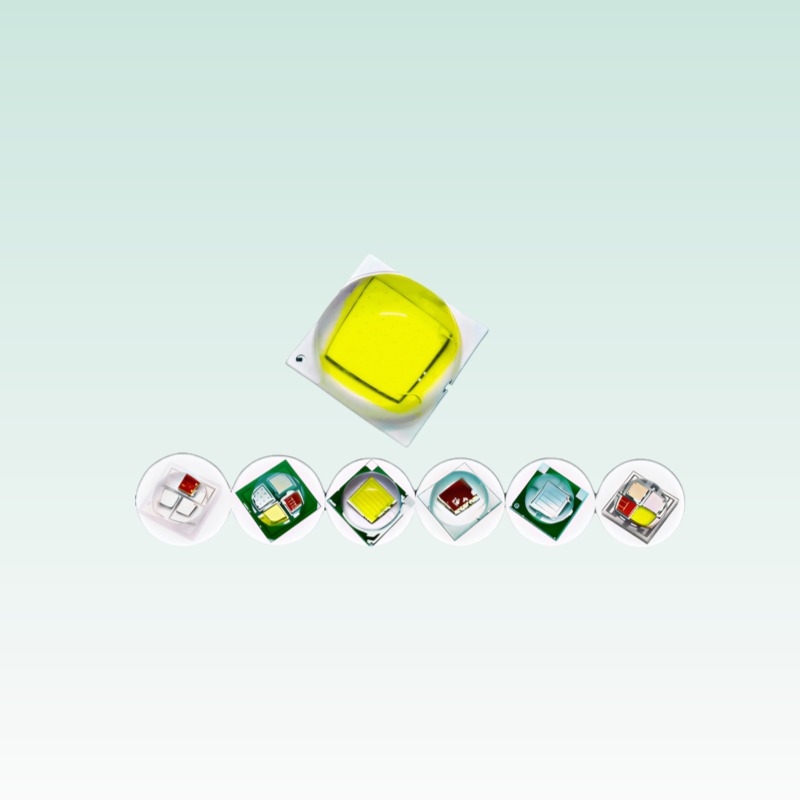
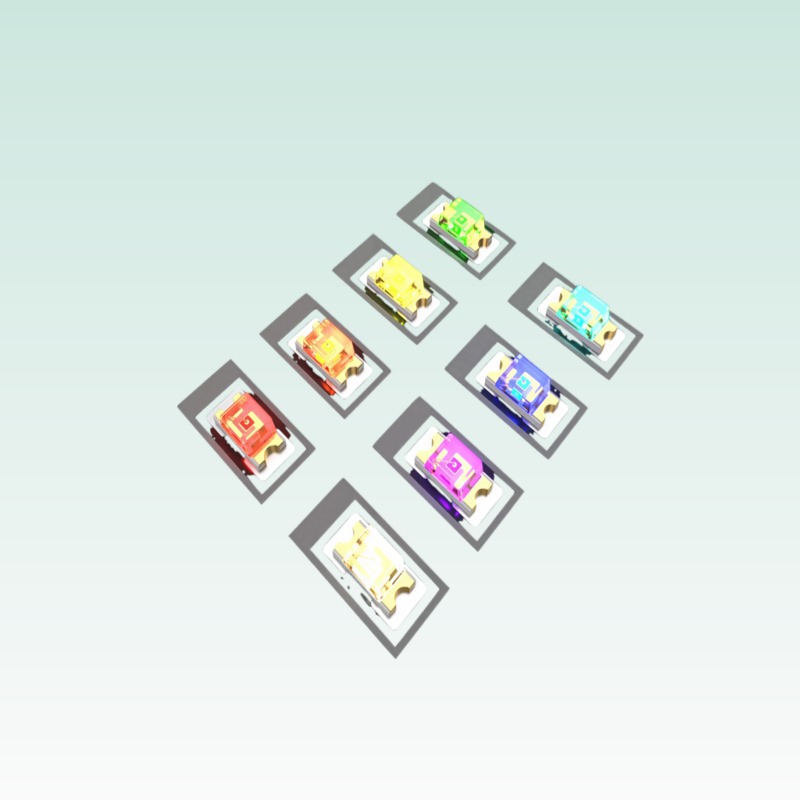



The 5050 is one of the most versatile LED packages ever made — a 5.0mm × 5.0mm square that houses everything from a single mid-power die to three-die RGB emitters and high-power variants. But “what is the 5050 LED current rating?” has no single answer: it depends on the die configuration, package construction, and above all, how well your design removes heat. This guide gives you the numbers and the design rules behind them.
Package Overview
| Dimension | Value |
|---|---|
| Body size | 5.0 × 5.0 mm |
| Height | 1.4–1.6 mm (typical) |
| Die configurations | 1 die (single color), 3 die (RGB / RGBW), or high-power single die |
| Viewing angle | 120° (typical) |
| Solder pads | 4–6 pads depending on configuration |
Current Ratings by Configuration
Standard single-color 5050 (mid-power): rated for 60–100mA continuous operation — the classic 0.2W-class part used in strips and channel letters. Some suppliers rate standard parts to 150mA with adequate heat sinking, but running at the datasheet maximum without margin sacrifices lifetime.
RGB and RGBW 5050: each color die is driven independently. Typical per-channel ratings are 20mA for red and 20mA for green and blue in standard parts — with the red die (lower forward voltage) often rated slightly higher. Total package dissipation is the sum of all channels, which is why full-white output on an RGB part is thermally constrained.
High-power 5050 variants: single-die high-power constructions in the same footprint handle 350mA (≈1W) continuously with proper thermal design, and specialized versions reach 700mA (≈3W). These parts rely on a lower thermal resistance path than standard packages and require direct board-level heat sinking.
| Configuration | Typical drive current | Power class |
|---|---|---|
| Single color, standard | 60–100 mA | 0.2 W |
| Single color, extended | up to 150 mA | 0.5 W |
| RGB, per channel | 20 mA (standard) | 0.2 W total |
| High-power single die | 350 mA | 1 W |
| High-power variants | up to 700 mA | 3 W |
Why Derating Matters More Than the Max Rating
The maximum current on a datasheet assumes a specified solder-point temperature — often 25°C, which never exists in a real product. As board temperature rises, safe drive current falls. A practical design rule: reduce drive current by roughly 10% for every 10°C of solder-point temperature above the datasheet reference, and always verify against the supplier’s derating curve.
Driving a 5050 at its absolute maximum in a poorly cooled enclosure is the most common cause of premature lumen depreciation and color shift — particularly in RGB applications where the die junctions age at different rates, gradually shifting white balance.
Thermal Design Rules for 5050 Applications
- Copper area — mid-power 5050s dissipate heat through their pads; provide at least the datasheet-recommended copper pour per LED, and use 2 oz copper where density allows
- Thermal vias — for high-power variants, place a via array under or beside the thermal pad to carry heat into an inner or bottom plane
- Spacing — derate current when LEDs are densely packed (as in strip lighting); neighboring devices raise each other’s ambient
- Enclosure airflow — sealed IP-rated housings can run 20–30°C hotter than open fixtures at the same drive current
- Aluminum substrates (MCPCB) — mandatory for the 1W and 3W class; FR4 is not adequate for sustained high-power operation
- Indicator or accent lighting, minimal heat? Standard 60mA operation offers maximum lifetime
- LED strip product? Follow the strip’s specified wattage per meter — do not overdrive to “boost” output
- Full-color dynamic scenes? Specify RGBW with per-channel constant-current control
- Replacement for a 1W-class luminaire? High-power 5050 on MCPCB with thermal vias
- High ambient temperature (industrial, outdoor sealed)? Derate 20–30% and validate with junction-temperature measurement
Drive Topology Notes
Constant-current driving is strongly preferred for 5050 arrays — it automatically compensates forward-voltage variation between parts and prevents thermal runaway. For architectural RGB applications, constant-current sink channels with PWM dimming provide repeatable color mixing. Our 5050 LEDs family includes single-color, RGB, RGBI, and RGBW variants with consistent die matching for even color across arrays — see also the driver and power supply design FAQ for topology selection, and the LED thermal management guide for junction-temperature budgeting.
Quick Selection Checklist
Queendom LED manufactures the 5050 family in single-color, RGB, RGBI, RGBW, UV, and high-power variants, with binning consistency and lot traceability for both indicator-grade and illumination-grade programs.
Published for educational purposes — Queendom LED Technical Resources
Further reading: LED Drivers & Power Supply Design | Technical FAQ · LED Thermal Management & Heat Sink Design | Technical FAQ
