
 English
 Afrikaans
 Albanian
 Amharic
 Arabic
 Armenian
 Azerbaijani
 Basque
 Belarusian
 Bengali
 Bosnian
 Bulgarian
 Catalan
 Cebuano
 Chichewa
 Corsican
 Croatian
 Czech
Czech Danish
 Dutch
Dutch Esperanto
 Estonian
 Filipino
 Finnish
 French
 Frisian
 Galician
 Georgian
 German
 Greek
Greek Gujarati
 Haitian Creole
 Hausa
Hausa Hawaiian
 Hebrew
 Hindi
Hindi Hmong
Hmong Hungarian
 Icelandic
 Igbo
Igbo Indonesian
 Irish
Irish Italian
 Japanese
 Javanese
 Kannada
 Kazakh
 Khmer
Khmer Korean
 Kurdish (Kurmanji)
 Kyrgyz
 Lao
Lao Latin
Latin Latvian
 Lithuanian
 Luxembourgish
 Macedonian
 Malagasy
 Malay
Malay Malayalam
 Maltese
 Maori
Maori Marathi
 Mongolian
 Myanmar (Burmese)
 Nepali
 Norwegian
 Pashto
 Persian
 Polish
 Portuguese
 Punjabi
 Romanian
 Russian
 Samoan
 Scottish Gaelic
 Serbian
 Sesotho
 Shona
Shona Sindhi
 Sinhala
 Slovak
 Slovenian
 Somali
 Spanish
 Sudanese
 Swahili
 Swedish
 Tajik
Tajik Tamil
Tamil Telugu
 Thai
Thai Turkish
 Ukrainian
 Urdu
Urdu Uzbek
Uzbek Vietnamese
 Welsh
Welsh Xhosa
Xhosa Yiddish
 Yoruba
 Zulu
Zulu



Ultraviolet (UV) curing uses light to polymerise inks, coatings, adhesives, and resins almost instantly. For decades, mercury arc lamps were the default UV source. Today, UVA 365 nm LED curing systems are displacing mercury lamps across printing, coating, and industrial bonding lines – for good reasons: instant on/off, no warm-up, longer lamp life, lower energy consumption, and no mercury waste.
For production engineers and plant managers evaluating UV LED curing, the technology decision is no longer “whether” but “which wavelength, which power, and how to integrate”. This guide explains how 365 nm LED curing works, where it fits, what specifications matter, and how to retrofit an existing line without interrupting production.
How UV LED curing works
UV-curable formulations contain photoinitiators that absorb UV light and trigger polymerisation – a cross-linking reaction that converts liquid resin into a solid, cured film. The efficiency of that reaction depends on two things: the cumulative energy dose (measured in mJ/cm²) and the irradiance peak (mW/cm²).
LED photochemistry differs from arc lamps in three ways that matter on the production floor:
- Narrow emission band. A 365 nm LED emits in a narrow band around its nominal wavelength (typically ±5–10 nm), whereas mercury arc lamps emit a broad spectrum with peaks at 254, 313, 365, 405, and 436 nm. Which photoinitiator you are using determines whether a narrow band is enough.
- Lower total dose at high speeds. LED systems deliver high peak irradiance but a narrow integration window. At line speeds above 100 m/min, dose accumulation time shrinks; system design must compensate with higher irradiance, additional heads, or slower speeds.
- Cool-running lamps, heat-sunk diodes. The LEDs themselves produce less radiant heat than mercury lamps, but the waste heat at the diode junction must be removed by water or air cooling – thermal management moves from the lamp chamber to the LED module.
Why 365 nm is the workhorse wavelength
Not all UV curing is the same, and the 365 nm band covers the majority of industrial applications:
- Flexographic and screen printing – inks tuned to 365–395 nm photoinitiators cure efficiently with UVA LEDs.
- Coatings and lacquers – wood, plastic, and metal decorative coatings formulated for LED curing.
- UV adhesives and bonding – glass, electronic assembly, medical device assembly.
- Digital inkjet printing – printheads lay down droplets that must cure before the next pass; 365–395 nm LED systems dominate this market.
- Composite and pultrusion curing – fibre-reinforced materials cured with 365 nm systems where UV dose and temperature must be controlled.
Longer-wavelength UVA systems at 385–405 nm penetrate deeper and cure thicker films, but they require photoinitiators matched to those longer wavelengths. Shorter UVC wavelengths (254–280 nm) offer surface curing and disinfection but are not typical for ink and coating curing. For most retrofits, 365 nm is the safe default when the photoinitiator chemistry is verified to absorb in that band.
Key specifications when buying a UVA 365nm LED curing system
Irradiance (mW/cm²)
Peak irradiance at the cure plane is the headline number. Values of 4–20 W/cm² are common in single-head systems; high-power configurations exceed that. Confirm the irradiance at the actual substrate distance, not at the lens exit – free-space losses are real.
Cure width and uniformity
Match the optical window to your substrate width. Uniformity across the web matters more than peak value: a ±10% uniformity target is typical, because under-cured edges fail adhesion tests even when the centre looks perfect.
Cooling architecture
Air-cooled systems simplify installation; water-cooled systems handle higher optical power densities and tighter thermal budgets. Match the cooling method to line speed and duty cycle – a line that runs 24/7 needs a different thermal design than a job-shop printer.
Electrical efficiency and power supply
Total input power for the controller plus heads determines operating cost. Compare W per W of optical output, and check power factor and wiring requirements against your facility’s capacity.
Lifetime and reliability
UV LEDs are rated in hours – typically 20,000–30,000 hours to 70% or 50% output under specified conditions. Demand the L70/L50 numbers at your actual drive current and cooling water/air temperature, not at lab conditions.
Control and integration
Production lines need interlocks, speed-synchronous dimming, and PLC/fieldbus integration. Check protocol support (EtherNet/IP, PROFINET, or simple I/O) before you commit.
Optimising the cure process
Moving to LED curing is not just swapping the lamp. The cure process must be re-validated:
- Reformulate or verify the ink/coating. Legacy inks designed for mercury lamps may not contain the right photoinitiators for 365 nm-only exposure. Ask your ink supplier for an “LED-curable” formulation or a compatibility statement.
- Measure dose with a radiometer. Buy a UV radiometer calibrated for 365 nm and map irradiance across the cure plane at production speed. Record dose versus line speed to build your process window.
- Recheck adhesion and surface cure. Narrow-band UVA can under-cure the surface of thick coatings (where oxygen inhibition dominates) even when the bulk is cured. Surface-tack is a common LED-curing complaint; address it with nitrogen inerting or a two-step cure.
- Temperature sensitivity. Every photoinitiator has a temperature response. Verify cure quality at cold start, warm-up, and steady state of the line – not just at midday temperatures.
Retrofitting from mercury arc lamps to 365nm LEDs
A retrofit is attractive when lamp replacement cost, energy bills, or mercury compliance push the payback below two years. A practical retrofit path:
- Step 1 – Audit the current system. Record lamp power, cure width, line speed, substrate types, inks/coatings used, and maintenance costs.
- Step 2 – Verify photoinitiator compatibility. Confirm with the ink/coating supplier that 365 nm LED curing is supported. If not, budget for formulation change.
- Step 3 – Measure and match dose. Calculate the dose your current process delivers and design the LED system to match or exceed it at the same line speed.
- Step 4 – Pilot on one line. Run one production line with the LED system, validate adhesion, hardness, and colour, and document results before rolling out.
- Step 5 – Manage the transition. Schedule the switch during planned downtime; LED heads are lighter and smaller, so mounting and shroud redesign are typically minor.
Common mistakes in UV LED curing projects
- Buying by wattage instead of irradiance. Input watts say nothing about dose at the substrate. Buy mW/cm², not W.
- Ignoring uniformity. A system with 25% edge fall-off will fail at the edges. Specify uniformity and measure it on installation.
- Overdriving LEDs for margin. Running LEDs at maximum current for “extra safety” shortens lifetime drastically. Design for the dose you need with margin in the thermal design, not in overdrive.
- Skipping the ink compatibility check. The most common retrofit failure is not the LEDs – it is an ink that cannot cure at 365 nm alone.
- Forgetting UV safety. Even though UVA is less dangerous than UVC, high-intensity 365 nm light still requires eye protection and proper shielding. Install interlocks and safety signage.
Case-scale economics: why the switch pays
Compared with a 200 W mercury lamp system, a 365 nm LED system at equivalent production output typically shows:
- 30–50% lower energy consumption per production hour.
- Zero warm-up time – instant start saves shift-start and colour-change delays.
- 10–20× longer service life between source replacements.
- No mercury, no ozone, no special disposal cost.
- Lower cabinet and exhaust requirements – less radiant infrared heat in the press room.
Payback periods of 12–24 months are common in printing and coating operations that run two or three shifts.
How QUEENDOM approaches UVA 365nm curing
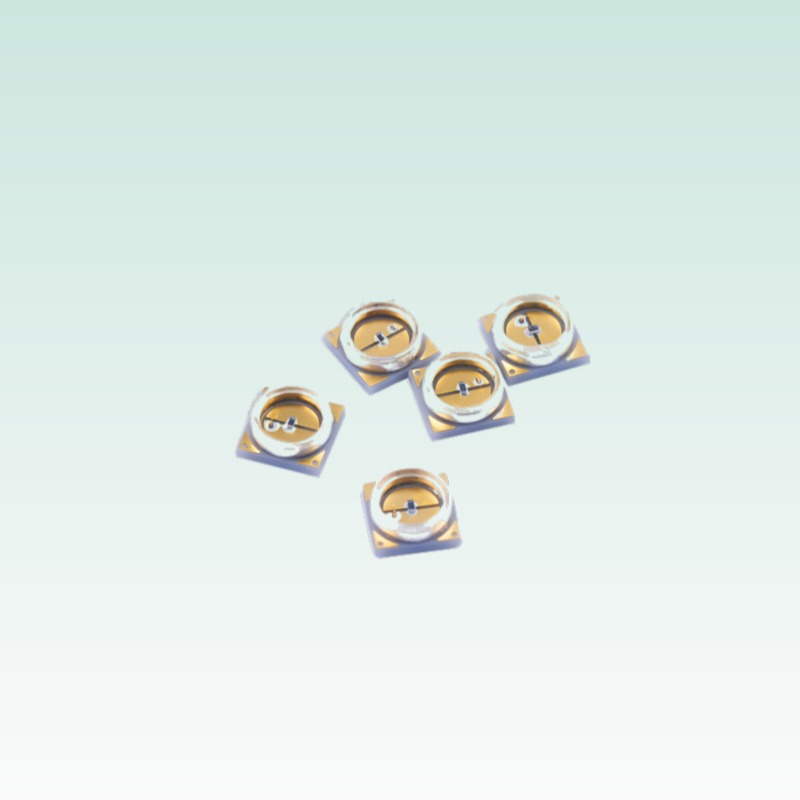
QUEENDOM develops UVA 365 nm LED chips and curing modules with ceramic packaging for industrial reliability, broadcast irradiance and uniformity data at the cure plane, and supports integrators with matched optics, cooling designs, and dose calculation. Whether you are retrofitting an existing flexo press, coating line, or inkjet system, we can supply engineering samples and irradiance mapping support so the pilot phase proves the numbers before you scale.
UVA 365 nm LED curing is a proven, cost-effective technology when it is engineered as a system: chemistry, dose, uniformity, cooling, and integration all have to line up. Ask the right questions, pilot on real production, and the switch from mercury to LED will pay for itself in energy, uptime, and maintenance – year after year.
A worked dose calculation for a flexo press
Take a newer flexographic press running at 120 m/min with a print repeat of 0.6 m – about 3.3 repeats per second. The UV cure station has an optical window of 0.5 m along the web direction; the substrate passes the window in roughly 0.25 s. To deliver a target dose of 60 mJ/cm², the average irradiance across the window must be approximately 240 mW/cm² (60 mJ divided by 0.25 s). Since real systems do not achieve the target’s uniform average, a common safety margin adds 30–50%, pointing to a specification of 350–400 mW/cm² average irradiance at the cure plane, verified with a UV-A radiometer at the exact nozzle and lamp distance.
This is why irradiance (mW/cm²) is the purchasing metric, not input wattage: two systems with the same input watts can differ by a factor of two in cure-plane irradiance depending on optics, window losses, and driver efficiency.
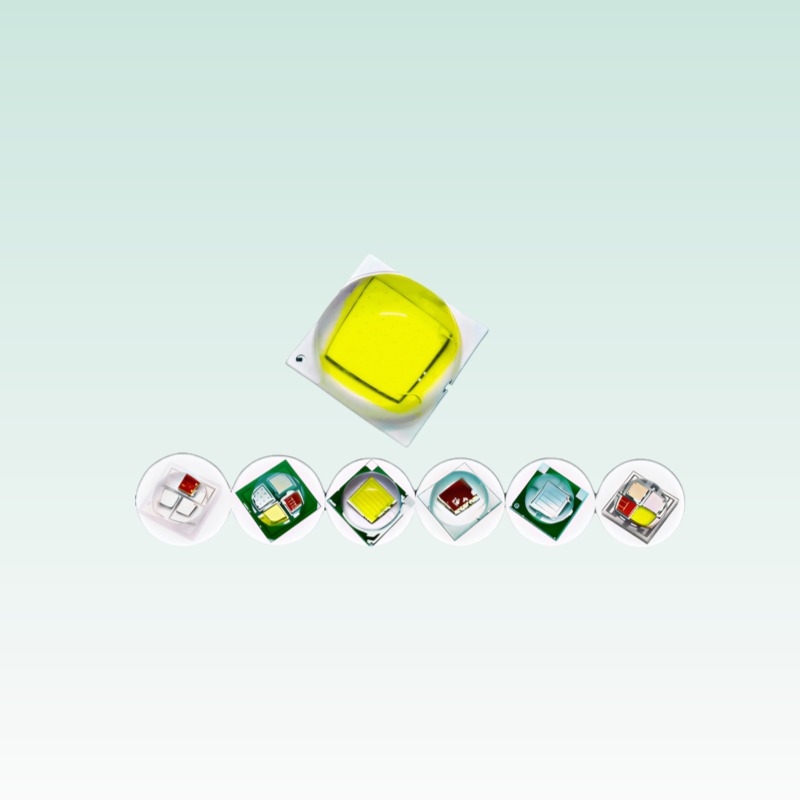
On the component side, the same quality logic applies: curing heads that integrate Ceramic LED Chips (3535/5050 ceramic packages) dissipate heat faster, drift less in wavelength, and support the longer lifetimes that line operators expect from UV systems. A supplier who can document the chip material, the thermal path, and the irradiance uniformity of the emitter array gives maintenance teams a predictable service curve instead of unexplained output loss.
For process developers who manage several wavelength bands, the same supply chain can cover the whole specialty source portfolio: UVA 365 nm for curing, far-UVC at 222 nm for surface disinfection, and SWIR LED Chips in the 970–1700 nm band for inspection and sensing. Consolidating these photonic requirements with one qualified manufacturer simplifies qualification files, OEM documentation, and spare-part strategy – a genuine advantage for machinery builders that ship curing stations, disinfection modules, and vision systems under one roof.
Safety, standards, and preventive maintenance
UV-A at curing intensities is an occupational hazard even though it is not as dangerous as UVC. IEC 62471 photobiological safety classification applies to UV LED curing systems: most high-power curing heads fall into moderate or even high risk groups, requiring interlocks, shielding, and eye protection. Your purchasing specification should require:
- Photobiological safety classification per IEC 62471 and CE documentation.
- Interlocked shielding that isolates exposure when the line is accessible.
- Operator training records and UV dosimetry for personnel where required.
- Radiometer-calibrated dose logging as part of process control.
For maintenance, plan for LED module lifetime (L70 at your drive condition), optical window cleaning (UV-cured overspray accumulates on optics), and thermal system service (coolant condition and flow checks). A preventive-maintenance schedule tied to irradiance measurement – for example quarterly irradiance audits with re-verification of the dose/speed maps – keeps the process inside its validated window and turns UV curing from a black box into a controlled, documented process step.
Related Products
Further reading: UVA 365nm vs 395nm Curing Guide
