

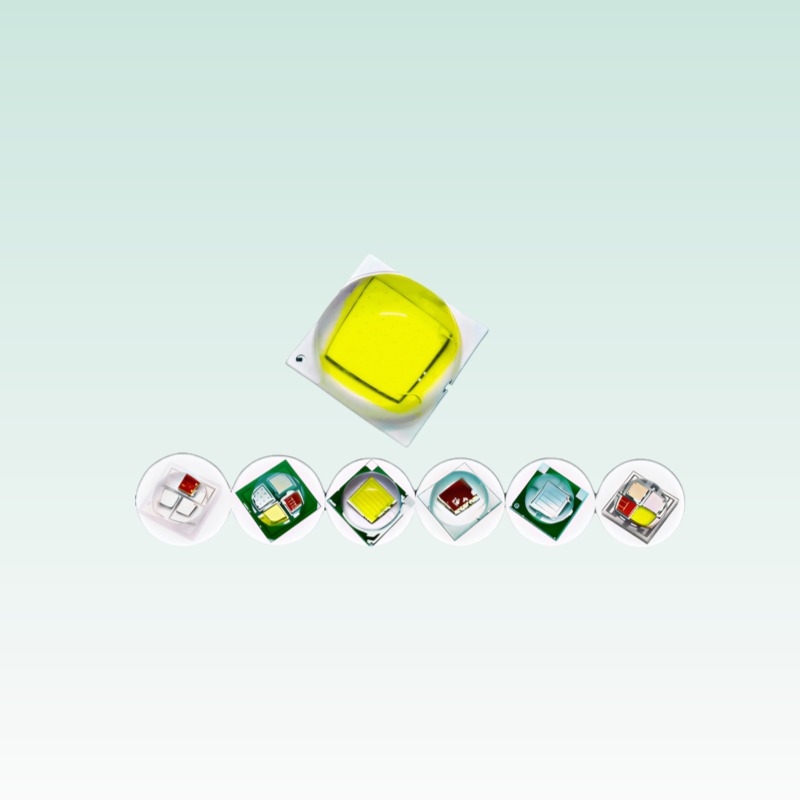

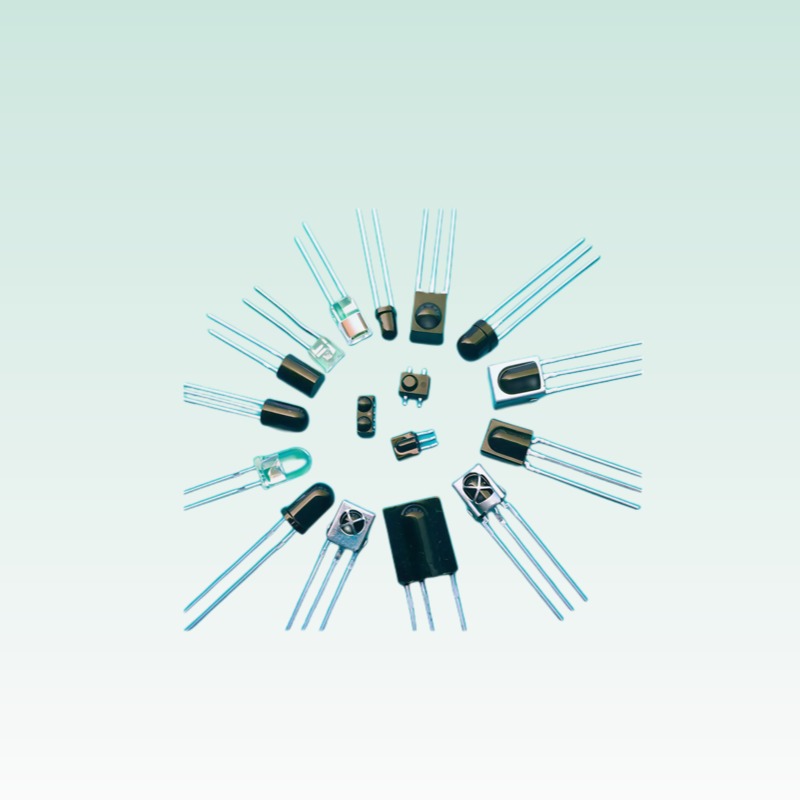








Red and near-infrared LEDs are often described with the same phrase: infrared light therapy. The physics behind the two is different enough that a system built around one wavelength will not reproduce the other. The visible red band ends near 700nm. Just past that point, water and tissue start behaving differently, and effective penetration changes by a factor of several. Choosing 630nm or 850nm is a choice about where the light stops inside the body.
Where the Boundary Sits
Human skin is opaque to most of the spectrum. Below 400nm, ultraviolet light is absorbed by DNA and protein. Between 400nm and 700nm, melanin in the epidermis absorbs strongly, and short wavelengths scatter within the first millimetre. From roughly 600nm to 1100nm, tissue becomes partly transparent: scattering still dominates, but absorption drops enough that photons travel deeper. LED emitters in this window sit at 630nm to 660nm for red, and 810nm to 850nm for the near-infrared band that extends to about 1000nm.
Why the Two Peaks Behave Differently
Two absorbers set the depth. Melanin absorbs across the visible range and falls away past 800nm. Haemoglobin absorbs around 540nm and again near 800nm. Water absorbs weakly until about 950nm, where the curve starts to climb. The practical result is a shallow window for 630nm and a deeper window for 850nm, because at 850nm melanin and haemoglobin are far less reactive and water is still fairly transparent.
| Parameter | 630nm red | 850nm near infrared |
|---|---|---|
| Spectral band | visible red | invisible near infrared |
| Dominant absorber in skin | melanin | water, mild haemoglobin |
| Typical effective depth | 1 to 3 mm | 5 to 10 mm |
| Usable irradiance | tens of mW per cm2 | tens to hundreds of mW per cm2 |
| Photobiological class | low risk visible | low risk invisible, eye less protected |
What the Penetration Number Actually Means
It is easy to quote a millimetre figure and treat it as a guarantee. Penetration depth measured at 10 percent of surface irradiance does not mean the light reaches that distance and stops. Scattering in skin follows approximately exponential decay, so a large share of the delivered energy is absorbed in the first layer. For 630nm, most of that share lands in the epidermis and upper dermis. For 850nm, the same share spreads over a deeper volume, which is why deeper targets need longer exposure or a higher radiant output.
Spectral Half Width Matters
An emitter does not output one wavelength. A red or near-infrared LED emits across a spectral half width of 15nm to 40nm, and the width often grows at high current. That width shifts the effective penetration: a bin measured at 10nm full width half maximum behaves differently from one at 30nm. Driving a chip above its rated current widens the spectrum and adds heat, and both effects move energy out of the window you selected. Binning by peak wavelength and radiant power keeps the optical output where it was designed.
How the Numbers Are Measured
A measured spectrum needs a spectroradiometer, not a colour sensor. The instrument captures radiance per wavelength, from which peak wavelength, spectral half width and total radiant power follow. Integrating spheres handle total output for emitters. A radiance head held at the treatment surface handles irradiance at the dose point. Without both figures, two systems built from the same part number can still deliver different doses, because lens geometry and mounting distance change the number that reaches tissue.
Dose and Photobiological Limits
Photobiomodulation dose is radiometric. Lumens do not apply, because the eye does not see this band. The useful figures are irradiance in milliwatts per square centimetre and dose in joules per square centimetre, which is irradiance multiplied by time. A 50 mW per cm2 field applied for 20 minutes delivers about 60 J per cm2. Published dose ranges cluster between 4 and 40 J per cm2 per session, which is why exposure time, not peak brightness, is the variable most systems tune. IEC 62471 classifies these sources by radiance and viewing conditions. Because the near-infrared band is invisible, the blink reflex gives no protection, so compliance rests on measured radiance rather than on how the source feels.
Key Takeaways
Which wavelength for which depth? 630nm works in the epidermal and dermal layer. 850nm reaches structures several millimetres deeper.
Should both emitters sit in one fixture? Yes. An array that mixes 630nm and 850nm emits two overlapping optical windows, and each keeps its own penetration profile.
How is output specified? Radiometrically, in milliwatts or joules per square centimetre, never in lumens.
