
 English
 Afrikaans
 Albanian
 Amharic
 Arabic
 Armenian
 Azerbaijani
 Basque
 Belarusian
 Bengali
 Bosnian
 Bulgarian
 Catalan
 Cebuano
 Chichewa
 Corsican
 Croatian
 Czech
Czech Danish
 Dutch
Dutch Esperanto
 Estonian
 Filipino
 Finnish
 French
 Frisian
 Galician
 Georgian
 German
 Greek
Greek Gujarati
 Haitian Creole
 Hausa
Hausa Hawaiian
 Hebrew
 Hindi
Hindi Hmong
Hmong Hungarian
 Icelandic
 Igbo
Igbo Indonesian
 Irish
Irish Italian
 Japanese
 Javanese
 Kannada
 Kazakh
 Khmer
Khmer Korean
 Kurdish (Kurmanji)
 Kyrgyz
 Lao
Lao Latin
Latin Latvian
 Lithuanian
 Luxembourgish
 Macedonian
 Malagasy
 Malay
Malay Malayalam
 Maltese
 Maori
Maori Marathi
 Mongolian
 Myanmar (Burmese)
 Nepali
 Norwegian
 Pashto
 Persian
 Polish
 Portuguese
 Punjabi
 Romanian
 Russian
 Samoan
 Scottish Gaelic
 Serbian
 Sesotho
 Shona
Shona Sindhi
 Sinhala
 Slovak
 Slovenian
 Somali
 Spanish
 Sudanese
 Swahili
 Swedish
 Tajik
Tajik Tamil
Tamil Telugu
 Thai
Thai Turkish
 Ukrainian
 Urdu
Urdu Uzbek
Uzbek Vietnamese
 Welsh
Welsh Xhosa
Xhosa Yiddish
 Yoruba
 Zulu
Zulu



Lighting Specifications | Category: Horticulture
Horticulture Lighting Specifications
Published: September 2026 | Category: Lighting Specifications | Keywords: horticulture LED specs, grow light spectrum, PPFD, plant lighting, LED grow light parameters, horticulture lighting design
1. Overview
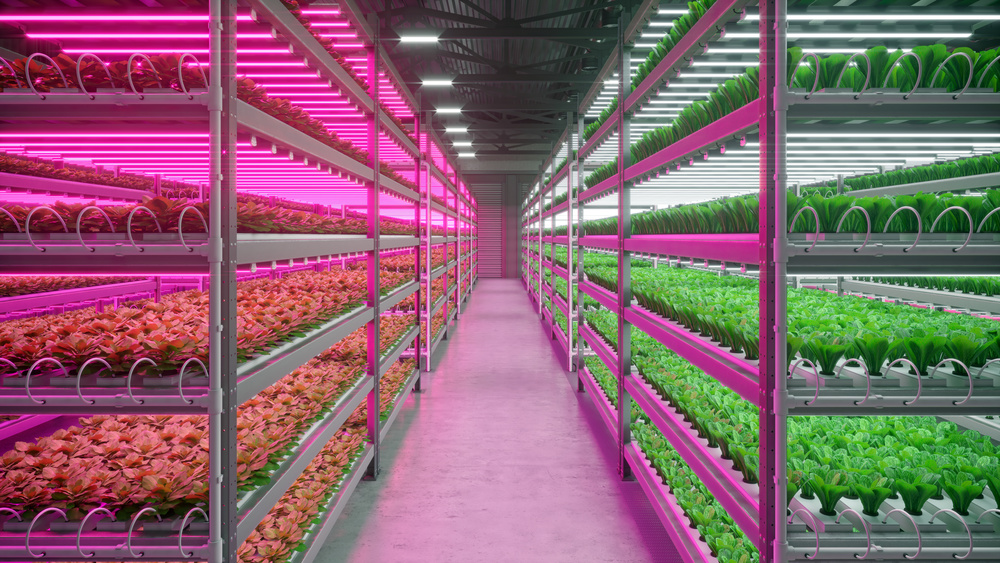
Horticulture LED lighting has fundamentally changed controlled environment agriculture (CEA). Unlike general lighting where photometric performance (lux) is the primary metric, horticulture lighting is evaluated by photon flux (PPFD in umol/m2/s) and spectral distribution across photosynthetically active radiation (PAR, 400-700nm). This specification reference covers the critical parameters for Queendom horticulture LED systems.
2. Product Categories
High-Bay Grow Lights
600W-1000W LED grow lights for commercial greenhouses and vertical farms. Replace 1000W HPS systems.
Flat Panel Grow Lights
Slim panel fixtures for multi-layer vertical farming. 100W-300W with close-canopy mounting capability.
Linear LED Grow Lights
T8 replacement and suspended linear fixtures for low-ceiling greenhouses and tissue culture.
Octopus / Spider Lights
Multi-arm fixtures with remote driver for large canopy coverage with minimal shading.
3. Horticulture-Specific Specifications
| Parameter | Specification Range | Notes |
|---|---|---|
| Power Range | 100W – 1000W | Per fixture |
| PPF (Photosynthetic Photon Flux) | 300 – 2500 umol/s | Total photon output per fixture |
| PPFD @ 30cm | 500 – 2000 umol/m2/s | At canopy level, depends on fixture & distance |
| Efficacy (umol/J) | 2.0 – 3.5 umol/J | Photon efficacy (PAR watts out / electrical watts in) |
| Spectrum Options | Full-cycle / Veg / Bloom / Adjustable | See spectrum guide below |
| Key Wavelengths | 450nm (blue) + 660nm (deep red) | Chlorophyll absorption peaks |
| UV / IR Channels | 365-380nm UV + 730nm far-red | Optional channels for morphogenesis & flowering |
| Dimming | 0-10V / PWM / DALI / Smart Controller | Spectrum-level dimming on adjustable models |
| IP Rating | IP54 / IP65 | IP65 for high-humidity greenhouses |
| Operating Temp | -10C to +45C | Greenhouse and indoor environments |
| Humidity | Up to 95% RH (non-condensing) | Conformal-coated PCB for humidity resistance |
| Lifespan (L90) | 35,000 – 50,000 hours | L90 for horticulture (stricter than L70) |
4. Spectrum Configurations
| Spectrum | Composition | Application |
|---|---|---|
| Full Cycle (Sunlike) | 4000K white + 660nm red + 730nm far-red | Complete grow cycle: seed to harvest |
| Veg (Vegetative) | 5000K white + 450nm blue | Leafy greens, herbs, vegetative growth stage |
| Bloom (Flowering) | 3000K white + 660nm deep red | Flowering plants, fruiting stage |
| Adjustable (Tunable) | Multiple channels independently dimmable | Research, phenotyping, custom spectrum |
5. DLI (Daily Light Integral) Guidelines
DLI is the total photon flux delivered per day (mol/m2/day). It determines plant growth rate and yield. Target DLI varies by crop:
| Crop Type | Target DLI (mol/m2/day) | Photoperiod |
|---|---|---|
| Leafy Greens (lettuce, spinach) | 12-17 | 16-18 hours |
| Herbs (basil, mint) | 10-15 | 14-16 hours |
| Tomatoes / Peppers | 20-30 | 16 hours |
| Cannabis | 35-45 | 18h veg / 12h flower |
| Microgreens | 6-12 | 12-16 hours |
| Strawberries | 17-25 | 14-16 hours |
Related Resources
Design: Lighting Design Guide
Case Study: Greenhouse Grow Light Case Study
Products: Horticulture LED Products
Support: Contact for Grow Light Sizing
Need a custom grow light layout?
Downloadable Specifications
Product-specific datasheets and spectrum guides for horticulture lighting products:
| Document | Product | Format | Download |
|---|---|---|---|
| QUEENDOM Plant Lighting Catalog (EN) | All Grow Lights | Download | |
| LED Grow Tubes (T8 Plant Light) | T8 Grow Tube | Download | |
| LED Plant Light Full Spectrum Table | Spectrum Reference | Download | |
| Panel Grow Light Series (37.8 PG/RG) | Panel Grow Light | Download | |
| Plant Light Accessories & Wiring Diagram | Installation Guide | Download |
New to grow lighting: What Is a Plant Growth Light? — start with the basics, then apply these specifications.