
 English
 Afrikaans
 Albanian
 Amharic
 Arabic
 Armenian
 Azerbaijani
 Basque
 Belarusian
 Bengali
 Bosnian
 Bulgarian
 Catalan
 Cebuano
 Chichewa
 Corsican
 Croatian
 Czech
Czech Danish
 Dutch
Dutch Esperanto
 Estonian
 Filipino
 Finnish
 French
 Frisian
 Galician
 Georgian
 German
 Greek
Greek Gujarati
 Haitian Creole
 Hausa
Hausa Hawaiian
 Hebrew
 Hindi
Hindi Hmong
Hmong Hungarian
 Icelandic
 Igbo
Igbo Indonesian
 Irish
Irish Italian
 Japanese
 Javanese
 Kannada
 Kazakh
 Khmer
Khmer Korean
 Kurdish (Kurmanji)
 Kyrgyz
 Lao
Lao Latin
Latin Latvian
 Lithuanian
 Luxembourgish
 Macedonian
 Malagasy
 Malay
Malay Malayalam
 Maltese
 Maori
Maori Marathi
 Mongolian
 Myanmar (Burmese)
 Nepali
 Norwegian
 Pashto
 Persian
 Polish
 Portuguese
 Punjabi
 Romanian
 Russian
 Samoan
 Scottish Gaelic
 Serbian
 Sesotho
 Shona
Shona Sindhi
 Sinhala
 Slovak
 Slovenian
 Somali
 Spanish
 Sudanese
 Swahili
 Swedish
 Tajik
Tajik Tamil
Tamil Telugu
 Thai
Thai Turkish
 Ukrainian
 Urdu
Urdu Uzbek
Uzbek Vietnamese
 Welsh
Welsh Xhosa
Xhosa Yiddish
 Yoruba
 Zulu
Zulu


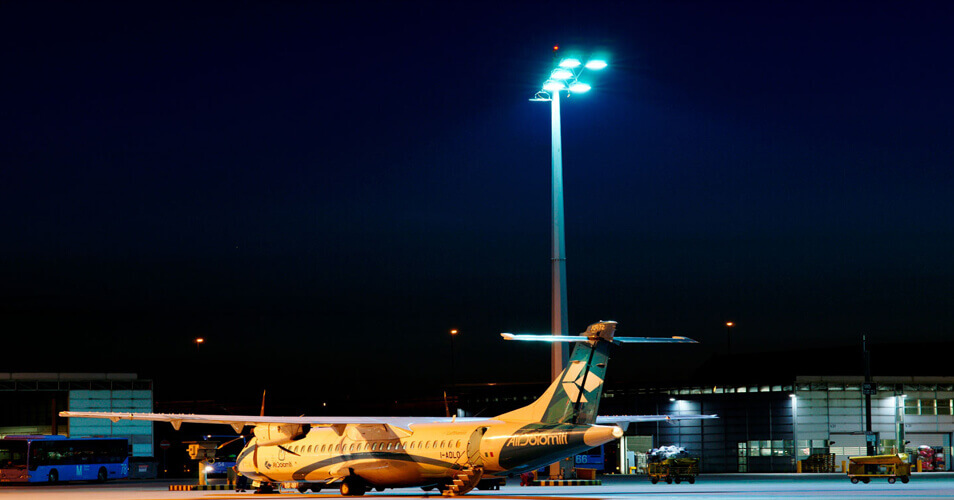


Almost every outdoor LED flood light is sold as IP65 or IP66 — and most buyers treat the two as interchangeable. They are not. The difference sits in the second digit (water protection), and in environments with driven rain, salt spray, or pressure washing, choosing the wrong one shortens fixture life significantly. This guide explains the ratings and where each belongs.
Reading the IP Code
The IP (Ingress Protection) code from IEC standard 60529 has two digits:
- First digit (solids): 6 = dust-tight — no ingress of dust at all. Both IP65 and IP66 share this.
- Second digit (liquids): this is where they differ.
- Building facades and wall washing away from driven rain paths
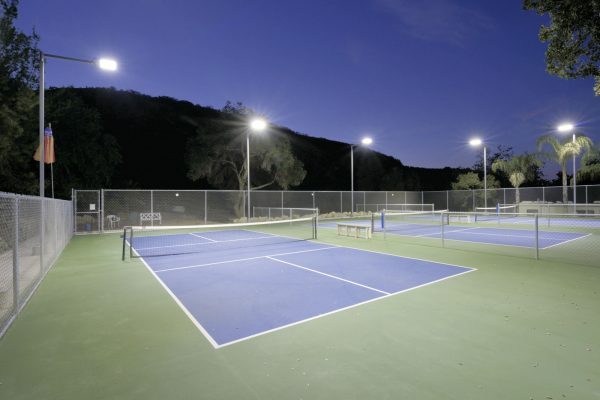
- Sports courts and general area lighting in normal weather regions
- Canopy and under-eave mounting
- Signage and accent lighting
- Ports and marine environments — driven salt spray and storm spray attack seals; our port marine lighting case documents the corrosion and sealing requirements
- High-pressure washdown areas — food processing exteriors, livestock facilities, equipment yards cleaned with pressure washers
- Coastal and island projects — wind-driven rain carries salt that wicks into marginal seals
- Low mounting near ground level — splash and spray exposure from vehicles and cleaning
- Gasket material and design — silicone gaskets compress-set slower than cheap rubber compounds; UV exposure degrades inferior seals within 2–3 years
- Breathing and drainage — temperature cycling creates pressure differentials that pump moisture through weak seals; well-designed enclosures manage this with drainage geometry
- Corrosion protection of hardware — marine-grade finishes and stainless fasteners matter more than the IP digit once salt enters the picture; see our marine and offshore lighting guide
- Cable entry sealing — the gland, not the lens, is the most common water entry point in field failures
| Rating | Liquid protection | Test condition |
|---|---|---|
| IP65 | Protected against water jets | 12.5 L/min nozzle from any direction |
| IP66 | Protected against powerful water jets | 100 L/min high-pressure jets from any direction |
| IP67 | Protected against temporary immersion | 30 minutes at 1m depth |
| IP68 | Protected against continuous immersion | Conditions specified by manufacturer |
The step from IP65 to IP66 is roughly an 8× increase in water volume and pressure — IP66 fixtures survive directed high-pressure hosing that can force water past IP65 seals.
Where the Difference Actually Matters
IP65 is sufficient for:
IP66 is the safer choice for:
Beyond the Rating: What Actually Determines Outdoor Lifespan
An IP rating is a lab test of a new fixture. Field longevity depends on how the enclosure ages:
Specification Checklist
1. Match the rating to the worst-case condition, not the average — one pressure-wash cycle per month defines the requirement
2. For coastal projects within a few kilometers of the sea, treat IP66 as the baseline and evaluate corrosion testing documentation
3. Confirm the rating applies to the complete fixture as shipped — adding accessories (visors, guards) can compromise factory sealing if not designed for it
4. Ask for salt-spray test data (e.g., per ISO 9227) when the project is marine
5. Verify the driver enclosure rating matches the optical enclosure — mixed ratings create a hidden weak point
Product Context
The flood light family covers outdoor area and facade projects, with the solar flood light variant for off-grid sites. For projects demanding the highest liquid protection, IP67/IP68-class fixtures such as our waterproof tube lights handle even immersion-grade washdown environments.
Queendom LED manufactures outdoor flood lighting with sealed enclosure design, corrosion-resistant finishing, and IP documentation for project compliance.
Published for educational purposes — Queendom LED Technical Resources
Further reading: Marine & Offshore Lighting | Corrosion-Resistant LED Systems · Port Marine Lighting Case
