





Beleuchtungsleistungsdichte & Illuminance Standards
Comprehensive lighting guidelines für Wohnbereich, gewerblich, industriell, und institutional spaces — optimized für LED Effizienz und human-centric design in Konformität mit global standards.
LED & traditional LPD standards by space Typ – W/m² und illuminance (lux) tables für Wohnbereich, gewerblich, und industriell buildings.
Residential Buildings
| Room / Space | Traditional LPD (W/m²) Strom → Target | LED LPD (W/m²) Strom → Target | Illuminance (lx) |
|---|---|---|---|
| Living Room | 7 → 6 | 3 → 2 | 100 |
| Bedroom | — | — | 75 |
| Dining Room | — | — | 150 |
| Kitchen | — | — | 100 |
| Bathroom | — | — | 100 |
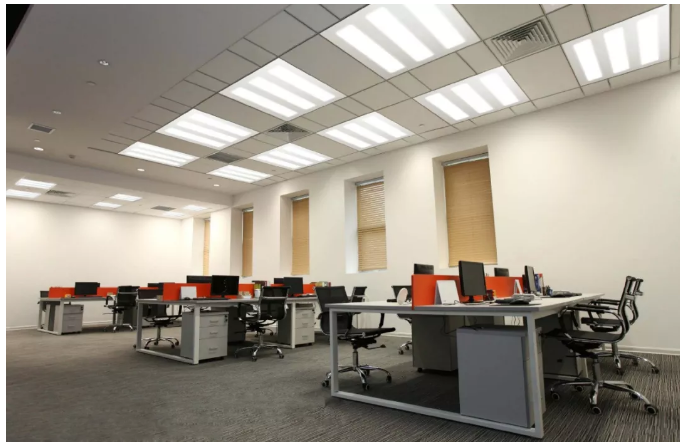
Office Buildings
| Room / Space | Traditional LPD (W/m²) Strom → Target | LED LPD (W/m²) Strom → Target | Illuminance (lx) |
|---|---|---|---|
| Allgemein Office | 11 → 9 | 4.5 → 4 | 300 |
| Premium Office / Design Studio | 18 → 15 | 7.5 → 7 | 500 |
| Meeting Room | 11 → 9 | 4.5 → 4 | 300 |
| Service Hall | 13 → 11 | 5.5 → 5 | 300 |
| Archive Room | 8 → 7 | 3.5 → 3 | 200 |
Commercial Buildings
| Room / Space | Traditional LPD (W/m²) Strom → Target | LED LPD (W/m²) Strom → Target | Illuminance (lx) |
|---|---|---|---|
| Allgemein Store | 12 → 10 | 5 → 4 | 300 |
| Premium Store | 19 → 16 | 8 → 7 | 500 |
| Allgemein Supermarket | 13 → 11 | 5.5 → 5 | 300 |
| Premium Supermarket | 20 → 17 | 8 → 7 | 500 |
Hospital & Education
| Room / Space | Traditional LPD (W/m²) Strom → Target | LED LPD (W/m²) Strom → Target | Illuminance (lx) |
|---|---|---|---|
| Operating Room | 30 → 25 | 12 → 11 | 750 |
| Laboratory (Fine) | 18 → 15 | 7.5 → 7 | 500 |
| Classroom / Reading Room | 11 → 9 | 4.5 → 4 | 300 |
| Pharmacy | 20 → 17 | 8 → 7 | 500 |
| Ward | 6 → 5 | 2.5 → 2 | 100 |
Industrial Facilities
| Room / Space | Traditional LPD (W/m²) Strom → Target | LED LPD (W/m²) Strom → Target | Illuminance (lx) |
|---|---|---|---|
| Precision Machining (<0.1mm) | 19 → 17 | 8 → 7 | 500 |
| Electronics Assembly | 20 → 18 | 8 → 7 | 500 |
| Warehouse (Fine Parts) | 8 → 7 | 3.5 → 3 | 200 |
| Control Room | 18 → 15 | 7.5 → 7 | 500 |
| Boiler Room | 6 → 5 | 2.5 → 2 | 100 |
Umfasst full tables für hospitality, sports venues, libraries, Transportwesen hubs, und detailed Hinweise on room index adjustments.
Wie die LPD-Grenzwerte festgelegt werden und was sie tatsächlich regeln
Beleuchtung power density caps die installed lighting watts per square meter (oder per square foot in US codes) für a space class — nicht die illuminance delivered. That distinction matters: a konform design kann still be too dim if fixtures sind inefficient, und an over-bright design kann still comply if der Raum ist large. Die professionell method ist bis treat LPD als a ceiling you design under while hitting die task-plane illuminance der Raum actually needs.
Die Two-Number Method
- Find Ihr space class und seine LPD cap in die applicable code (ASHRAE 90.1 / IECC in North America, EN 15193 und national annexes in Europe, GB 50034 in China). Use die gesamte-building oder space-by-space table consistently — mixing die zwei methods in ein submittal ist eine gemeinsam rejection cause.
- Compute Ihr design load: fixture count × (Leuchte watts + driver losses), divided by floor area. Auxiliary items — emergency battery packs, control gear — follow die code’s inclusion rules; wenn unsure, umfassen them.
| Space Class (typisch) | Modern LPD Bereich | Design Target |
|---|---|---|
| Warehouse, general | 4–6 W/m² | 200 lux on task plane, uniformity ≥ 0.4 |
| Manufacturing, fine task | 8–12 W/m² | 500 lux, UGR ≤ 22 |
| Classroom | 8–10 W/m² | 300–500 lux on desks, UGR ≤ 19 |
| Corridor / circulation | 2–4 W/m² | 100–150 lux |
| Cold Lagerung | 5–7 W/m² | 150–200 lux, IP65 minimal |
Werte über sind indicative planning Bereiche — always verify against die code edition Ihr permit ist filed under. LED Effizienz gains keep pushing die caps down mit jeder revision cycle.
Where LED Designs Gain Their Margin
- Lichtausbeute floor: specify Leuchten bei ≥ 140 lm/W Systemlichtausbeute (fixture-level, nicht bare-LED level) — thist einelone typically halves die LPD von a legacy design
- Controls credits: daylight response und occupancy scheduling earn LPD trade-offs in am meisten North American codes; document die control zones in die submittal oder die credit ist denied
- Uniformity über peak lux: spreading fixtures bis raise minimal illuminance reduziert over-lit patches die waste LPD headroom
- Maintenance factor honesty: calculating bei 0.8 MF inflates fixture count; mit L90-bei-50,000-h LEDs und a documented cleaning cycle, 0.9 ist defensible und saves 10% von installed watts
Worked retrofit examples mit gemessen before/after numbers sind in die hoch-bay Werk case und die classroom renovation case.