
 English
 Afrikaans
 Albanian
 Amharic
 Arabic
 Armenian
 Azerbaijani
 Basque
 Belarusian
 Bengali
 Bosnian
 Bulgarian
 Catalan
 Cebuano
 Chichewa
 Corsican
 Croatian
 Czech
Czech Danish
 Dutch
Dutch Esperanto
 Estonian
 Filipino
 Finnish
 French
 Frisian
 Galician
 Georgian
 German
 Greek
Greek Gujarati
 Haitian Creole
 Hausa
Hausa Hawaiian
 Hebrew
 Hindi
Hindi Hmong
Hmong Hungarian
 Icelandic
 Igbo
Igbo Indonesian
 Irish
Irish Italian
 Japanese
 Javanese
 Kannada
 Kazakh
 Khmer
Khmer Korean
 Kurdish (Kurmanji)
 Kyrgyz
 Lao
Lao Latin
Latin Latvian
 Lithuanian
 Luxembourgish
 Macedonian
 Malagasy
 Malay
Malay Malayalam
 Maltese
 Maori
Maori Marathi
 Mongolian
 Myanmar (Burmese)
 Nepali
 Norwegian
 Pashto
 Persian
 Polish
 Portuguese
 Punjabi
 Romanian
 Russian
 Samoan
 Scottish Gaelic
 Serbian
 Sesotho
 Shona
Shona Sindhi
 Sinhala
 Slovak
 Slovenian
 Somali
 Spanish
 Sudanese
 Swahili
 Swedish
 Tajik
Tajik Tamil
Tamil Telugu
 Thai
Thai Turkish
 Ukrainian
 Urdu
Urdu Uzbek
Uzbek Vietnamese
 Welsh
Welsh Xhosa
Xhosa Yiddish
 Yoruba
 Zulu
Zulu



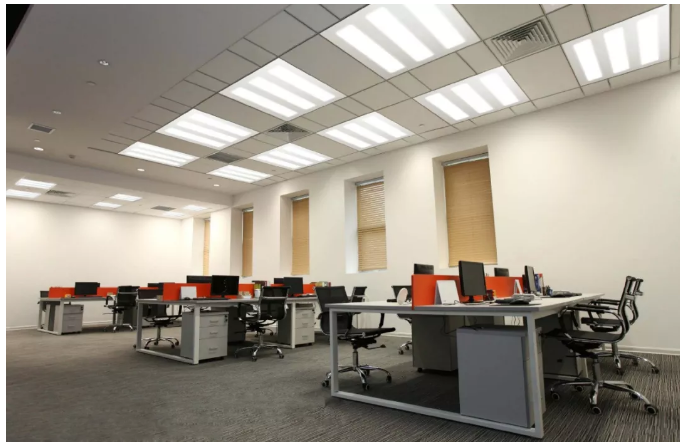





The color rendering index (CRI) quantifies how faithfully a light source reveals the colors of objects compared with a reference illuminant of the same correlated color temperature. The scale runs from 0 to 100, where 100 represents perfect rendering as achieved by an incandescent reference. Two figures do most of the work in specifications: Ra, the general index averaged over eight pastel test colors, and R9, a separate score for saturated red.
How the Index Is Built
The method comes from the CIE. A source illuminates standardized test color samples, and each sample’s appearance under the test source is compared with its appearance under a reference illuminant matched to the same CCT. The first eight samples are muted pastels; their scores average into Ra, the value shown as “CRI 80” or “CRI 90” on datasheets.
The ninth sample is a strong red, reported separately as R9. Saturated red is the color most white LED sources struggle to reproduce, because the blue pump and yellow phosphor combination typically underfills the long-wavelength end of the spectrum. R9 matters wherever red carries information: packaging print, wiring color codes, food freshness and skin tones under medical lighting.
The Mechanism: Spectra Set the Score
A source renders color accurately when its spectrum contains energy across the wavelengths that objects reflect. A spectrum with deep gaps — common in simple phosphor-converted LEDs — leaves certain colors dull or shifted. Higher-CRI chips add red and other compensating phosphors, which fills the gaps but absorbs some energy.
The practical consequences: high-CRI sources typically cost a little more and show slightly lower efficacy in lm/W than standard versions at the same CCT. That trade-off is why demanding maximum CRI everywhere wastes budget; the requirement should follow the visual task.
Requirements by Task
| Application | Typical Requirement | Reason |
|---|---|---|
| Warehouses, circulation areas | Ra 80 | Color discrimination is not task-relevant |
| General offices, classrooms | Ra 80 | Comfortable rendering for normal work |
| Electronics, printing, textile and packaging inspection | Ra 90, R9 > 50 | Operators judge subtle color differences that decide pass or fail |
| Cleanrooms, medical and food inspection | Ra 90 or better, explicit R9 target | Red tones carry diagnostic or freshness information |
Mainstream indoor luminaires deliver Ra 80 or Ra 90. Inspection lines for electronic assemblies, printing, textiles and packaging usually specify Ra 90 plus R9, because operators must distinguish subtle color differences that determine pass or fail; the higher tier also reduces visual fatigue and rework in quality control. Warehouses and general circulation areas can accept Ra 80 and spend the saved budget on more fixtures or better controls.
Reading Datasheets Without Being Misled
CRI and CCT are independent parameters: a warm white source can render colors well or badly, and the same applies to cool white. Never accept a CCT figure as evidence of rendering quality.
Second, verify the claimed Ra and R9 in the LM-79 test report or another accredited laboratory report rather than a marketing sheet, because R9 in particular is often omitted from summary tables. Third, know the newer alternative: IES TM-30 reports color fidelity as Rf (0–100, similar in spirit to Ra) plus Rg, a gamut index showing whether colors appear more saturated or washed out. Because CRI is an average, it can hide shifts that TM-30 reveals across a wider set of real colors; demanding applications should ask for both.
Frequently Asked Questions
Is a higher CRI always better?
No. Beyond the task requirement, extra CRI trades efficacy and cost for rendering headroom. Ra 80 is enough where color discrimination is not task-relevant; reserve Ra 90 with an R9 target for inspection, medical and display work.
Why is R9 often missing from datasheets?
Many standard phosphor LEDs score poorly on saturated red, so summary tables omit the value. If a task depends on red rendering, check the full test report and read the R9 line explicitly.
Does CCT affect CRI?
The reference illuminant changes with CCT — an incandescent-like model below 5000K, a daylight model above — so each score is judged against a matching reference. A 2700K and a 5000K source can both reach Ra 90.
