
 English
 Afrikaans
 Albanian
 Amharic
 Arabic
 Armenian
 Azerbaijani
 Basque
 Belarusian
 Bengali
 Bosnian
 Bulgarian
 Catalan
 Cebuano
 Chichewa
 Corsican
 Croatian
 Czech
Czech Danish
 Dutch
Dutch Esperanto
 Estonian
 Filipino
 Finnish
 French
 Frisian
 Galician
 Georgian
 German
 Greek
Greek Gujarati
 Haitian Creole
 Hausa
Hausa Hawaiian
 Hebrew
 Hindi
Hindi Hmong
Hmong Hungarian
 Icelandic
 Igbo
Igbo Indonesian
 Irish
Irish Italian
 Japanese
 Javanese
 Kannada
 Kazakh
 Khmer
Khmer Korean
 Kurdish (Kurmanji)
 Kyrgyz
 Lao
Lao Latin
Latin Latvian
 Lithuanian
 Luxembourgish
 Macedonian
 Malagasy
 Malay
Malay Malayalam
 Maltese
 Maori
Maori Marathi
 Mongolian
 Myanmar (Burmese)
 Nepali
 Norwegian
 Pashto
 Persian
 Polish
 Portuguese
 Punjabi
 Romanian
 Russian
 Samoan
 Scottish Gaelic
 Serbian
 Sesotho
 Shona
Shona Sindhi
 Sinhala
 Slovak
 Slovenian
 Somali
 Spanish
 Sudanese
 Swahili
 Swedish
 Tajik
Tajik Tamil
Tamil Telugu
 Thai
Thai Turkish
 Ukrainian
 Urdu
Urdu Uzbek
Uzbek Vietnamese
 Welsh
Welsh Xhosa
Xhosa Yiddish
 Yoruba
 Zulu
Zulu



Product Overview
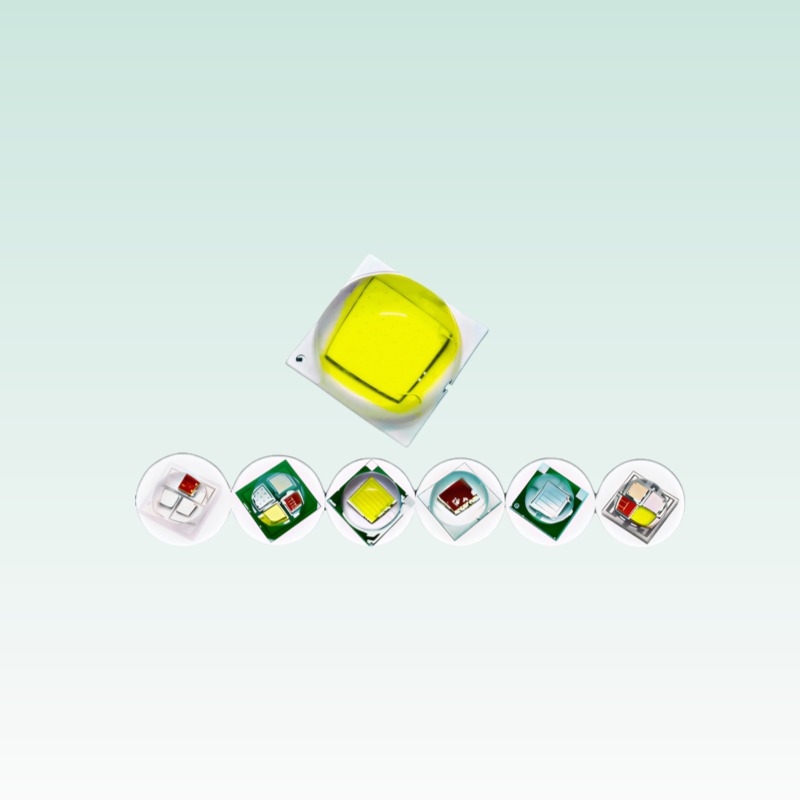
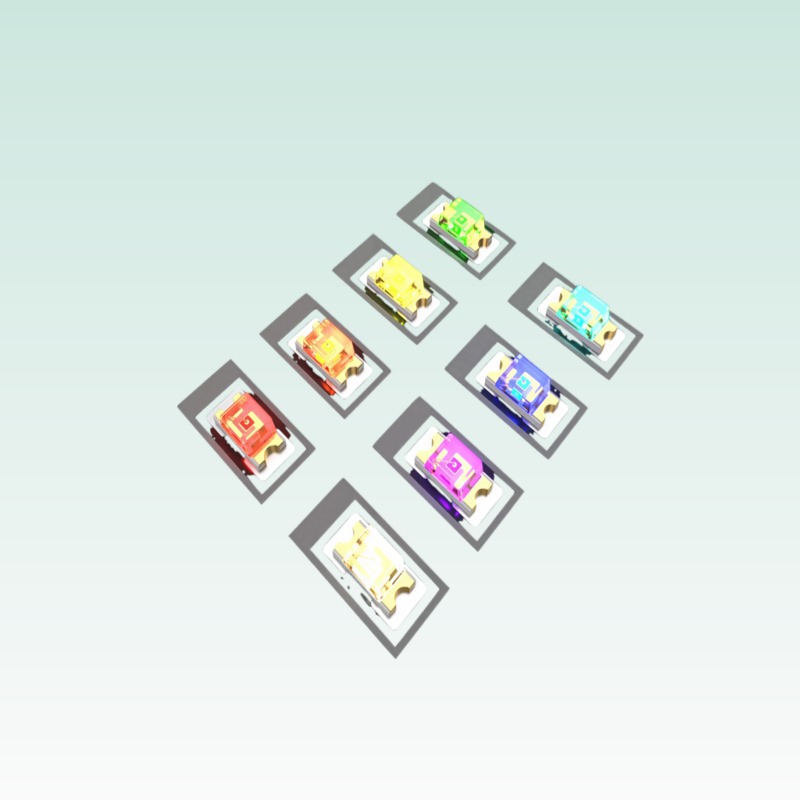
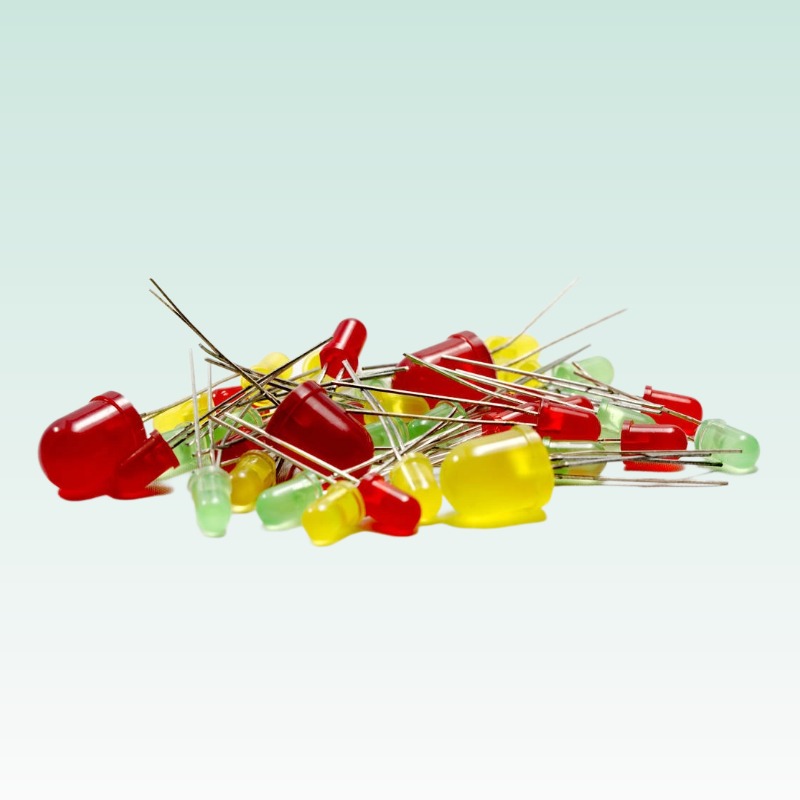
QUEENDOM’s 3535 Ceramic LED Chips represent the pinnacle of automotive-grade semiconductor lighting technology. Fully qualified to AEC-Q102 standards, these ceramic-packaged LEDs withstand the extreme thermal cycling, vibration, and humidity conditions that define automotive operating environments.
The 3535 footprint (3.5mm × 3.5mm) balances optical output with compact form factor, making it ideal for adaptive driving beam (ADB) headlight modules, LiDAR illumination sources, and high-brightness interior lighting where space is constrained but reliability cannot be compromised.
Technical Specifications
Package Dimensions: 3.5mm × 3.5mm × 1.8mm (L×W×H)
Substrate Material: Aluminum Nitride (AlN) ceramic, thermal conductivity >170 W/mK
Thermal Resistance (Rth j-s): < 3.0 K/W Operating Temperature: -40°C to +150°C (AEC-Q102 Grade 1) Storage Temperature: -40°C to +150°C Forward Voltage: 2.8V – 3.4V (white); 2.0V – 3.0V (color) Forward Current: 350mA – 1500mA (depending on bin) Luminous Flux: 120lm – 280lm (white, 350mA, 25°C) Color Temperature: 2700K – 6500K (CCT bins available) CRI: Ra > 80 (standard), Ra > 90 (premium bin)
Viewing Angle: 120° (Lambertian) or 60° (with secondary lens)
ESD Protection: HBM Class 3B (8000V)
Qualification: Full AEC-Q102 Rev. D (2016)
Key Applications
Adaptive Driving Beam (ADB) Headlights
Modern ADB systems require individually addressable LED pixels that switch in milliseconds to create glare-free high beams. Our 3535 ceramic chips deliver the thermal headroom and optical precision needed for matrix-beam modules, supporting >100 independent light segments per headlamp with individual PWM dimming control.
LiDAR Illumination and Sensing
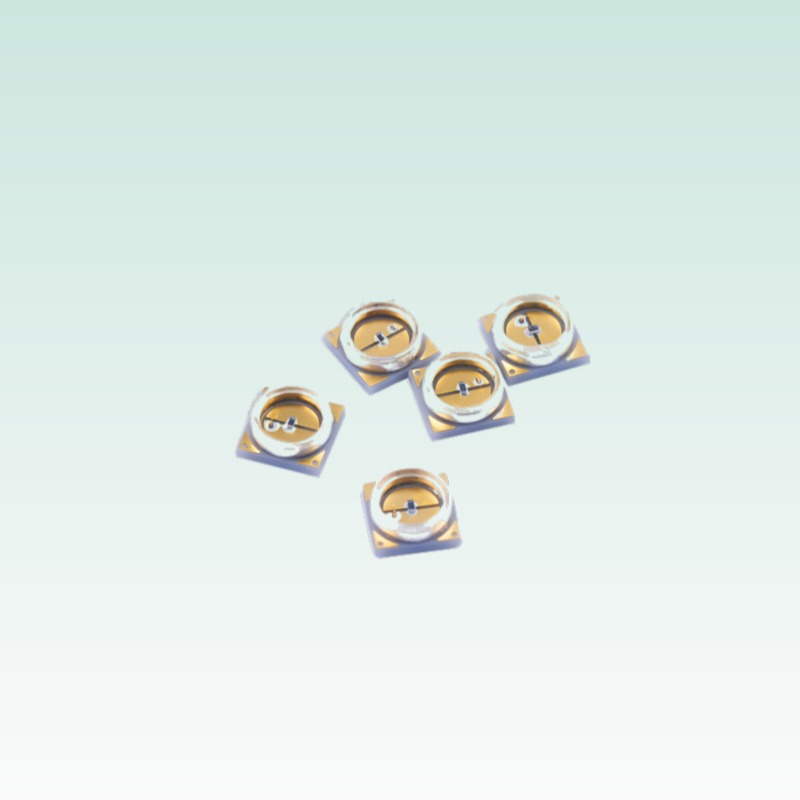
Automotive LiDAR systems at 905nm and 1550nm require high-peak-power pulsed illumination. The 3535 ceramic package’s low thermal resistance enables high-duty-cycle pulsed operation without junction temperature overshoot, supporting detection ranges >200 meters for Level 3+ autonomous driving systems.
High-Brightness Interior Lighting
From ambient roof lighting to reading lamps and logo projection, automotive interior LEDs must operate silently and reliably for 15+ year vehicle lifetimes. Our AEC-Q102 qualified chips deliver consistent color point and lumen maintenance across the full automotive temperature range, eliminating the color shift and dimming that plague consumer-grade alternatives.
Why Choose QUEENDOM AEC-Q102 Solutions?
• Full AEC-Q102 Rev. D Qualification: Not just temperature testing — comprehensive qualification including thermal cycling, mechanical shock, vibration, humidity, and ESD
• PPAP Level 3 Documentation: Complete production part approval process documentation for OEM Tier-1 and Tier-2 suppliers
• Zero-Defect Target: Cpk > 1.67 on critical parameters with SPC-controlled manufacturing
• Automotive Supply Chain Certified: IATF 16949 quality management system
• Custom CCT Binning: Tight color consistency (3- and 5-step MacAdam ellipse) for premium brand applications
Certifications and Compliance
AEC-Q102 Rev. D (Grade 1, -40°C to +150°C) | CE | RoHS | REACH | IATF 16949 | ISO 9001 | Full PPAP documentation available
Related Products
• SWIR LED Chips (970-1700nm) — Short-wave infrared for industrial vision and quality control
• 7070 High-Power Ceramic LED Chips — Industrial high-power solutions with ceramic thermal management
• 5050 RGB Addressable LED Chips — Multi-color addressable solutions for architectural and entertainment lighting
Frequently Asked Questions
Q: What does AEC-Q102 certification specifically test?
A: AEC-Q102 is the Automotive Electronics Council standard for discrete LEDs. It includes: Pre-conditioning (MSL3 moisture sensitivity), Temperature Cycling (-40°C ↔ +150°C, 1000 cycles), High-Temperature Operating Life (HTOL at Tj=125°C, 1000 hours), Thermal Shock, Mechanical Shock, Vibration (variable frequency), Humidity (85°C/85%RH, 1000 hours), ESD (HBM 8kV), and Solderability. Passing all tests qualifies the device for automotive use.
Q: Can you support custom CCT and color bins for specific OEM programs?
A: Absolutely. We maintain tight color binning capabilities (3-step and 5-step MacAdam ellipse) and can reserve specific CCT ranges and flux bins for dedicated OEM programs. This ensures color consistency across multiple headlamp modules and production years, critical for premium automotive brands.
Q: What is the typical lead time for AEC-Q102 qualified samples?
A: Standard AEC-Q102 qualified samples ship within 2-3 weeks from qualified inventory. For custom CCT bins or special ceramic substrate requirements, lead time extends to 6-8 weeks including reliability qualification verification. Volume production lead time is typically 8-12 weeks depending on order size and current fab loading.
Q: Do you provide optical simulation support for headlamp module design?
A: Yes. Our application engineering team provides ray-tracing simulation support using Zemax OpticStudio and LightTools. We can model your specific reflector/lens geometry, estimate illuminance distribution, and optimize chip placement for minimum glare and maximum beam uniformity before you cut metal.
Contact QUEENDOM
Automotive lighting requires zero-compromise reliability. QUEENDOM’s AEC-Q102 qualified 3535 ceramic LED chips deliver the performance and documentation that Tier-1 suppliers and OEMs demand.
Email: sales@queendomlamp.com
Website: www.queendomlamp.com
Q: How do I initiate an automotive LED project with QUEENDOM?
A: Contact our automotive business unit with your technical requirements: application (headlamp/interior/LiDAR), target optical power, CCT/CRI requirements, operating temperature range, estimated annual volume, and target cost. We respond within 48 hours with a customized proposal including sample plan, qualification schedule, and production timeline.
Related Products
Further reading: 3535 Ceramic LED Chip Datasheet Guide · AEC-Q102 Certification Guide
