

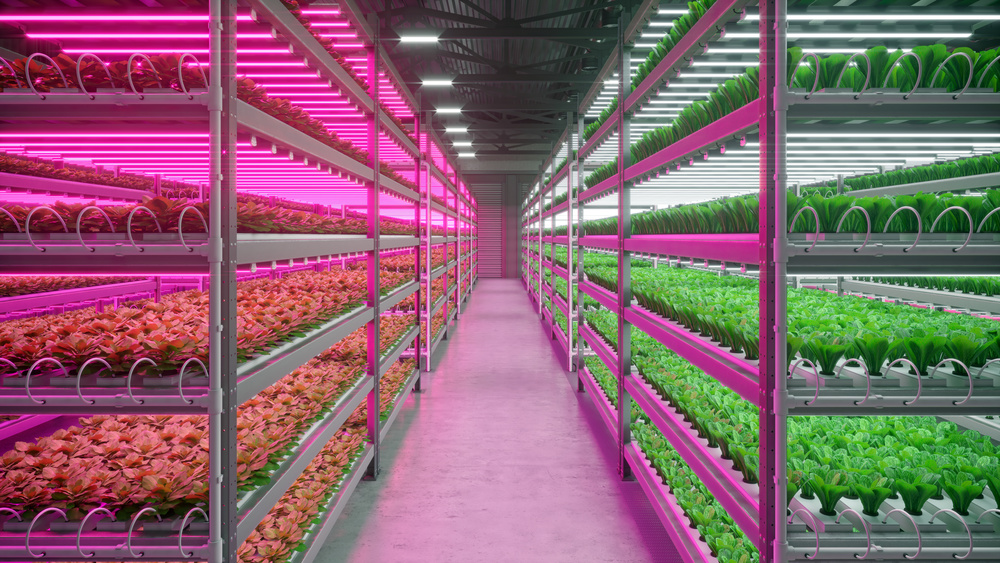



Patchy light is expensive. A 10% drop in PPFD at the corners of a rack becomes a measurable yield loss at the end of every cycle. L-series LED grow light bars attack the problem at the optic level: they replace the point-source hot spots of round fixtures with a rectangular distribution matched to tray geometry, so photons overlap cleanly between adjacent bars instead of piling up under each one.
Why Bare Bars Make Hot Lines and Dark Valleys
LED chips emit in a lambertian pattern, strongest straight down. A bare bar therefore produces a bright line directly beneath it and a dark valley between bars. L-series bars reshape that emission with lenses or reflectors into a batwing or rectangular profile, so the flux between bars merges instead of dipping. The result is one even sheet of light across the tray rather than a row of stripes.
Spacing, Tray Width and the U1 Ratio
With bars spaced 150-250 mm apart above a 1200 mm tray, horizontal uniformity can exceed 95%, and the U1 ratio holds across the working area. U1 is the minimum-to-average PPFD ratio over that area, not a marketing number measured at one sweet spot under the fixture. Ask which figure the vendor quoted before you compare two datasheets.
| Layout factor | Typical setting | Effect on uniformity |
|---|---|---|
| Bar spacing | 150-250 mm over a 1200 mm tray | Keeps bar-to-bar valleys filled; wider spacing drops overlap |
| Distribution | Batwing or rectangular | Matches tray geometry instead of a lambertian line |
| Mounting height | Confirmed by simulation | Changes overlap width and average PPFD together |
| Optics condition | Clean, dust-free | Dust on lenses drops PPFD noticeably |
Spacing and mounting height trade off against each other. Raising the bars widens the overlap between them but lowers the average PPFD on the tray; lowering them raises intensity but reopens the valleys. The simulation report shows that trade-off for each candidate layout, so the choice is measured rather than guessed.
The Simulation Report Before the Purchase Order
Every layout should come with a uniformity simulation report before installation: PPFD maps, DLI values, and the effect of mounting height and bar spacing. This lets you compare configurations before spending money. The same document supports DLC horticultural project files, grant applications and internal capital approvals, because it converts a lighting claim into a verifiable photometric calculation based on the actual IES file of the fixture.
L-Series Bars vs Round High Bays on Multi-Tier Racks
In dense multi-tier leafy-green systems, L-series bars typically outperform round high bay grow lights. The even distribution removes over-lit edges and shadowed centers, the two zones where yield quietly leaks away. The wide body carries more aluminum, which lowers junction temperature, improves photon efficacy, and lets growers run 18-20 h per day while keeping leaf temperature acceptable. Cooler bars also inject less heat into the tier, so the microclimate between shelves stays more stable and the climate control system works against fewer local hot spots.
Selection and Maintenance Checklist
Define the crop PPFD and DLI target first, then simulate bar spacing, mounting distance and the number of bars per tier. Confirm the report quotes the U1 ratio across the working area and used the actual fixture photometric file. On maintenance: check quick connectors every quarter, keep optics dust-free, and re-measure with a quantum sensor after each major cleaning cycle. For projects claiming DLC Premium horticultural status, keep the simulation reports and test certificates in the project file; auditors and utilities request them.
FAQ
How far apart should L-series bars be mounted?
Most 1200 mm tray layouts work at 150-250 mm bar spacing, but treat that as a starting point. Verify with a simulation that uses the fixture’s IES file before ordering.
What uniformity number should I accept?
Ask for the U1 ratio over the full working area. Above 95% horizontal uniformity is a realistic target for well-designed bar layouts on leafy-green racks.
Do the bars need cleaning?
Yes. Dust on lenses measurably drops PPFD. Wipe the optics on a schedule and re-measure with a quantum sensor after each major clean.
