

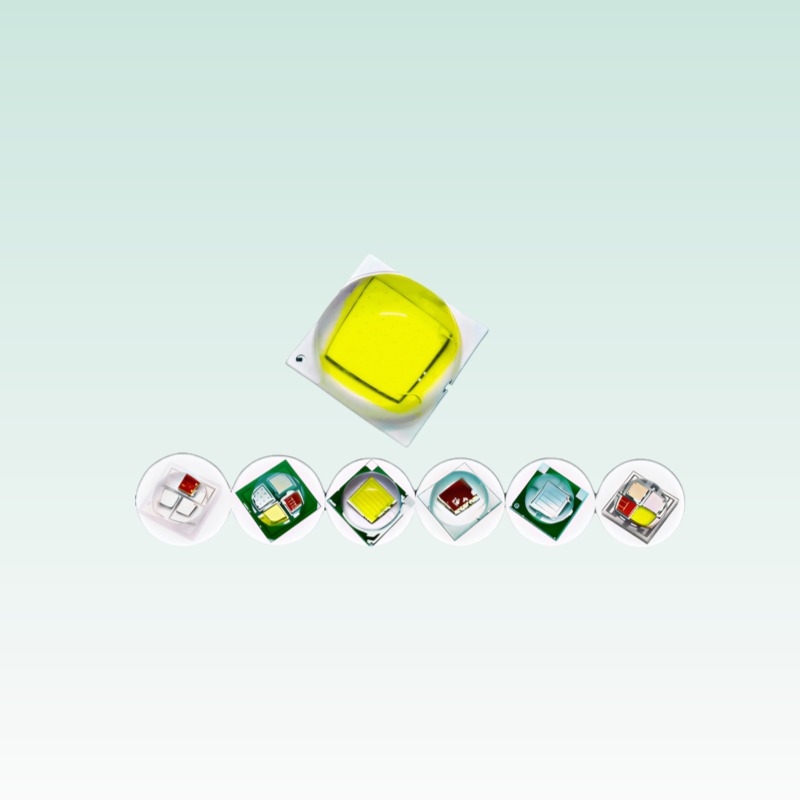




LED lifetime is a thermal story. Junction temperature controls the L70 rating, the hours until light output decays to 70% of its initial value, and cutting the junction temperature by 10 C can roughly double useful life. That is why a well-cooled grow light rated 50,000 h at L70 can outperform a cheaper fixture with the same headline number that runs 25 C hotter in practice.
Three Failure Modes, All Heat-Driven
The failures are specific and observable. Lumen depreciation shrinks photon output gradually. Phosphor degradation shifts the spectrum toward blue as the phosphor loses efficiency, which changes the red-to-blue ratios a crop recipe depends on. Driver capacitors age fastest in heat: a driver that cooks at 70 C fails long before the LED chips do. The modes also compound, because a hot LED board heats a driver mounted next to it. Many field failures are driver failures, so check whether the thermal rating covers the driver as well as the LEDs before you accept a datasheet at face value.
How Heat Leaves the Fixture
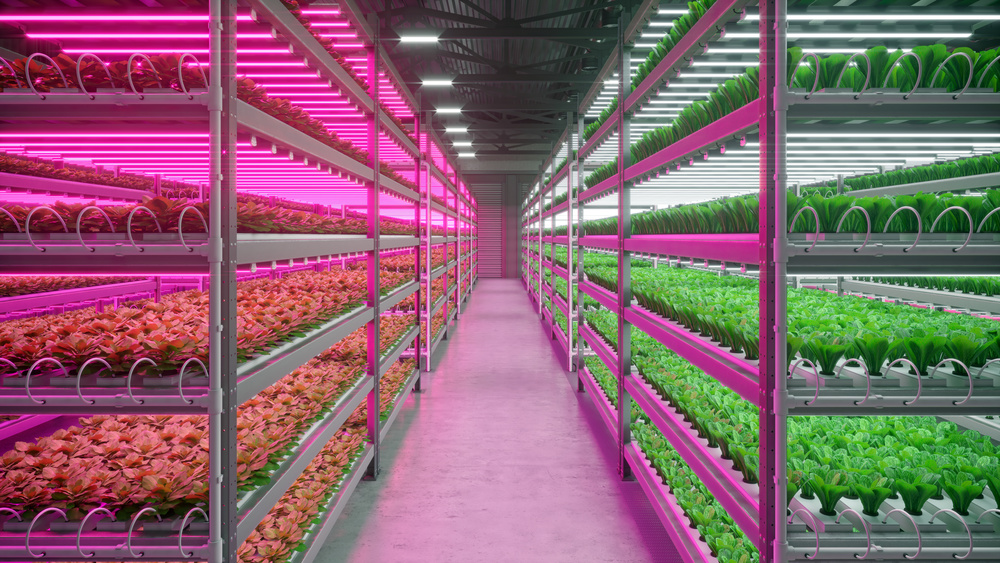
Good thermal design works through a chain: aluminum heat sinks sized to the wattage, thermal interface material between the LED board and the sink, and airflow paths that move heated air away. Every link matters; a good heat sink with dried-out interface material still runs hot. High bay grow lights running high wattage need passive or active cooling matched to the ambient temperature, which can exceed 35 C in a summer greenhouse. Check the derating curve in the datasheet, which shows how allowable output falls as ambient climbs. Mounting close under a solid rack shelf or inside a hooded fixture cuts the airflow those designs assumed.
Read the L70 Rating at Your Temperature
Datasheets rarely state the ambient at which L70 was measured, and the difference is not cosmetic. The ambient matters because heat leaves the junction only as fast as it can cross the board, the sink and the boundary into the air; warmer air shrinks that final step.
| Rating condition | Example L70 | What it means for the project |
|---|---|---|
| 25 C ambient | 50,000 h | Laboratory number, rarely the real environment |
| 45 C ambient | 30,000-35,000 h | Typical summer greenhouse; changes the amortization math |
Always ask for the L70 value at your operating condition, or at least at both 25 C and 35 C. For the LEDs themselves, ask whether the lifetime data follows the LM-80 test method at component level, which makes the numbers comparable between vendors.
Operating Practices That Extend Life
Keep heat sinks and air paths clean; dust is an insulator that removes cooling margin. Where fixtures are dimmable, dimming during the hottest hours lowers junction temperature and the cooling load of the room. Schedule an annual thermal audit: measure the driver case temperature and the LED board temperature at design output, compare them against the thermal derating data, and re-verify PPFD at 100% with a quantum sensor. Record the numbers in the same file as your PPFD measurements so trends show up year over year. If the site runs consistently hotter than the derating assumptions, reduce the operating current, improve airflow, or choose a fixture with more thermal headroom. Thermal management is the cheapest reliability investment a grower can make.
FAQ
What temperature kills a grow light fastest?
Heat at the driver. Capacitors inside a driver that runs at 70 C age far faster than the LED chips, so the fixture dies electrically while the diodes still work. That is why the driver needs its own cooling path, not just the board.
Why did my spectrum drift blue over time?
Phosphor degradation. As the phosphor loses efficiency, output shifts toward blue and the red-to-blue ratio your crop recipe depends on changes.
How often should I audit temperatures?
Once a year is a sensible minimum: measure driver case and LED board temperatures at full output, compare to derating data, and re-measure PPFD with a quantum sensor. Audit sooner if you change the mounting, the dimming schedule or the room’s cooling setup.
