












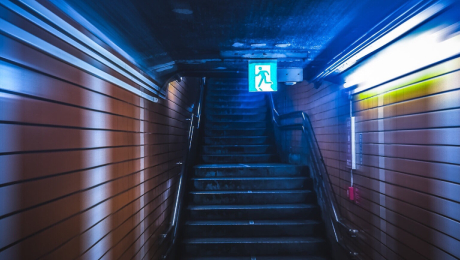
Introduction LED emergency light is a type of lighting that uses light-emitting diodes (LEDs) to provide illumination in the event of a power outage. LED emergency lights are typically used in commercial and industrial settings, as they are more energy-efficient and have a longer lifespan than traditional incandescent bulbs. What is an LED emergency light? An LED emergency light is a lighting system that utilizes LED technology to provide illumination in the event of a power outage. LED emergency lights are typically used in commercial and industrial settings, as they have the potential to last longer and use less energy than traditional incandescent bulbs. With this in mind, LED emergency lights are ideal for any situation where immediate lighting is needed. They typically come in a variety of sizes and styles, making them suitable for any environment. LED emergency lights are also known for their reliability and durability, making them a viable option for a variety of applications. How does an LED emergency light work? An LED emergency light is designed to detect when power is cut off from the main source. Upon detecting a power outage, the LED emergency light will turn on, providing illumination for a predetermined amount of time. The amount of time the LED emergency light will remain on after detecting a power outage can be customized based on the size of the battery and other components in the system. Typically, LED emergency lights will be able to provide illumination for up to 24 hours, depending on the size of the battery and the setup of the system. Beyond that, LED emergency lights are also designed to remain off until they sense a power failure. This allows the lights to remain off during the day or night, conserving power until they’re needed most. The benefits of LED emergency lights LED emergency lights are known for their energy efficiency and long lifespan. These lights typically require less energy to power than traditional incandescent bulbs, while also being able to last up to 24 times longer. Furthermore, LED emergency lights are known for their superior illumination and brightness. Meanwhile, LED emergency lights are also known for their reliability, as they are less likely to fail or malfunction during high-pressure situations. This makes them an ideal option for commercial and industrial settings, where consistent lighting is essential. The disadvantages of LED emergency lights The main disadvantage of LED emergency lights is their high upfront cost. LED lights typically require a higher-than-average initial investment, due to the advanced design and components needed to produce the emergency illumination. Additionally, LED emergency lights require high levels of battery power in order to provide consistent illumination, making them potentially less efficient than other types of lighting systems. How to choose the right LED emergency light When choosing an LED emergency light, it’s important to consider the size and style of the light, as well as the amount of power and illumination it can provide. Additionally, you should also factor in the reliability of the system, and how long the emergency light is designed to last. You should also consider the setup of the system, as some models require the installation of additional components. In this case, it’s important to make sure that the additional components are compatible with the system and the environment where the light will be used. Conclusion LED emergency lights are an excellent choice for commercial and industrial settings, due to their energy efficiency, long lifespan, and superior illumination. However, they do tend to require a higher upfront investment than traditional incandescent bulbs. With this in mind, it’s essential to consider all of the factors involved when choosing an LED emergency light, in order to ensure that you’re getting the best system for your needs.
Category Archives: Lighting Q&A
Frequently Asked Questions About LED Lighting
We invite you to explore the resources available on our FAQ page, where you will find comprehensive answers to the most common inquiries regarding LED lighting technology.
21
Feb
Feb
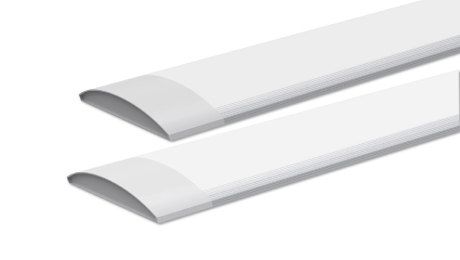
LED purification lights can continuously generate negative ions to make the air fresh and clean. It can effectively eliminate smoke and odor in the air, and kill germs and viruses. LED purification lamp is a perfect combination of miniaturized complex equipment that generates negative ions and high-efficiency energy-saving lamps. When the light is irradiated, it can generate a large number of negative ions to spread in the space, so as to eliminate smoke, dust, odor, disinfection, sterilization and pollution, etc. It is widely used in hotels, hotels, offices, conference rooms, families and teahouses, It is an excellent product for improving air quality and eliminating harmful gases such as formaldehyde and benzene in karaoke halls and Internet cafes. Principle The working principle of the LED purification lamp is that it stimulates a large number of negative ions, which can quickly purify the smoke and particle pollutants suspended in the air, and at the same time can sterilize, thereby purifying the air and preventing pollution. Make the whole space have a fresh and healthy natural air. People spend 3/4 of their life indoors. According to expert research, indoor air pollution is many times that of outdoor air. Therefore, for human health, it is imperative to purify indoor air, prevent pollution, and create an indoor ecological environment! LED purification lamp adopts low-temperature plasma technology. When the lamp is illuminated, the miniature negative ion emitter in the middle of the energy-saving lamp instantly releases high-concentration negative ions. Under the lighting, it spreads evenly to every corner of the space. After combining with the pathogen cells, the internal energy transfer structure of the cells is changed, resulting in their death. And make benzene, toluene, formaldehyde, smoke, dust, pollen, etc. floating in the air attract particles to gather and settle naturally, so as to achieve the purpose of purifying the air. At the same time, this product can generate about 0.05PPM ozone, which can completely remove the smell of smoke, fishy smell, and odor in the air. It can also kill more than 85% of harmful bacteria such as E. coli and mold in the air, and can also decompose Oxidative odor, chemical volatiles (benzene, formaldehyde, etc.). Effect Sterilization: kill harmful bacteria in the air Purification: removal of various toxic chemicals (benzene, ammonia, etc.) Deodorization: remove all kinds of odors in life Smoke Elimination: Quickly eliminate smoke in the air Energy saving: 96% energy saving than ordinary incandescent lamps Health and environmental protection: fresh air, promote healthy life
20
Feb
Feb
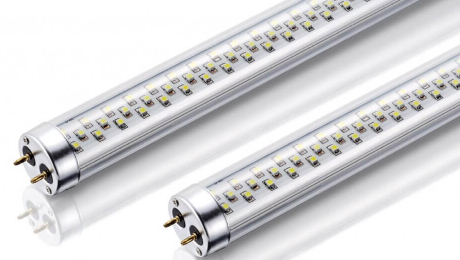
LED light tube uses light-emitting diodes as light sources, which have higher luminous efficiency, more energy-saving, longer service life, and are more environmentally friendly. Become the most ideal product to replace fluorescent tubes at the present stage. The traditional fluorescent tube is also called a fluorescent lamp. There is a filament at each end of the lamp. The tube is filled with a small amount of argon and thin mercury vapor. The inner wall of the tube is coated with fluorescent powder. The gas between the two filaments emits ultraviolet rays when conducting electricity. Make phosphors emit visible light. Due to the heavy metal pollutant “mercury”, the scrapped fluorescent tubes pollute the environment very seriously. Introduction LED fluorescent tubes are the same as traditional fluorescent tubes in terms of size and diameter. There are three types of lengths: 60cm, 120cm, and 150cm. 10W LED fluorescent lamps are brighter than traditional 40W fluorescent lamps, 16W LED fluorescent lamps are brighter than traditional 64W fluorescent lamps, and the brightness of LED fluorescent lamps is especially softer Make it easier for people to learn. The service life is between 50,000 and 80,000 hours, and the power supply voltage is AC85V-260V (AC), without starter and ballast, fast start, low power, no flicker, and not easy to eye fatigue. Service Life Because the LED light tube adopts the light-emitting mode of solid light source, the life span mainly depends on the solid LED light source and the driving heat dissipation part. At present, the life span of LED light source has reached more than 100,000 hours. The heat dissipation has basically reached a relatively ideal state. The life of high-quality LED light tubes available in the market basically reaches 10,000-50,000 hours, which is almost 10-50 times that of fluorescent tubes. LED fluorescent tubes save more than 80% of electricity and are almost maintenance-free. There is no problem of frequent replacement of lamp tubes, ballasts, and starters. The cost saved in about half a year can be exchanged for the cost. The green and environment-friendly semiconductor electric light source has soft light and pure spectrum, which is beneficial to the eyesight protection and physical health of workers. The 6000K cold light source gives people a visually cool feeling, which helps to concentrate and improve efficiency. Advantages Do not use mercury and do not contain lead. Traditional fluorescent lamps contain a large amount of mercury vapor. Once such lamps are broken, mercury vapor will volatilize into the atmosphere and pollute the environment. LED fluorescent lamps can It is one of the recognized green light sources to protect the environment. Are cold light sources and do not emit a lot of heat like traditional tubes. It can basically convert all electrical energy into light energy, which will not cause energy waste and is very economical. Is a very quiet energy-saving tube, which will not produce noise like traditional fluorescent tubes, and is very suitable for environments that require quiet, such as libraries, offices and other places. It can also protect the eyes very well, and it starts up very quickly without flickering, which is very beneficial to our health. Is a green and environmentally friendly tube, it does not produce ultraviolet light, infrared light and other radiation, does not contain harmful substances such as mercury, and has less heat generation, which well avoids the situation where mosquitoes surround the light source. , which creates a relatively clean environment indoors. Have a long service life, and their power consumption is less than one-third of that of traditional fluorescent tubes, but their brightness is consistent with traditional fluorescent tubes. Generally speaking, the lifespan of normal use is more than 30,000 hours. Long-term use does not need to be replaced, which invisibly reduces labor costs. It is very suitable for some occasions where it is inconvenient to replace tubes. Of course, the colors of LED fluorescent tubes are very rich, and lights of various luminous colors can be made to meet the needs of different occasions. Disadvantage The only disadvantage of LED fluorescent tubes is the high price. However, although the current price of LED fluorescent tubes is about ten times that of fluorescent tubes, it is still cost-effective in terms of its lifespan, power saving and pollution-free. Because if compared with a fluorescent lamp with a lifespan of 5,000 hours, an LED fluorescent tube with a lifespan of 50,000 hours is already worth 10 times the price to buy, and the energy saved during the process is completely pure income.
13
Feb
Feb
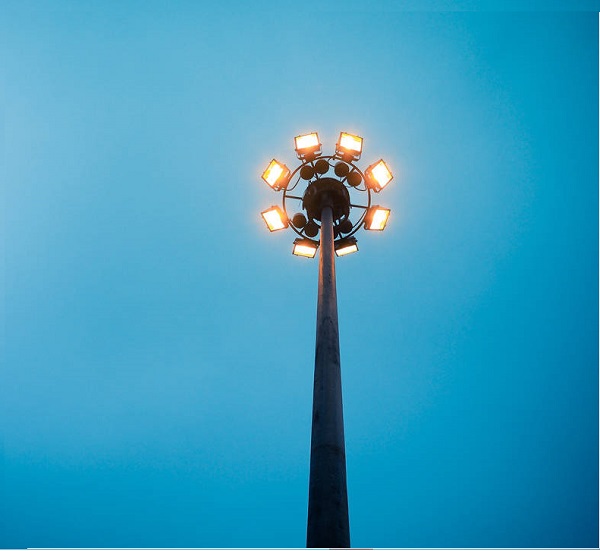
What is a floodlight? Floodlight is a point light source that can illuminate evenly in all directions. Its irradiation range can be adjusted arbitrarily, and it appears as a regular octahedron icon in the scene.

09
Feb
Feb
What is a floodlight? Floodlight is the most widely used light source in the production of renderings, and standard floodlights are used to illuminate the entire scene. Multiple flood lights can be applied to a scene. In order to produce a better effect, the light bulb for shooting is packed into a large reflective umbrella for use as a high-brightness diffused light source. Although it is indispensable for lighting in the studio, it can also be regarded as one of the light sources with good lighting effects for general amateur indoor photography. Floodlights are not spotlights, projection lights, or spotlights. Floodlights produce highly diffuse, non-directional light rather than a well-defined beam, resulting in soft and transparent shadows that fade more slowly when used for object lighting than when illuminated by spotlights. There are even flood lights whose illumination fades off very slowly, appearing as a light source that does not cast shadows. Spotlights, on the other hand, cast a directional, well-defined beam of light that illuminates a specific area. How floodlights work? The traditional electric light source, whether it is an incandescent lamp or a high and low pressure gas discharge lamp, is composed of a glass bulb and a filament. Electric energy enters the bulb through the filament and is converted into light energy. The floodlight is by inductively coupling high-frequency electromagnetic energy into the bulb, so that the gas in the bulb avalanche ionizes to form plasma, and when the excited atoms of the plasma return to the ground state, they spontaneously radiate 245nma ultraviolet rays, Phosphors are excited by ultraviolet light to emit visible light. Floodlight is a new type of electric light source based on the combination of two well-known principles of fluorescent lamp gas discharge and high-frequency electromagnetic induction. Because it does not have the filament or electrode necessary for conventional electric light sources, it is also called electrodeless lamp; usually the working frequency of low-pressure gas discharge high-frequency electrodeless lamp is 2.5~3.0MHz, that is to say, the operating frequency of floodlight is higher than that of ordinary The operating frequency (50Hz) of incandescent lamps and daily-used inductive fluorescent lamps, metal halide lamps, high-pressure sodium lamps and other lamps is 50,000-60,000 times higher than that of ordinary energy-saving lamps or electronic ballasts (30-60KHz). ) about 250 times higher.
09
Feb
Feb
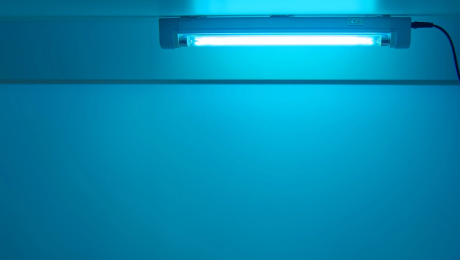
What is an Ultra Violet Light?UltraViolet light, also known as a UV Light, is a light source used for disinfection and sterilization,ultraviolet light with a wavelength of 200~410 nm
07
Feb
Feb
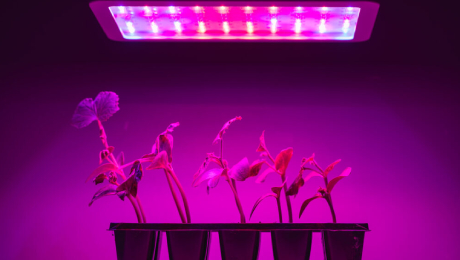
Plant growth light is a light source used to grow plants. It is mainly used for planting and management of crops and flowers. It can generally be divided into three types: red light, blue light and green light. Red light is the red light spectrum in the visible spectrum, which is suitable for photosynthesis and can promote the chlorophyll of plants; blue light is a kind of monochromatic light, which can produce a large amount of anthocyanins; green light is a special Spectrum, usually yellow and green. The plant growth light can increase the chlorophyll content of the plant and promote the photosynthesis of the plant in a certain concentration of nutrient solution. It can promote the enlargement of leaf cells; make the leaves shiny, brightly colored, and thick stems; make crops grow robustly, reduce diseases and insect pests, etc. It is mainly used in the planting management of vegetables, flowers, etc., which is very helpful for increasing production. What is light? The speed of light is the speed of light. The amount of light passing through a unit area in a unit time is called the speed of light. Light has three important characteristics: directionality, a long-term change rule, energy dissipation. On Earth, everything has a certain size and shape, a certain wavelength and different brightness, and they transform into each other in space. The energy of different lights is related to the wavelength: light of one color (red light) contains the most energy; followed by blue, red and blue light, among which red light contains the least energy; white, blue and yellow light contains the least energy. What are the functions of a plant growth light? By improving photosynthesis, increasing photosynthetic products, improving plant stress resistance, and promoting yield increase. By improving the absorption of nutrients, promote root development, enhance plant resistance, and reduce diseases. By adjusting the stomatal opening of the leaf and the change of the leaf structure (that is, changing the stomatal opening; increasing the thickness of the leaf) to achieve the purpose of light regulation; Regulate photosynthesis by adjusting the sensitivity of plants to light intensity. Common types In general, plant growth lights are mainly divided into three categories: Yellow light: mainly used for the production of vegetables and other plants, which can increase the light and promote growth during the vegetative reproduction of plants; Purple light lamp: that is, incandescent bulb, which can be used for indoor greening and flower cultivation management; Strobe light: it is a new light source that has only appeared in recent years. Choose Choose according to the application needs: such as flower cultivation, seedling cultivation, etc. Select by function: mainly used for photosynthesis and other functions. How to use: According to different needs, choose different photoperiods and light colors to regulate the light of plants to achieve the desired effect.
07
Feb
Feb
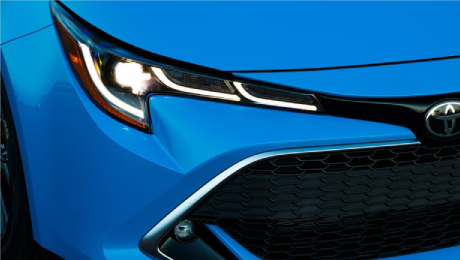
LED Car lights refer to devices that use the principle of electroluminescence to convert electrical energy into light energy. Compared with traditional lighting sources, LED lights have the advantages of low energy consumption, long life, and convenient use. With the continuous development of LED technology, new light sources are increasingly used in automobiles, and LED lights are an indispensable part. In the automotive industry, LEDs are widely used, but not all models are suitable for LED headlights; in some cases, auxiliary lighting systems (Side Lanes) are required to replace LED headlights. Structure LED Car Lights are composed of LED light-emitting diodes, which use the principle of electrothermal to control the power-on and power-off states of the light-emitting diodes by controlling the size of the current in the semiconductor, so as to realize the control of the working state of the light-emitting source. During the entire working process of the LED light source, several discrete drive units are generally connected in series to control the magnitude and direction of the current. Working principle LED Car lights are mainly composed of lamp holders, lampshades, light guide plates (also called diffuser plates) and so on. The working principle is: convert electrical energy into light energy, irradiate the front or rear of the vehicle through the light guiding effect of the diffusion plate, and then consume the light energy in the form of heat energy. When there is a certain distance between the LED lamp head and the light guide sheet of the diffusion plate, an illumination light source will be formed. LED Car lights have a long service life of 30,000 hours, while traditional light bulbs only last about 1,000 hours; while the vehicle is running, LEDs can self-adjust according to the intensity and brightness of the external light to achieve the best luminous effect. Working characteristics: Small power and high energy density. With high luminous brightness, it can be used in the auxiliary lighting system of automobiles to replace halogen lamps. Long service life (more than 5 years). It can conveniently realize the control and switching of far and low beams, that is, the intensity of the car lights can be changed by adjusting the color of the lights. It can realize more functions without adding any electronic components. Benefits of using LED Car Lights Using LED Car Lightscan reduce energy consumption, because LED is DC, it does not need high voltage power supply LED Car lights are very common in cars, and it does not require complex circuits to control the brightness of the lights Compared with xenon lamps and halogen headlights, LED headlights are more energy-efficient and have a longer service life, while xenon lamps and halogen headlights usually produce a certain degree of glare effect With the continuous advancement of LED technology, more and more LED vehicles will be used in the automotive industry (especially for high-end models). As consumers, we also hope that our cars have the characteristics of high quality, high safety performance, high light efficiency, long life and high environmental protection performance.
06
Feb
Feb
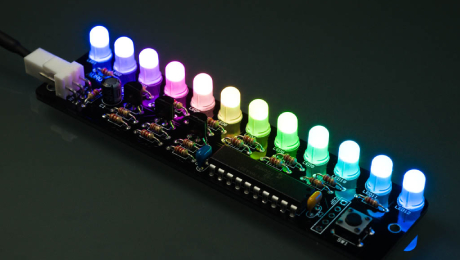
Through-hole LED are light emitting diode that attach to the circuit board using two long wires. The bonds that are created between the through-hole LEDs or other through-hole electronic components and circuit board are far stronger than the surface mount LEDs.
02
Feb
Feb
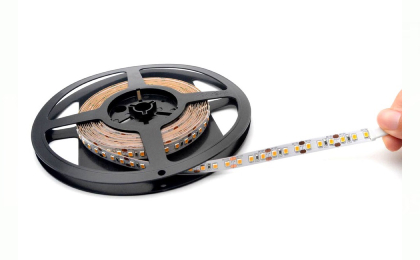
What is LED strip lights?LED strip lights, also known as an LED tape or ribbon light is a flexible circuit board populated by surface mounted various sizes of LED chips and other components that usually comes with an adhesive backing.
 English
 Afrikaans
 Albanian
 Amharic
 Arabic
 Armenian
 Azerbaijani
 Basque
 Belarusian
 Bengali
 Bosnian
 Bulgarian
 Catalan
 Cebuano
 Chichewa
 Corsican
 Croatian
 Czech
Czech Danish
 Dutch
Dutch Esperanto
 Estonian
 Filipino
 Finnish
 French
 Frisian
 Galician
 Georgian
 German
 Greek
Greek Gujarati
 Haitian Creole
 Hausa
Hausa Hawaiian
 Hebrew
 Hindi
Hindi Hmong
Hmong Hungarian
 Icelandic
 Igbo
Igbo Indonesian
 Irish
Irish Italian
 Japanese
 Javanese
 Kannada
 Kazakh
 Khmer
Khmer Korean
 Kurdish (Kurmanji)
 Kyrgyz
 Lao
Lao Latin
Latin Latvian
 Lithuanian
 Luxembourgish
 Macedonian
 Malagasy
 Malay
Malay Malayalam
 Maltese
 Maori
Maori Marathi
 Mongolian
 Myanmar (Burmese)
 Nepali
 Norwegian
 Pashto
 Persian
 Polish
 Portuguese
 Punjabi
 Romanian
 Russian
 Samoan
 Scottish Gaelic
 Serbian
 Sesotho
 Shona
Shona Sindhi
 Sinhala
 Slovak
 Slovenian
 Somali
 Spanish
 Sudanese
 Swahili
 Swedish
 Tajik
Tajik Tamil
Tamil Telugu
 Thai
Thai Turkish
 Ukrainian
 Urdu
Urdu Uzbek
Uzbek Vietnamese
 Welsh
Welsh Xhosa
Xhosa Yiddish
 Yoruba
 Zulu
Zulu