




Densité de puissance d'éclairage & Illuminance Standards
Comprehensive lighting guidelines for residential, commercial, industrial, and institutional spaces — optimized for LED efficiency and human-centric design in compliance with global standards.
LED & traditional LPD standards by space type – W/m² and illuminance (lux) tables for residential, commercial, and industrial buildings.
Residential Buildings
| Room / Space | Traditional LPD (W/m²) Current → Target | LED LPD (W/m²) Current → Target | Illuminance (lx) |
|---|---|---|---|
| Living Room | 7 → 6 | 3 → 2 | 100 |
| Bedroom | — | — | 75 |
| Dining Room | — | — | 150 |
| Kitchen | — | — | 100 |
| Bathroom | — | — | 100 |
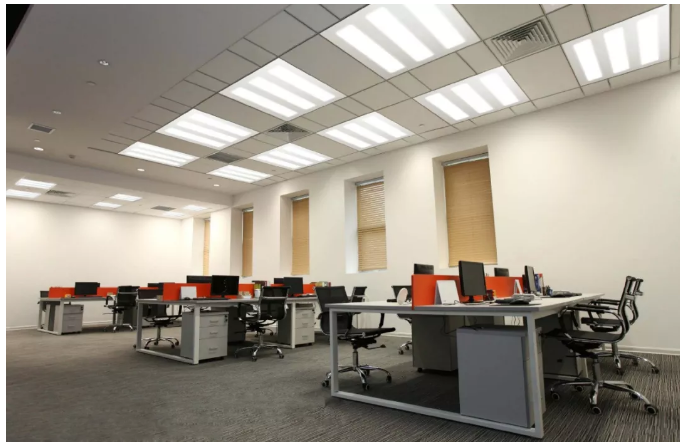
Office Buildings
| Room / Space | Traditional LPD (W/m²) Current → Target | LED LPD (W/m²) Current → Target | Illuminance (lx) |
|---|---|---|---|
| General Office | 11 → 9 | 4.5 → 4 | 300 |
| Premium Office / Design Studio | 18 → 15 | 7.5 → 7 | 500 |
| Meeting Room | 11 → 9 | 4.5 → 4 | 300 |
| Service Hall | 13 → 11 | 5.5 → 5 | 300 |
| Archive Room | 8 → 7 | 3.5 → 3 | 200 |
Commercial Buildings
| Room / Space | Traditional LPD (W/m²) Current → Target | LED LPD (W/m²) Current → Target | Illuminance (lx) |
|---|---|---|---|
| General Store | 12 → 10 | 5 → 4 | 300 |
| Premium Store | 19 → 16 | 8 → 7 | 500 |
| General Supermarket | 13 → 11 | 5.5 → 5 | 300 |
| Premium Supermarket | 20 → 17 | 8 → 7 | 500 |
Hospital & Education
| Room / Space | Traditional LPD (W/m²) Current → Target | LED LPD (W/m²) Current → Target | Illuminance (lx) |
|---|---|---|---|
| Operating Room | 30 → 25 | 12 → 11 | 750 |
| Laboratory (Fine) | 18 → 15 | 7.5 → 7 | 500 |
| Classroom / Reading Room | 11 → 9 | 4.5 → 4 | 300 |
| Pharmacy | 20 → 17 | 8 → 7 | 500 |
| Ward | 6 → 5 | 2.5 → 2 | 100 |
Industrial Facilities
| Room / Space | Traditional LPD (W/m²) Current → Target | LED LPD (W/m²) Current → Target | Illuminance (lx) |
|---|---|---|---|
| Precision Machining (<0.1mm) | 19 → 17 | 8 → 7 | 500 |
| Electronics Assembly | 20 → 18 | 8 → 7 | 500 |
| Warehouse (Fine Parts) | 8 → 7 | 3.5 → 3 | 200 |
| Control Room | 18 → 15 | 7.5 → 7 | 500 |
| Boiler Room | 6 → 5 | 2.5 → 2 | 100 |
Includes full tables for hospitality, sports venues, libraries, transportation hubs, and detailed notes on room index adjustments.
How LPD Limits Are Set and What They Actually Regulate
Lighting power density caps the installed lighting watts per square meter (or per square foot in US codes) for a space class — not the illuminance delivered. That distinction matters: a compliant design can still be too dim if fixtures are inefficient, and an over-bright design can still comply if the space is large. The professional method is to treat LPD as a ceiling you design under while hitting the task-plane illuminance the space actually needs.
The Two-Number Method
- Find your space class and its LPD cap in the applicable code (ASHRAE 90.1 / IECC in North America, EN 15193 and national annexes in Europe, GB 50034 in China). Use the whole-building or space-by-space table consistently — mixing the two methods in one submittal is a common rejection cause.
- Compute your design load: fixture count × (luminaire watts + driver losses), divided by floor area. Auxiliary items — emergency battery packs, control gear — follow the code’s inclusion rules; when unsure, include them.
| Space Class (typical) | Modern LPD Range | Design Target |
|---|---|---|
| Warehouse, general | 4–6 W/m² | 200 lux on task plane, uniformity ≥ 0.4 |
| Manufacturing, fine task | 8–12 W/m² | 500 lux, UGR ≤ 22 |
| Classroom | 8–10 W/m² | 300–500 lux on desks, UGR ≤ 19 |
| Corridor / circulation | 2–4 W/m² | 100–150 lux |
| Cold storage | 5–7 W/m² | 150–200 lux, IP65 minimum |
Values above are indicative planning ranges — always verify against the code edition your permit is filed under. LED efficiency gains keep pushing the caps down with each revision cycle.
Where LED Designs Gain Their Margin
- Efficacy floor: specify luminaires at ≥ 140 lm/W system efficacy (fixture-level, not bare-LED level) — this alone typically halves the LPD of a legacy design
- Controls credits: daylight response and occupancy scheduling earn LPD trade-offs in most North American codes; document the control zones in the submittal or the credit is denied
- Uniformity over peak lux: spreading fixtures to raise minimum illuminance reduces over-lit patches that waste LPD headroom
- Maintenance factor honesty: calculating at 0.8 MF inflates fixture count; with L90-at-50,000-h LEDs and a documented cleaning cycle, 0.9 is defensible and saves 10% of installed watts
Worked retrofit examples with measured before/after numbers are in the high-bay factory case and the classroom renovation case.