

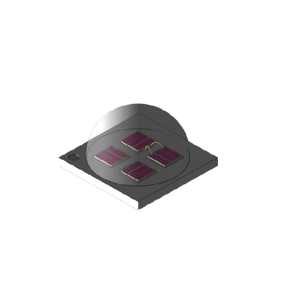
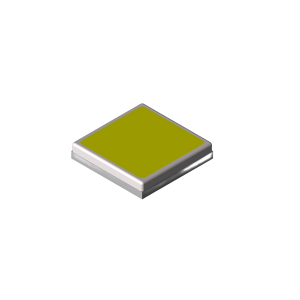





850nm light, or the light at a wavelength of 850 nanometers, has become a significant topic in the optical industry due to its unique properties and applications. This near-infrared light lies just beyond the visible spectrum, making it ideal for various technologies that require precise control and manipulation of light. This article delves into the characteristics, uses, and future developments surrounding 850nm light in the industry.
Characteristics of 850nm Light
850nm light is classified as near-infrared light, which is invisible to the human eye. This makes it particularly useful in applications where light detection and ranging (LiDAR) systems are employed, as it allows for greater penetration through various materials without the interference of visible light. The following are some key characteristics of 850nm light:
- Penetration Capability: 850nm light has a high penetration capability through materials like water, fog, and dust, making it suitable for long-range communication and imaging systems.
- Less Interference: Since it is outside the visible spectrum, 850nm light is less prone to interference from ambient light, which is crucial for accurate data transmission and detection.
- Low Attenuation: The light experiences less attenuation over long distances, which is beneficial for applications requiring reliable communication over extended areas.
Applications of 850nm Light
Due to its unique properties, 850nm light finds applications in a variety of industries. Here are some of the primary uses:
Telecommunications
In the telecommunications sector, 850nm light is widely used in fiber optic communication systems. It enables higher data rates and longer transmission distances due to its low attenuation characteristics. Additionally, it is used in wavelength division multiplexing (WDM) systems to increase the capacity of optical fibers.
LiDAR Technology
LiDAR systems, which use light detection and ranging to measure distances, heavily rely on 850nm light. This near-infrared light is ideal for autonomous vehicles, drones, and robotics due to its ability to penetrate through various environmental conditions and provide accurate distance measurements.
Medical Imaging
850nm light is used in medical imaging technologies, such as optical coherence tomography (OCT), which allows for non-invasive, high-resolution imaging of biological tissues. This is particularly useful in ophthalmology for detecting and monitoring retinal diseases.
Security and Surveillance
In security and surveillance applications, 850nm light can be used for covert communication and imaging. It allows for the transmission of data over long distances without being easily detected by the naked eye, making it suitable for secure communications and surveillance systems.
Technological Advancements
The demand for 850nm light has spurred technological advancements in the industry. Here are some of the key developments:
High-Speed Lasers
High-speed lasers that emit 850nm light have been developed to meet the increasing demand for higher data rates in fiber optic communication systems. These lasers are designed to be more efficient and reliable, enabling faster and more efficient data transmission.
Optical Components
Manufacturers have been working on developing optical components that are optimized for 850nm light. These components include optical fibers, couplers, and modulators, which are crucial for the efficient transmission and manipulation of the light.
Integration with Other Technologies
There is ongoing research to integrate 850nm light with other technologies, such as quantum computing and augmented reality. This could lead to new applications and advancements in various industries.
Future Developments
The future of 850nm light in the industry looks promising, with several potential developments on the horizon:
Increased Efficiency
Continued research into laser technology and optical components is expected to lead to even higher efficiency in 850nm light generation and transmission. This could further enhance the performance of fiber optic communication systems and other applications.
Expanding Applications
As technology advances, new applications for 850nm light are likely to emerge. This could include advancements in healthcare, autonomous vehicles, and smart cities.
Environmental Considerations
With growing concerns about the environmental impact of technology, there is an increasing focus on developing more sustainable solutions for 850nm light generation and transmission. This could involve the use of renewable energy sources and eco-friendly materials.
In conclusion, 850nm light has become a vital component in the optical industry, offering unique advantages for various applications. As technology continues to evolve, the demand for 850nm light is expected to grow, leading to further advancements and innovations in the industry.
 English
 Afrikaans
 Albanian
 Amharic
 Arabic
 Armenian
 Azerbaijani
 Basque
 Belarusian
 Bengali
 Bosnian
 Bulgarian
 Catalan
 Cebuano
 Chichewa
 Corsican
 Croatian
 Czech
Czech Danish
 Dutch
Dutch Esperanto
 Estonian
 Filipino
 Finnish
 French
 Frisian
 Galician
 Georgian
 German
 Greek
Greek Gujarati
 Haitian Creole
 Hausa
Hausa Hawaiian
 Hebrew
 Hindi
Hindi Hmong
Hmong Hungarian
 Icelandic
 Igbo
Igbo Indonesian
 Irish
Irish Italian
 Japanese
 Javanese
 Kannada
 Kazakh
 Khmer
Khmer Korean
 Kurdish (Kurmanji)
 Kyrgyz
 Lao
Lao Latin
Latin Latvian
 Lithuanian
 Luxembourgish
 Macedonian
 Malagasy
 Malay
Malay Malayalam
 Maltese
 Maori
Maori Marathi
 Mongolian
 Myanmar (Burmese)
 Nepali
 Norwegian
 Pashto
 Persian
 Polish
 Portuguese
 Punjabi
 Romanian
 Russian
 Samoan
 Scottish Gaelic
 Serbian
 Sesotho
 Shona
Shona Sindhi
 Sinhala
 Slovak
 Slovenian
 Somali
 Spanish
 Sudanese
 Swahili
 Swedish
 Tajik
Tajik Tamil
Tamil Telugu
 Thai
Thai Turkish
 Ukrainian
 Urdu
Urdu Uzbek
Uzbek Vietnamese
 Welsh
Welsh Xhosa
Xhosa Yiddish
 Yoruba
 Zulu
Zulu
Explore More from Queendom Lamp
Stay updated with the latest LED technology, lighting solutions, and industry insights.
Request a Quote About Queendom