





UVA LED Datasheets
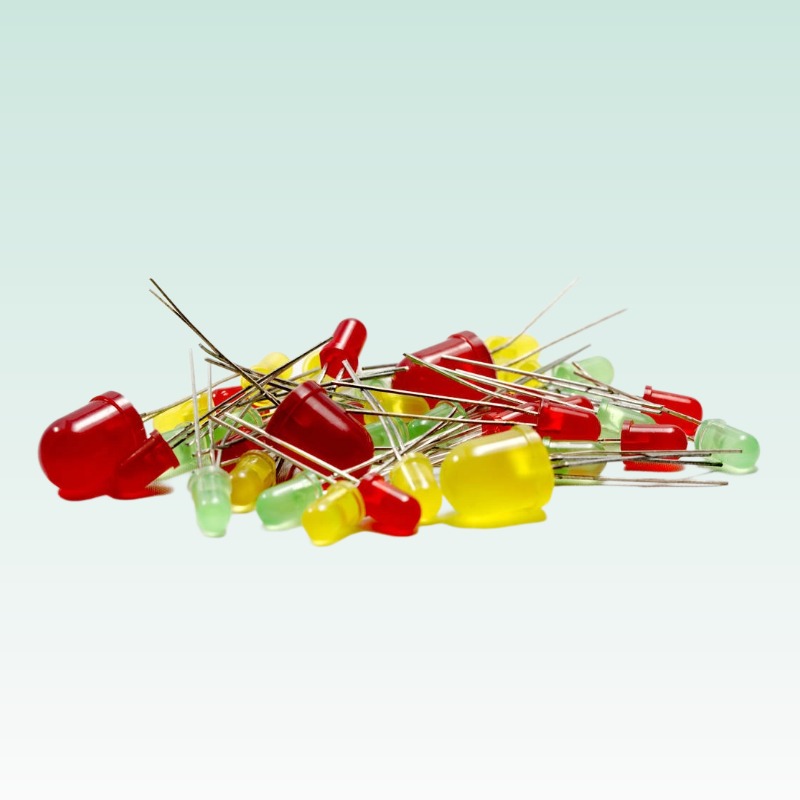
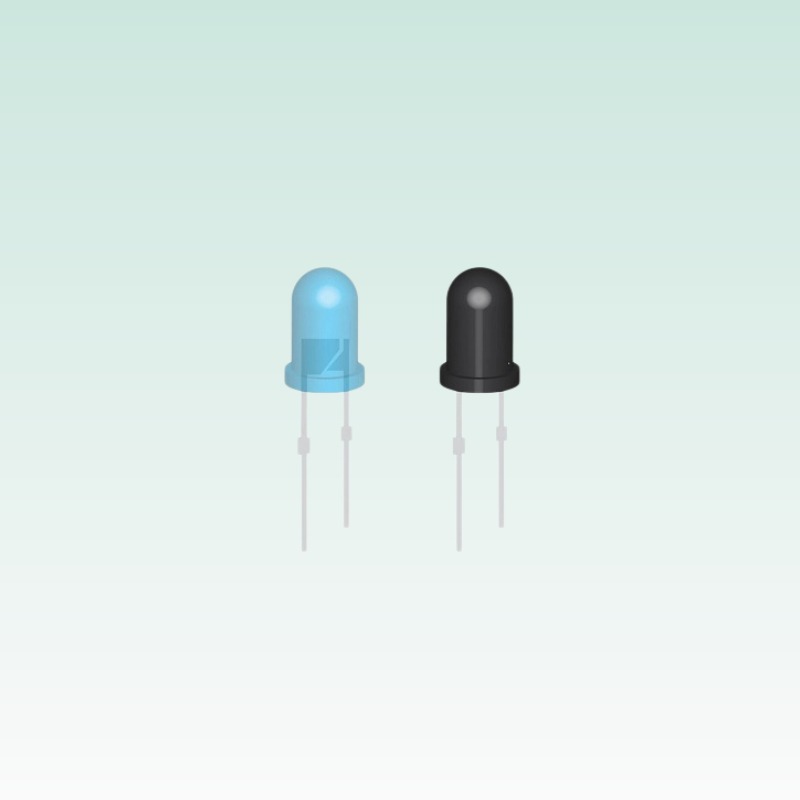
Round UVA LEDs
5 models
| Модель | Размер файла | Товар обновлён | Скачать |
|---|---|---|---|
| UVA LED 3mm | 3mm | — | |
| UVA LED 4mm | 4mm | — | |
| UVA LED 5mm | 5mm | — | |
| UVA LED 8mm | 8mm | — | |
| UVA LED 10mm | 10mm | — |
Flat-top, bullet and high-power UVA LED series are continuously updated — contact sales@queendomlamp.com for the latest list.
Datasheets are updated periodically. If your required model is not listed or the file appears outdated,
please contact our technical support team at sales@queendomlamp.com.
UVA LED Selection Guide
Choosing the Wavelength
| Длина волны | Characteristics | Typical Applications |
|---|---|---|
| 365 nm | Highest photon energy in UVA; strongest cure, lowest visible fluorescence | UV curing adhesives, PCB inspection, fluorescence analysis |
| 385 nm | High cure speed with better LED efficiency than 365 nm | Ink curing, printing, coating |
| 395 nm | Industrial workhorse: best cost/output balance | Curing, nail gel lamps, wood coating |
| 405 nm | Efficient, mild cure | 3D printing resins, bonding, validation |
Design and Safety Notes
- Radiometric power (mW) — not luminous intensity — is the specification that matters for curing; compare at equal test current
- Thermal control is critical: UVA output droops as junction temperature rises; keep Tj below 80 °C for stable output
- Eye protection: UVA causes photochemical damage to the cornea and lens over time — use UV-blocking eyewear and interlocked enclosures for curing equipment
- Photopolymer compatibility: confirm the resin absorption spectrum overlaps the LED wavelength before committing to a design
For high-power and SMD UVA formats, see the УФ-светодиод product family. Download the UV safety statement (PDF) for handling requirements.
Wavelength Selection by Application
The 365–405 nm UVA band is not interchangeable: every photochemistry has an absorption window, and matching the emitter to it is the difference between a 5-second cure and a tacky surface. The table below maps the wavelengths we stock in DIP packages to the applications they serve best.
| Peak Wavelength | Typical Radiometric Power | Best-Fit Applications | Notes |
|---|---|---|---|
| 365 nm | 80–120 mW @ 20 mA | Fluorescence inspection, counterfeit detection, adhesive curing | Shortest practical UVA; highest photon energy in band |
| 385 nm | 100–180 mW @ 20 mA | UV-curable coatings, potting compounds | Good balance of output and phosphor-free stability |
| 395 nm | 150–350 mW @ 20–40 mA | Inkjet ink curing, wood coating, 3D-print resin | Highest commercial output per dollar in the band |
| 405 nm | 120–200 mW @ 20 mA | Gel nails, resin printing, optical brightening | Mild chemistry; lowest photobiological concern in UVA |
Dosage and Irradiance Budgeting
UV curing is an energy equation, not a brightness contest. A typical free-radical acrylate needs 1–4 J/cm² of delivered dose to reach full through-cure, and cationic epoxies need 5–10 J/cm². Start from the emitter’s datasheet irradiance at the working distance (mW/cm²), then divide the required dose by it to get the minimum dwell time:
- Dose (mJ/cm²) = irradiance (mW/cm²) × exposure time (s)
- Halve the distance and irradiance rises roughly 3–4× under a focused DIP lens — but the useful field shrinks
- Derate datasheet output by 15–20% for thermal steady state and glass/cover-plate absorption
- Belt speed and pass count must be validated by tack-free and pull-off tests, not by eye
For a worked example with production data, see the УФ-светодиод curing system case study, where 395 nm bars replaced mercury lamps on a label press. If your requirement is germicidal rather than curing, UVC (265–280 nm) is the correct band — see the UVC LED water treatment case study for a 4-log inactivation design.
Package and Optical Design Notes for DIP UVA
DIP UVA LEDs pair a 5 mm or 3 mm epoxy or glass lens with a compact die. The lens geometry sets both the half-angle and the peak intensity: narrow 15–20° parts concentrate irradiance for distance curing and sensor excitation, while 60–120° parts build uniform flood arrays. In dense arrays, stagger emitters at 1.5–2× the working distance to overlap the 50% intensity contours. Keep sustained junction temperature below 100 °C by thermally anchoring the anvil/cathode posts to copper pours; UVA output droops about 0.5% per °C above 25 °C, and the shift compounds in long production runs.
Frequently Asked Questions
How much does peak wavelength drift with drive current and temperature?
Expect −1 to −2 nm of red-shift at the datasheet current limit and another −1 nm at maximum junction temperature. For tight processes, lock the bin at order time and specify ±2.5 nm tolerance on the datasheet line item.
Can I run DIP UVA LEDs on a constant-voltage supply with resistors?
For indication or low-duty sensing, yes — size the resistor for the worst-case forward voltage window. For curing, no: use constant-current drive. Resistor ballasting wastes the radiometric headroom that sets cure speed, and forward-voltage spread across a batch makes output vary die to die.
What service life should I plan for?
Driven at rated current with junction temperature held under 80 °C, plan on L70 > 20,000 hours for 395/405 nm parts and 10,000–15,000 hours for 365 nm, whose shorter wavelength stresses the encapsulant faster. Schedule radiometric re-checks at 2,000-hour intervals on production lines.
Do UVA emitters need the same safety controls as UVC?
UVA is far less hazardous than UVC but is not risk-free: ACGIH threshold-limit guidance caps 365 nm exposure near 1 mJ/cm² over an 8-hour window for eye tissue. Shield lines with polycarbonate or acrylic barriers, block direct line-of-sight to the array, and interlock access doors on production enclosures.