


Emergency light with solar charging has become an essential component in modern emergency preparedness and disaster response strategies. These lights, designed to provide illumination during power outages or in emergency situations, harness the power of the sun to ensure they remain operational even when traditional power sources are unavailable. This article delves into the evolution, benefits, and future of emergency lights equipped with solar charging capabilities.
Introduction to Emergency Lights with Solar Charging
Emergency lights with solar charging are designed to offer a reliable source of light during times of crisis. These lights are typically mounted on walls or ceilings and are equipped with photovoltaic cells that convert sunlight into electricity. This renewable energy source ensures that the lights can be charged during the day and used at night or during power failures.
Evolution of Emergency Lights with Solar Charging
The concept of emergency lighting has been around for decades, but it was not until the late 20th century that solar technology began to be integrated into these devices. Initially, solar-powered emergency lights were less efficient and had limited battery life. However, advancements in solar panel technology, battery storage, and energy management systems have significantly improved the performance and reliability of these lights.
In the early days, solar emergency lights were primarily used in remote locations where access to electricity was scarce. Over time, as the technology improved and costs decreased, these lights became more accessible and widespread. Today, they are commonly found in homes, offices, schools, hospitals, and public buildings worldwide.
Benefits of Solar-Powered Emergency Lights
There are several key benefits to using emergency lights with solar charging:
1. Environmental Sustainability: Solar-powered emergency lights are eco-friendly, as they rely on renewable energy sources and reduce the need for traditional electricity.
2. Cost-Effectiveness: While the initial cost of purchasing a solar emergency light may be higher than that of a traditional battery-powered light, the long-term savings on electricity bills can be significant.
3. Reliability: Solar emergency lights can operate for extended periods without the need for maintenance, making them a reliable source of light during emergencies.
4. Durability: These lights are often designed to withstand harsh weather conditions, ensuring they remain functional even in challenging environments.
5. Accessibility: With the advancement of technology, solar emergency lights have become more compact and portable, making them suitable for various applications, including outdoor activities and camping.
How Solar-Powered Emergency Lights Work
The operation of solar-powered emergency lights is relatively straightforward. Here’s a step-by-step explanation:
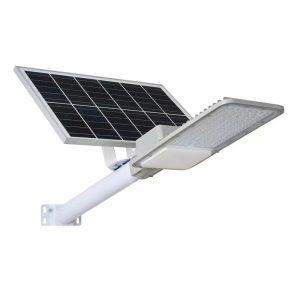
1. Solar Panels: The solar panels on the emergency light absorb sunlight during the day and convert it into direct current (DC) electricity.
2. Battery Storage: The DC electricity is then stored in rechargeable batteries, such as lead-acid or lithium-ion batteries, which can store energy for later use.
3. Energy Management System: An energy management system regulates the flow of electricity between the solar panels, batteries, and the light’s LED bulbs.
4. LED Bulbs: When the lights are needed, the energy management system directs electricity to the LED bulbs, which emit light.
5. Automatic Switching: Many solar emergency lights are equipped with an automatic switch that activates the lights when the power goes out or when motion is detected.
Applications of Solar-Powered Emergency Lights
Solar emergency lights have a wide range of applications, including:
1. Residential Use: Homeowners can install these lights in their homes to provide a backup light source during power outages.
2. Commercial Use: Businesses can use solar emergency lights to ensure their buildings remain illuminated during power failures, enhancing safety and security.
3. Public Infrastructure: Solar emergency lights are often installed in public areas, such as parks, streets, and parking lots, to provide illumination during the night or in emergencies.
4. Disaster Relief: In the aftermath of natural disasters, solar emergency lights can be deployed to provide temporary lighting in affected areas.
5. Outdoor Activities: Hikers, campers, and other outdoor enthusiasts can use solar emergency lights to ensure they have a reliable light source when away from traditional power sources.
Challenges and Future Prospects
Despite the numerous benefits of solar-powered emergency lights, there are still challenges to be addressed:
1. Initial Cost: The upfront cost of purchasing a high-quality solar emergency light can be a barrier for some consumers.
2. Battery Life: While battery technology has improved, the lifespan of batteries can still be a concern, especially in extreme weather conditions.
3. Efficiency: The efficiency of solar panels can vary depending on the weather and geographic location, which may affect the lights’ performance.
Looking to the future, ongoing research and development in solar technology, battery storage, and energy management systems are expected to address these challenges. Innovations such as flexible solar panels, longer-lasting batteries, and more efficient energy conversion processes will likely make solar-powered emergency lights even more reliable and cost-effective.
Conclusion
Emergency lights with solar charging have become an indispensable tool in modern emergency preparedness. As technology continues to advance, these lights will likely become even more efficient, reliable, and accessible. By harnessing the power of the sun, solar emergency lights offer a sustainable and cost-effective solution for illuminating the way during times of need.
 English
 Afrikaans
 Albanian
 Amharic
 Arabic
 Armenian
 Azerbaijani
 Basque
 Belarusian
 Bengali
 Bosnian
 Bulgarian
 Catalan
 Cebuano
 Chichewa
 Corsican
 Croatian
 Czech
Czech Danish
 Dutch
Dutch Esperanto
 Estonian
 Filipino
 Finnish
 French
 Frisian
 Galician
 Georgian
 German
 Greek
Greek Gujarati
 Haitian Creole
 Hausa
Hausa Hawaiian
 Hebrew
 Hindi
Hindi Hmong
Hmong Hungarian
 Icelandic
 Igbo
Igbo Indonesian
 Irish
Irish Italian
 Japanese
 Javanese
 Kannada
 Kazakh
 Khmer
Khmer Korean
 Kurdish (Kurmanji)
 Kyrgyz
 Lao
Lao Latin
Latin Latvian
 Lithuanian
 Luxembourgish
 Macedonian
 Malagasy
 Malay
Malay Malayalam
 Maltese
 Maori
Maori Marathi
 Mongolian
 Myanmar (Burmese)
 Nepali
 Norwegian
 Pashto
 Persian
 Polish
 Portuguese
 Punjabi
 Romanian
 Russian
 Samoan
 Scottish Gaelic
 Serbian
 Sesotho
 Shona
Shona Sindhi
 Sinhala
 Slovak
 Slovenian
 Somali
 Spanish
 Sudanese
 Swahili
 Swedish
 Tajik
Tajik Tamil
Tamil Telugu
 Thai
Thai Turkish
 Ukrainian
 Urdu
Urdu Uzbek
Uzbek Vietnamese
 Welsh
Welsh Xhosa
Xhosa Yiddish
 Yoruba
 Zulu
Zulu
Explore More from Queendom Lamp
Stay updated with the latest LED technology, lighting solutions, and industry insights.
Request a Quote About Queendom