

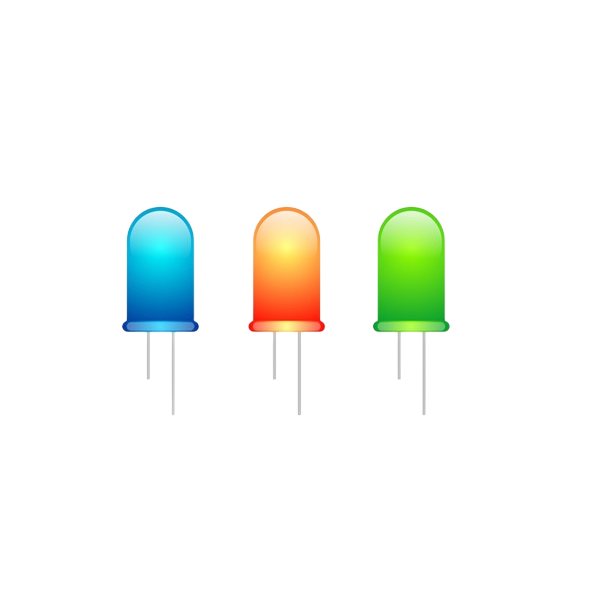



8mm green LED, or Light Emitting Diode, is a compact and highly efficient light source that has become increasingly popular in various applications due to its versatility and low power consumption. This article delves into the industry of 8mm green LEDs, exploring their history, technology, applications, and future prospects.
History of 8mm Green LEDs
The history of LEDs can be traced back to the early 20th century when the first semiconductor diodes were invented. However, it wasn’t until the late 1960s that the first practical LEDs were developed. Over the years, advancements in semiconductor technology have led to the creation of various sizes and colors of LEDs, including the 8mm green LED.
Technology Behind 8mm Green LEDs
8mm green LEDs are made from gallium nitride (GaN) or gallium phosphide (GaP) substrates. These materials emit light when an electric current is applied. The green color is achieved by doping the semiconductor material with impurities that create energy levels that correspond to the green part of the electromagnetic spectrum.
The manufacturing process involves epitaxial growth, where thin layers of semiconductor material are deposited onto a substrate. These layers are then doped with the appropriate impurities to create the desired color. The final step is the encapsulation of the LED chip in a transparent or diffused lens to enhance light output and direct the light in a specific direction.
Applications of 8mm Green LEDs
8mm green LEDs find applications in a wide range of industries and everyday products. Some of the most common uses include:
–
Indicators: Green LEDs are commonly used as indicators in electronic devices, such as computers, televisions, and appliances, to provide visual feedback on the status of the device.
–
Signage: Their bright and clear light makes green LEDs ideal for outdoor and indoor signage, including billboards, traffic lights, and directional signs.
–
Backlighting: 8mm green LEDs are used for backlighting in LCD displays, providing a uniform and energy-efficient illumination.
–
Decorative Lighting: Green LEDs are used in decorative lighting applications, such as string lights, wall washers, and spotlights, to create a festive or ambient atmosphere.
–
Medical and Scientific Equipment: Their precision and stability make green LEDs suitable for use in medical and scientific instruments, such as microscopes and laser pointers.
Market Trends and Challenges
The market for 8mm green LEDs has been growing steadily, driven by the increasing demand for energy-efficient lighting solutions. However, there are several challenges that the industry faces:
–
Cost: The cost of producing high-quality 8mm green LEDs can be high, which can limit their adoption in some applications.
–
Efficiency: While 8mm green LEDs are highly efficient, there is always room for improvement in terms of energy conversion and light output.
–
Heat Management: Efficient heat dissipation is crucial for the longevity and reliability of LEDs. Ensuring effective thermal management is a key challenge for manufacturers.
Future Prospects
The future of the 8mm green LED industry looks promising, with several potential developments on the horizon:
–
Advancements in Material Science: Research into new materials and doping techniques could lead to more efficient and cost-effective green LEDs.
–
Miniaturization: As technology advances, there is a trend towards smaller and more powerful LEDs, which could open up new applications.
–
Integration with IoT: The Internet of Things (IoT) is expected to drive the demand for smart, energy-efficient lighting solutions, including 8mm green LEDs.
In conclusion, the 8mm green LED industry has come a long way since its inception, and it continues to evolve with new technologies and applications. Despite the challenges, the future holds great potential for further innovation and growth in this sector.


Explore More from Queendom Lamp
Stay updated with the latest LED technology, lighting solutions, and industry insights.
Request a Quote About Queendom