

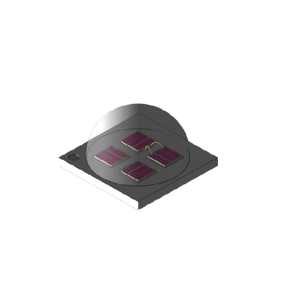
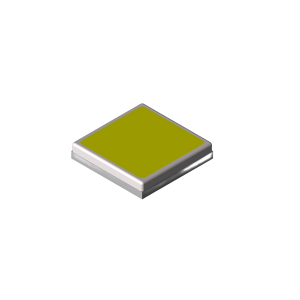

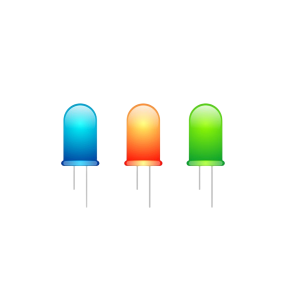




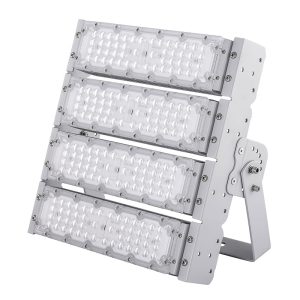
Photodiode LED, a cutting-edge technology that combines the functionalities of a photodiode and an LED, has gained significant attention in the industry. This article aims to provide an in-depth introduction to the Photodiode LED, exploring its working principle, applications, advantages, and future prospects.
Introduction to Photodiode LED
Photodiode LED is a hybrid device that integrates the photoelectric conversion characteristics of a photodiode and the light-emitting characteristics of an LED. It can both detect light and emit light, making it a versatile component in various fields. The device consists of a photodiode and an LED, which are connected in series or parallel, depending on the application requirements.
Working Principle of Photodiode LED
The working principle of Photodiode LED is based on the photoelectric effect. When light is incident on the photodiode, it generates an electric current, which is proportional to the intensity of the incident light. At the same time, the LED emits light with a certain wavelength, which can be adjusted by changing the material composition of the LED. The combination of these two functions allows the Photodiode LED to perform both light detection and light emission.
Applications of Photodiode LED
Photodiode LED has a wide range of applications in various fields, including:
1. Optical Communication: Photodiode LED is widely used in optical communication systems, such as fiber optic communication, for light detection and transmission.
2. Optical Sensing: The device can be used for various optical sensing applications, such as distance measurement, gesture recognition, and environmental monitoring.
3. Phototherapy: Photodiode LED can be used for phototherapy, which is a treatment method for skin diseases, such as psoriasis and eczema.
4. Agriculture: The device can be used in agriculture for plant growth regulation, soil moisture detection, and disease diagnosis.
5. Medical Equipment: Photodiode LED is used in medical equipment for various purposes, such as endoscopy, imaging, and therapy.
Advantages of Photodiode LED
Compared with traditional photodiodes and LEDs, Photodiode LED has several advantages:
1. High Efficiency: The combination of photodiode and LED can achieve high conversion efficiency, reducing energy consumption.
2. Small Size: The compact structure of Photodiode LED allows for integration into various devices with limited space.
3. Flexible Application: The versatile functions of Photodiode LED make it suitable for a wide range of applications.
4. Low Cost: The production cost of Photodiode LED is relatively low, making it more accessible to the market.
Future Prospects of Photodiode LED
With the continuous development of technology, the Photodiode LED has a promising future in the following aspects:
1. Miniaturization: As technology advances, the size of Photodiode LED will continue to shrink, making it more suitable for portable devices.
2. High Efficiency: Research and development efforts will focus on improving the conversion efficiency of Photodiode LED, reducing energy consumption.
3. Wide Application: The application fields of Photodiode LED will continue to expand, covering more aspects of people’s lives.
4. Environmentally Friendly: As a green and energy-saving device, Photodiode LED will play a more significant role in promoting sustainable development.
In conclusion, Photodiode LED is a cutting-edge technology with great potential in various fields. With continuous innovation and development, it is expected to bring more benefits to society in the future.
 English
 Afrikaans
 Albanian
 Amharic
 Arabic
 Armenian
 Azerbaijani
 Basque
 Belarusian
 Bengali
 Bosnian
 Bulgarian
 Catalan
 Cebuano
 Chichewa
 Corsican
 Croatian
 Czech
Czech Danish
 Dutch
Dutch Esperanto
 Estonian
 Filipino
 Finnish
 French
 Frisian
 Galician
 Georgian
 German
 Greek
Greek Gujarati
 Haitian Creole
 Hausa
Hausa Hawaiian
 Hebrew
 Hindi
Hindi Hmong
Hmong Hungarian
 Icelandic
 Igbo
Igbo Indonesian
 Irish
Irish Italian
 Japanese
 Javanese
 Kannada
 Kazakh
 Khmer
Khmer Korean
 Kurdish (Kurmanji)
 Kyrgyz
 Lao
Lao Latin
Latin Latvian
 Lithuanian
 Luxembourgish
 Macedonian
 Malagasy
 Malay
Malay Malayalam
 Maltese
 Maori
Maori Marathi
 Mongolian
 Myanmar (Burmese)
 Nepali
 Norwegian
 Pashto
 Persian
 Polish
 Portuguese
 Punjabi
 Romanian
 Russian
 Samoan
 Scottish Gaelic
 Serbian
 Sesotho
 Shona
Shona Sindhi
 Sinhala
 Slovak
 Slovenian
 Somali
 Spanish
 Sudanese
 Swahili
 Swedish
 Tajik
Tajik Tamil
Tamil Telugu
 Thai
Thai Turkish
 Ukrainian
 Urdu
Urdu Uzbek
Uzbek Vietnamese
 Welsh
Welsh Xhosa
Xhosa Yiddish
 Yoruba
 Zulu
Zulu
Explore More from Queendom Lamp
Stay updated with the latest LED technology, lighting solutions, and industry insights.
Request a Quote About Queendom