

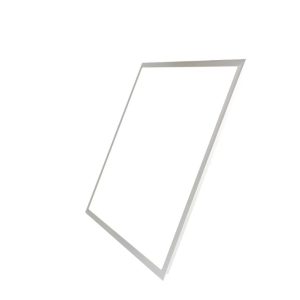
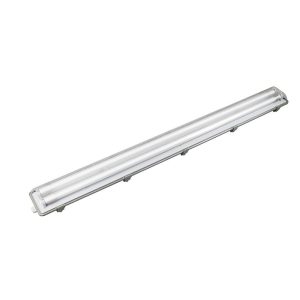
Induction ceiling lights have become a popular choice for modern lighting solutions in various industries. These innovative lighting systems offer numerous advantages over traditional lighting options, making them a preferred choice for both residential and commercial spaces. In this article, we will explore the features, benefits, and applications of induction ceiling lights, highlighting their significance in the lighting industry.
Introduction to Induction Ceiling Lights
Induction ceiling lights are based on the principle of electromagnetic induction, which allows for efficient and effective lighting. These lights are designed to be mounted on the ceiling and provide a uniform distribution of light across a wide area. Unlike traditional lighting systems, induction ceiling lights do not require a filament or a ballast, making them more energy-efficient and durable.
How Induction Ceiling Lights Work
The working principle of induction ceiling lights involves the use of a high-frequency alternating current (AC) to generate a magnetic field. This magnetic field induces an electric current in the metal coil of the light, which then produces light through the process of electromagnetic induction. The absence of a filament or a ballast in these lights makes them more reliable and long-lasting.
Advantages of Induction Ceiling Lights
1. Energy Efficiency: Induction ceiling lights consume significantly less energy compared to traditional lighting systems. This not only reduces electricity bills but also helps in reducing the overall carbon footprint.
2. Longevity: The absence of a filament or a ballast in induction ceiling lights makes them more durable and long-lasting. These lights can last up to 50,000 hours, which is five times longer than traditional lighting systems.
3. Instant Lighting: Induction ceiling lights provide instant lighting without any warm-up time, making them ideal for areas where immediate illumination is required.
4. Uniform Light Distribution: These lights offer a uniform distribution of light across a wide area, reducing the need for additional lighting fixtures.
5. No UV or IR Radiation: Induction ceiling lights emit no UV or IR radiation, making them safe for use in sensitive environments such as hospitals and laboratories.
6. Low Maintenance: These lights require minimal maintenance, as they do not have any moving parts or fragile components.
Applications of Induction Ceiling Lights
Induction ceiling lights are suitable for various applications, including:
1. Residential: These lights are ideal for use in homes, offering energy-efficient and long-lasting lighting solutions.
2. Commercial: Induction ceiling lights are widely used in offices, schools, hospitals, and shopping malls, providing uniform and energy-efficient lighting.
3. Industrial: These lights are suitable for use in industrial settings, such as factories and warehouses, where durability and energy efficiency are crucial.
4. Outdoor: Induction ceiling lights can be used for outdoor lighting, such as streetlights and parking lots, due to their long lifespan and low maintenance requirements.
Comparison with Traditional Lighting Systems
When compared to traditional lighting systems, induction ceiling lights offer several advantages:
1. Energy Consumption: Induction ceiling lights consume up to 80% less energy than traditional lighting systems, making them a more environmentally friendly option.
2. Longevity: Induction ceiling lights have a lifespan of up to 50,000 hours, whereas traditional lighting systems typically last for 1,000 to 2,000 hours.
3. Maintenance: Induction ceiling lights require minimal maintenance, whereas traditional lighting systems often need frequent replacement and maintenance.
4. Light Quality: Induction ceiling lights provide a better quality of light, with no flickering or stroboscopic effects, which can be harmful to human health.
Conclusion
Induction ceiling lights have revolutionized the lighting industry by offering energy-efficient, durable, and long-lasting lighting solutions. With their numerous advantages and wide range of applications, induction ceiling lights have become a preferred choice for both residential and commercial spaces. As technology continues to advance, we can expect further improvements in the efficiency and performance of induction ceiling lights, making them an even more attractive option for the future.
 English
 Afrikaans
 Albanian
 Amharic
 Arabic
 Armenian
 Azerbaijani
 Basque
 Belarusian
 Bengali
 Bosnian
 Bulgarian
 Catalan
 Cebuano
 Chichewa
 Corsican
 Croatian
 Czech
Czech Danish
 Dutch
Dutch Esperanto
 Estonian
 Filipino
 Finnish
 French
 Frisian
 Galician
 Georgian
 German
 Greek
Greek Gujarati
 Haitian Creole
 Hausa
Hausa Hawaiian
 Hebrew
 Hindi
Hindi Hmong
Hmong Hungarian
 Icelandic
 Igbo
Igbo Indonesian
 Irish
Irish Italian
 Japanese
 Javanese
 Kannada
 Kazakh
 Khmer
Khmer Korean
 Kurdish (Kurmanji)
 Kyrgyz
 Lao
Lao Latin
Latin Latvian
 Lithuanian
 Luxembourgish
 Macedonian
 Malagasy
 Malay
Malay Malayalam
 Maltese
 Maori
Maori Marathi
 Mongolian
 Myanmar (Burmese)
 Nepali
 Norwegian
 Pashto
 Persian
 Polish
 Portuguese
 Punjabi
 Romanian
 Russian
 Samoan
 Scottish Gaelic
 Serbian
 Sesotho
 Shona
Shona Sindhi
 Sinhala
 Slovak
 Slovenian
 Somali
 Spanish
 Sudanese
 Swahili
 Swedish
 Tajik
Tajik Tamil
Tamil Telugu
 Thai
Thai Turkish
 Ukrainian
 Urdu
Urdu Uzbek
Uzbek Vietnamese
 Welsh
Welsh Xhosa
Xhosa Yiddish
 Yoruba
 Zulu
Zulu
Explore More from Queendom Lamp
Stay updated with the latest LED technology, lighting solutions, and industry insights.
Request a Quote About Queendom